Plant Profile
Lemon verbenaAloysia citrodora
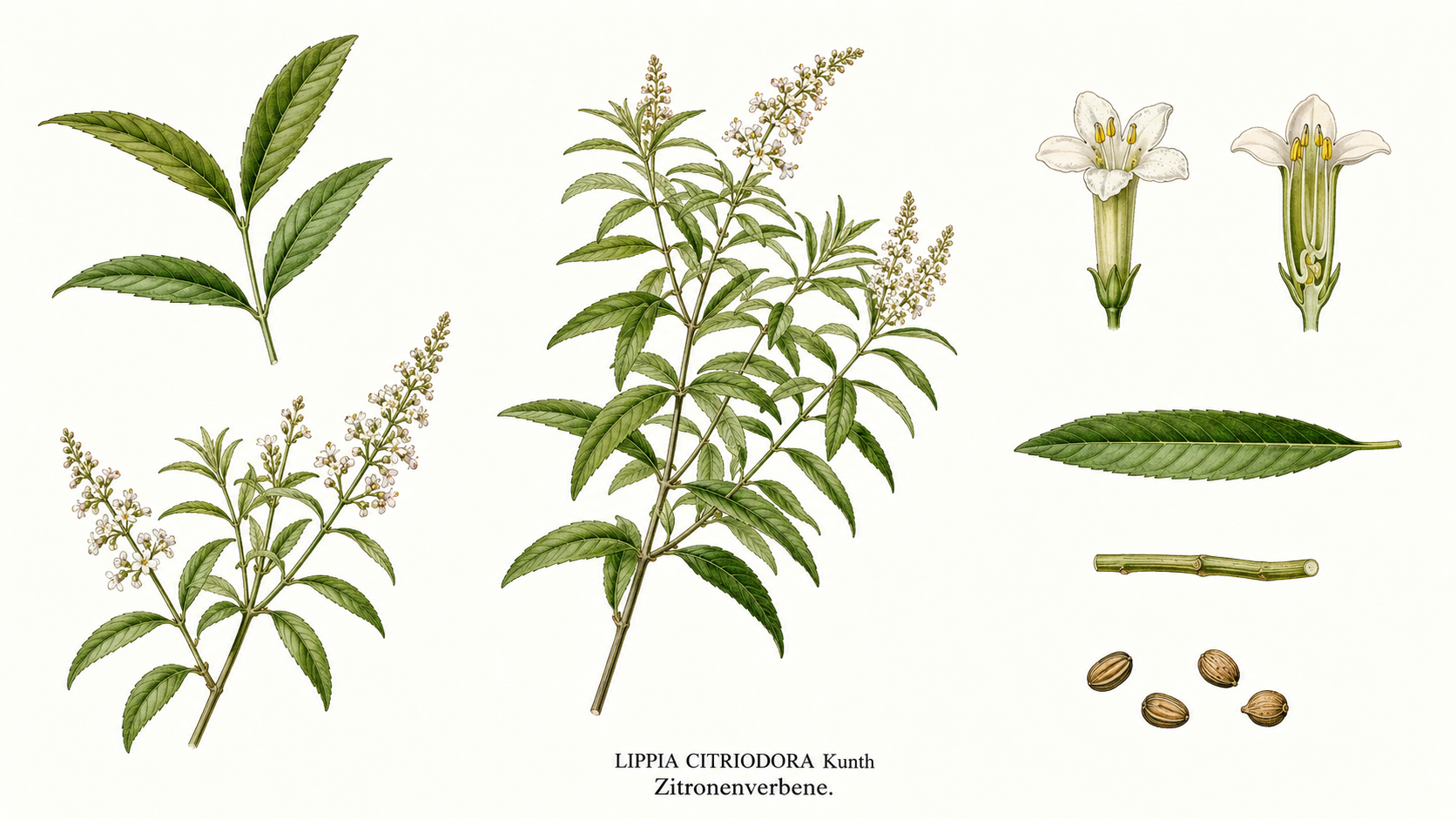
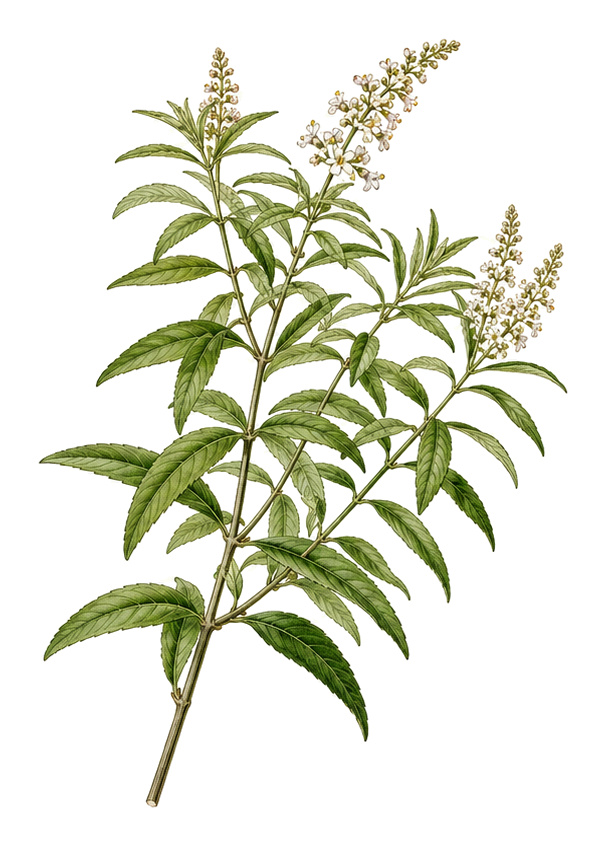
Lemon verbena is an outstanding, intensely fragrant subshrub that belongs in every tea garden. Its leaves release a pure, refreshing lemon aroma at the slightest touch. Native to South America and highly frost-sensitive, it is usually grown in containers in Central Europe and overwintered frost-free. Hard pruning in spring ensures compact, bushy growth and a bountiful harvest throughout the summer.
Quick profile
Key data
Suitable growing locations:
Good neighbors
Avoid
Indoor & direct sowing
Lemon verbena: Sowing and germination
Lemon verbena is started indoors in spring. The seeds are small and require light to germinate.
Direct sowing is not common in our latitudes as the plant is frost-sensitive and requires a long growing season.
Planting & site
Lemon verbena: Planting and spacing
Plant lemon verbena outdoors or in larger pots only after the last frosts.
Site & practical notes
Watering tip: In summer, container-grown lemon verbena requires surprisingly large amounts of water. Drying out leads to immediate leaf drop., Overwintering tip: Do not panic: the plant sheds all its leaves in winter quarters. This is perfectly normal. Reduce watering to a bare minimum.
Temperature & frost
Lemon verbena: Temperature and site
Water & nutrients
Lemon verbena: Water, nutrients and care
Container & growth
Lemon verbena: Container, support and growth
Year plan
Lemon verbena Calendar
In August, lemon verbena is at peak vitality—the perfect time to harvest large quantities for winter storage.
Recurring tasks
Relevant now
June
- Plant out seedlingsIf not planted in May, outdoors: If not done yet, plant outdoors or in larger containers now.
- Harvest leavesFrom established plants: First harvest of aromatic leaves for tea, cooking, or preservation.
Next up
July
- No additional single task
Monthly tasks
Single tasks from monthly data; repeated seasonal windows are shown in the overview above.
January
Quiet month
February
Direct sowing
- Sow seeds indoorsIndoors: Seeds are small and light-germinating. Use seed-starting mix and keep moist.
March
Direct sowing
- Sow seeds indoorsIndoors: Sow again if the first sowing was unsuccessful.
April
Direct sowing
- Harden off seedlingsIndoors, before planting out: Gradually acclimatize the young plants to outdoor conditions.
- Prick out seedlingsIndoors, after germination: Separate seedlings into individual pots once they have developed their first true leaves.
May
Planting
- Plant out seedlingsAfter last frost, outdoors: Plant lemon verbena outdoors or in larger containers after the 'Ice Saints' (mid-May).
June
Planting
- Plant out seedlingsIf not planted in May, outdoors: If not done yet, plant outdoors or in larger containers now.
Harvest
- Harvest leavesFrom established plants: First harvest of aromatic leaves for tea, cooking, or preservation.
August
No additional single task
September
Harvest
- Harvest leavesBefore frost: Harvest leaves before the first frost. This is also a good time for preservation.
Growing
- Prepare for overwinteringAs temperatures drop: Begin preparing the plant for overwintering by reducing watering and fertilization.
October
Harvest
- Last harvest of leavesBefore frost: Harvest the last leaves before moving the plant to its winter quarters.
Growing
- Move to winter quartersBefore first frost: Move the plant to cool, bright winter quarters before temperatures drop below freezing.
November
Quiet month
December
Quiet month
Flowering & pollination
Lemon verbena Flowering & pollination
Self-fertility
teilweise selbstfruchtbar
Pollinator needed
yes
Overview
Lemon verbena is primarily insect-pollinated. The flowers are hermaphroditic and produce nectar that attracts bees and other pollinators. Self-pollination is possible to a limited extent, but cross-pollination improves seed set.
Notes
Bees, bumblebees, and butterflies are the main pollinators. An insect-friendly garden encourages seed set.
Pruning & care
Lemon verbena Pruning & care
Pruning type
radical_renewal
Pruning timing
Main cut for spring regeneration. After overwintering, cut lemon verbena back to 10-15 cm above the base. This promotes dense, bushy regrowth. Prune just before budbreak, i.e., in March/April. Only remove dead shoots beforehand.
Harvest and shaping cut. By selectively trimming shoot tips (e.g., during harvest), the plant stays compact and produces more aromatic side leaves. Remove no more than one-third of the leaf mass per harvest to avoid weakening the plant.
Remove
Preserve
Avoid
Tools and hygiene
Disinfect pruning shears or a knife with 70% alcohol or methylated spirits before cutting. Clean the blade between different plants to prevent transmission of pathogens.
Companion guide
Lemon verbena Companion guide
Good neighbors
Avoid
Use & storage
Lemon verbena Use & storage
Leaves can be harvested continuously. Fresh leaves are used for tea or flavoring. Plants should be moved to winter quarters before the first frost.
Storage
Dried or frozen storage
Storage life
Fresh: 1–2 weeks in fridge; dried: about 1 year; frozen: 6–12 months
Harvest
Leaves can be harvested continuously. Fresh leaves are used for tea or flavoring. Plants should be moved to winter quarters before the first frost.
Processing
After harvest
Leaves are delicate and wilt quickly. Process immediately after harvest, dry, or freeze to preserve aroma. Do not wash; only lightly brush off if necessary.
Edibility & safety
Lemon verbena Edibility & safety
For people
In brief: which parts are edible, which parts remain risky, and whether raw consumption makes sense.
Safety notes
Lemon verbena is considered non-toxic. In very large amounts, however, essential oils may cause irritation of the gastrointestinal tract. Pregnant and breastfeeding women should avoid medicinal doses.
Animal safety
For animals, the specific plant part matters here: some parts may be suitable, while others should be avoided. At least one critical rating is listed for 11 animal types.
Each row shows which parts are more suitable and which parts are critical.
Companion animals
 Dog
DogNo suitable parts listed
Leaves
No suitable parts listed
Leaves
Large amounts
Stomach upset, Colic
contact a vet if symptoms appear
Lemon verbena contains essential oils that can cause gastrointestinal irritation in dogs. Small amounts used in cooking as flavoring are generally safe, but ingestion of plant parts is not recommended.
Open animal page Cat
CatNo suitable parts listed
Leaves
No suitable parts listed
Leaves
Large amounts
Stomach upset
contact a vet if symptoms appear
Lemon verbena contains essential oils that can cause gastrointestinal irritation in cats. Small amounts used in cooking as a flavoring are considered safe.
Open animal page Rabbit
No suitable parts listed
No risk parts listed
No suitable parts listed
No risk parts listed
unknown
Leaves can be fed in small amounts as a treat. Stems and roots are not recommended due to high woody content and potential essential oils. Excessive consumption may cause gastrointestinal irritation from essential oils.
Open animal page Guinea pig
Leaves
Stems (very woody), Roots
Leaves
Stems (very woody), Roots
Large amounts, Woody stems, Roots
Gastrointestinal irritation, Colic
observe
Leaves can be given as an occasional treat in small amounts. Stems and roots are not recommended due to high woody content and potential irritation from essential oils. Excessive consumption may cause gastrointestinal discomfort from essential oils.
Open animal page Hamster
Leaves
Stems (very woody), Roots
Leaves
Stems (very woody), Roots
Large amounts, Woody stems, Roots
Gastrointestinal irritation, Colic
observe
No direct species-specific source was found for hamsters. This is a cautious inference from the guinea pigs profile and the known plant-part risks.
Open animal page Budgie
No suitable parts listed
No risk parts listed
No suitable parts listed
No risk parts listed
unknown
Leaves can be given as an occasional treat in small amounts. Stems and roots should be avoided due to their woody nature and potential irritation from essential oils. If large amounts of stems/roots are ingested, monitor and contact vet if symptoms appear.
Open animal pageFarm animals
 Horse
HorseNo suitable parts listed
Leaves, Stems
No suitable parts listed
Leaves, Stems
Large amounts
Stomach upset, Colic
contact a vet if symptoms appear
Lemon verbena contains essential oils that can cause gastrointestinal irritation in horses. Small amounts as flavoring are considered safe.
Open animal page Chicken
No suitable parts listed
Leaves
No suitable parts listed
Leaves
Large quantities
Gastrointestinal irritation
observe
Lemon verbena contains essential oils that can cause gastrointestinal irritation in chickens when consumed in large quantities. While small amounts may be used as a culinary flavoring, regular feeding is not suitable. The plant is considered toxic to dogs, cats, and horses, warranting a cautious assessment for chickens.
Open animal page Duck
DuckNo suitable parts listed
Leaves, Stems
No suitable parts listed
Leaves, Stems
Large amounts, Essential oils
Gastrointestinal irritation, Vomiting, Diarrhea
observe
Lemon verbena contains essential oils that may cause gastrointestinal upset in ducks if consumed in large amounts. While small quantities are used as a culinary flavoring, it is not suitable as feed. No duck-specific studies are available.
Open animal page Goose
GooseNo suitable parts listed
Leaves, Stems
No suitable parts listed
Leaves, Stems
Large amounts, Essential oils
Gastrointestinal irritation, Vomiting, Diarrhea
observe
No direct species-specific source was found for geese. This is a cautious inference from the ducks profile and the known plant-part risks.
Open animal page Sheep
SheepLeaves
Stems (very woody), Roots
Leaves
Stems (very woody), Roots
Large amounts, Woody stems, Roots
Gastrointestinal irritation, Colic
observe
No direct species-specific source was found for sheep. This is a cautious inference from the goats profile and the known plant-part risks.
Open animal page Goat
GoatLeaves
Stems (very woody), Roots
Leaves
Stems (very woody), Roots
Large amounts, Woody stems, Roots
Gastrointestinal irritation, Colic
 Cattle
Leaves
Stems (very woody), Roots
Leaves
Stems (very woody), Roots
Large amounts, Woody stems, Roots
Gastrointestinal upset, Colic
observe
Lemon verbena leaves can be used in small amounts as a feed additive, but woody stems and roots may cause gastrointestinal irritation due to high essential oil content. If ingestion of large amounts is suspected, the animal should be observed.
Open animal page Pig
PigNo suitable parts listed
No risk parts listed
No suitable parts listed
No risk parts listed
unknown
Leaves can be used in small amounts as flavoring, woody stems and roots should be avoided due to potential irritation from essential oils. If large amounts are ingested, observe and contact vet if symptoms appear.
Open animal pageThese guidelines are for general information only and do not replace veterinary diagnosis. If critical plant parts were ingested or the animal shows unusual behaviour or symptoms, seek veterinary advice.
Max risk
4 / 5
Highest status
toxic
Urgency
contact a vet if symptoms appear
Saving seed
Lemon verbena Saving seed
Seed viability
2 - 3 years
Method
Part: Seeds, Method: Cut the flower heads after seed ripening (brown, dry) and let them dry in a paper bag. Then remove the small seeds from the capsules., Conditions: Seeds are small and require light to germinate. Store dry and cool., Notes: Lemon verbena produces seeds in Central Europe in good weather, but germination rate is often low. Propagation via cuttings is more reliable in practice.
Practical tips
Lemon verbena Practical tips
Common beginner mistakes
Success pattern
Hard pruning in April + weekly organic liquid fertilization from June onwards = A compact, 1-meter-high bush bursting with leaves until October.
High-impact tips
Regularly pinch off shoot tips for fresh tea as you walk through the garden. This replaces formal pinching and perfectly stimulates bushier branching.
Grower observations
Plants kept in pots on a hot, south-facing terrace during summer develop a significantly higher concentration of essential oils than those in partial shade.
Plant Profile
Additional plant images

Health
Pests, Diseases
Pests
Aphids
Curling of leaves, sticky underside of leaves.
Spider mites
Fine webbing on leaves, leaves turn yellow and drop.
Fungus gnats
Small black flies in the soil, damage to young roots.
Diseases
Powdery mildew
White, powdery coating on leaves.
Root rot
Roots become brown and mushy, plant wilts despite adequate water supply.
Leaf spot disease
Brown or black spots on leaves.
Deficiencies
Nitrogen deficiency
Pale green to yellow discoloration of older leaves, stunted growth.
Potassium deficiency
Brown leaf margins, wilted leaves.
Plant health
Diagnosis help
Lemon verbena Diagnosis help
Pest groups
Disease groups
Prevention
Diagnosis
Most problems arise from care errors. Checking site and water conditions is usually the first step.
Cultural prevention
Monitoring
First response
Diagnostic rules
White coating on leaves
Possible causes: Powdery mildew
- Check humidity
- Measure plant spacing
Wilting with wet soil
Possible causes: Root rot
- Check roots
- Examine drainage
Yellow, curled leaves
Possible causes: Aphids, Nitrogen deficiency
- Check undersides of leaves for aphids
- Review fertilization
FAQ
Why is my lemon verbena suddenly losing all its leaves?
This usually has two causes: In autumn/winter, it is the natural shedding of leaves before dormancy. In summer, sudden leaf drop indicates severe underwatering or extreme waterlogging.
Is lemon verbena frost hardy?
No, it tolerates almost no frost (briefly down to -5 °C in extremely sheltered spots). In Central Europe, it must be overwintered in a frost-free environment at around 5-10 °C.
Is Lemon verbena safe for Dog?
Lemon verbena is classified as toxic for Dog. Risk: 4 / 5. Urgency: contact a vet if symptoms appear. Lemon verbena contains essential oils that can cause gastrointestinal irritation in dogs. Small amounts used in cooking as flavoring are generally safe, but ingestion of plant parts is not recommended.
Is Lemon verbena safe for Cat?
Lemon verbena is classified as toxic for Cat. Risk: 4 / 5. Urgency: contact a vet if symptoms appear. Lemon verbena contains essential oils that can cause gastrointestinal irritation in cats. Small amounts used in cooking as a flavoring are considered safe.
Is Lemon verbena safe for Rabbit?
Lemon verbena is classified as not established for Rabbit. Risk: unknown. Urgency: unknown. Leaves can be fed in small amounts as a treat. Stems and roots are not recommended due to high woody content and potential essential oils. Excessive consumption may cause gastrointestinal irritation from essential oils.
Is Lemon verbena safe for Horse?
Lemon verbena is classified as toxic for Horse. Risk: 4 / 5. Urgency: contact a vet if symptoms appear. Lemon verbena contains essential oils that can cause gastrointestinal irritation in horses. Small amounts as flavoring are considered safe.
Guides
Related guides
Guide
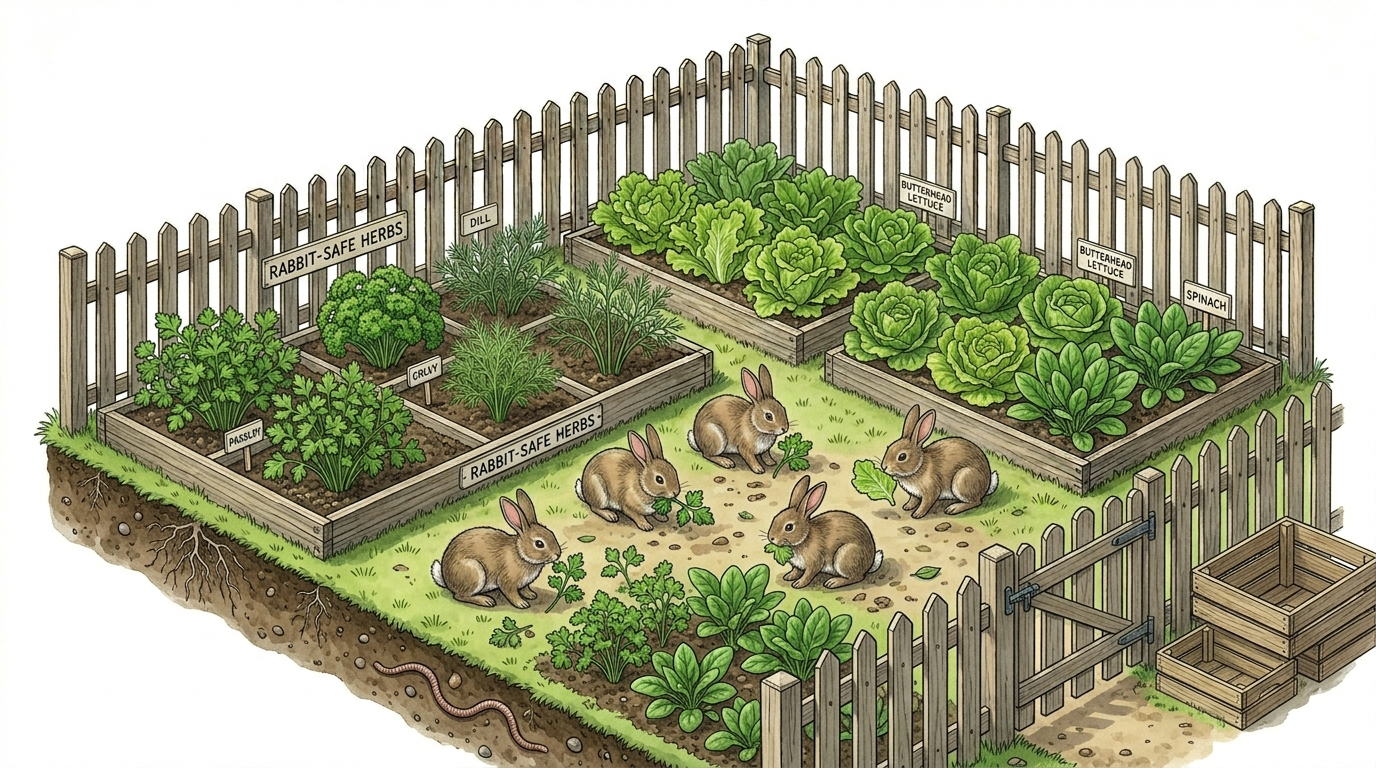
Rabbits in the Garden: Herbs and Vegetables
Learn how to choose suitable herbs and vegetables for rabbits, grow feeding plants, and plan a rabbit-friendly garden.
Guide
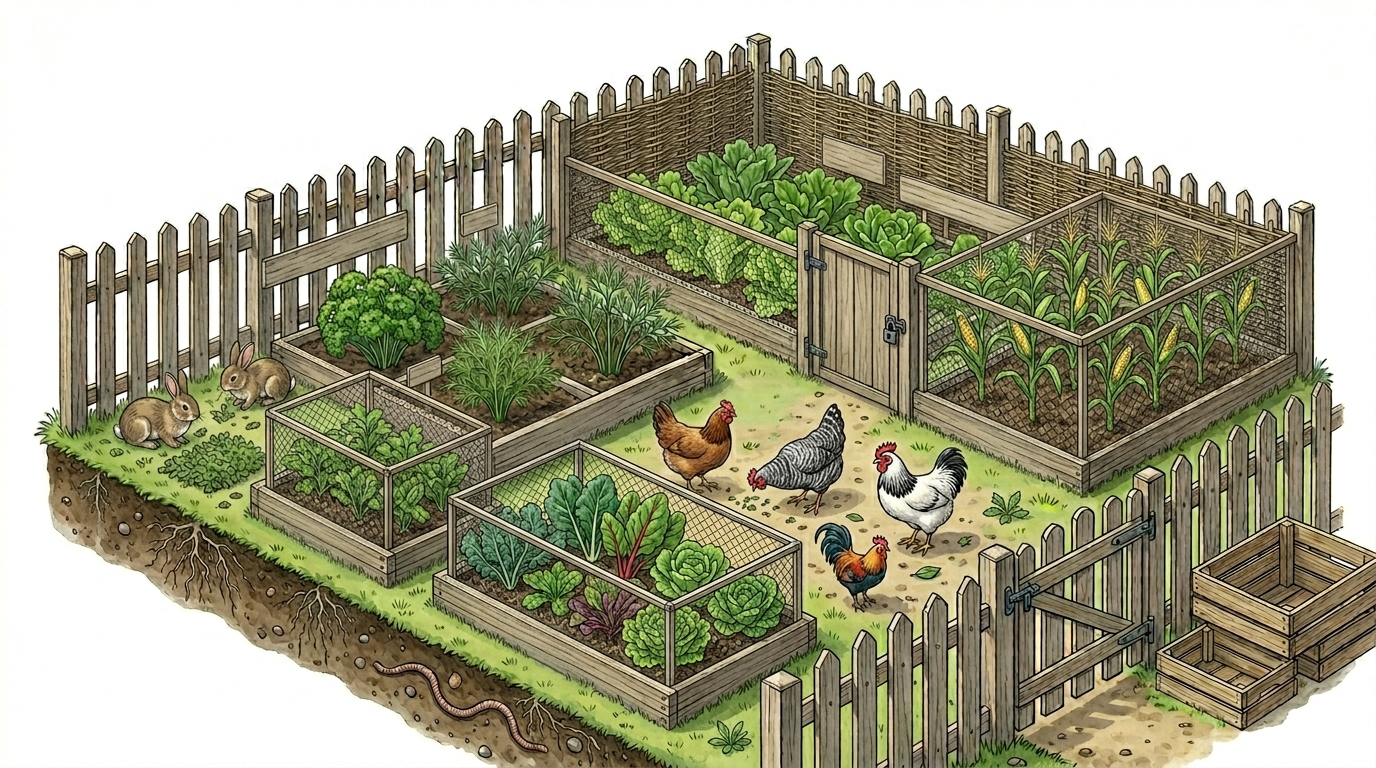
Chickens in the Garden: Safe Plants and Zones
Learn how to design a chicken-friendly garden with suitable plants, protected beds, and well-planned activity areas.
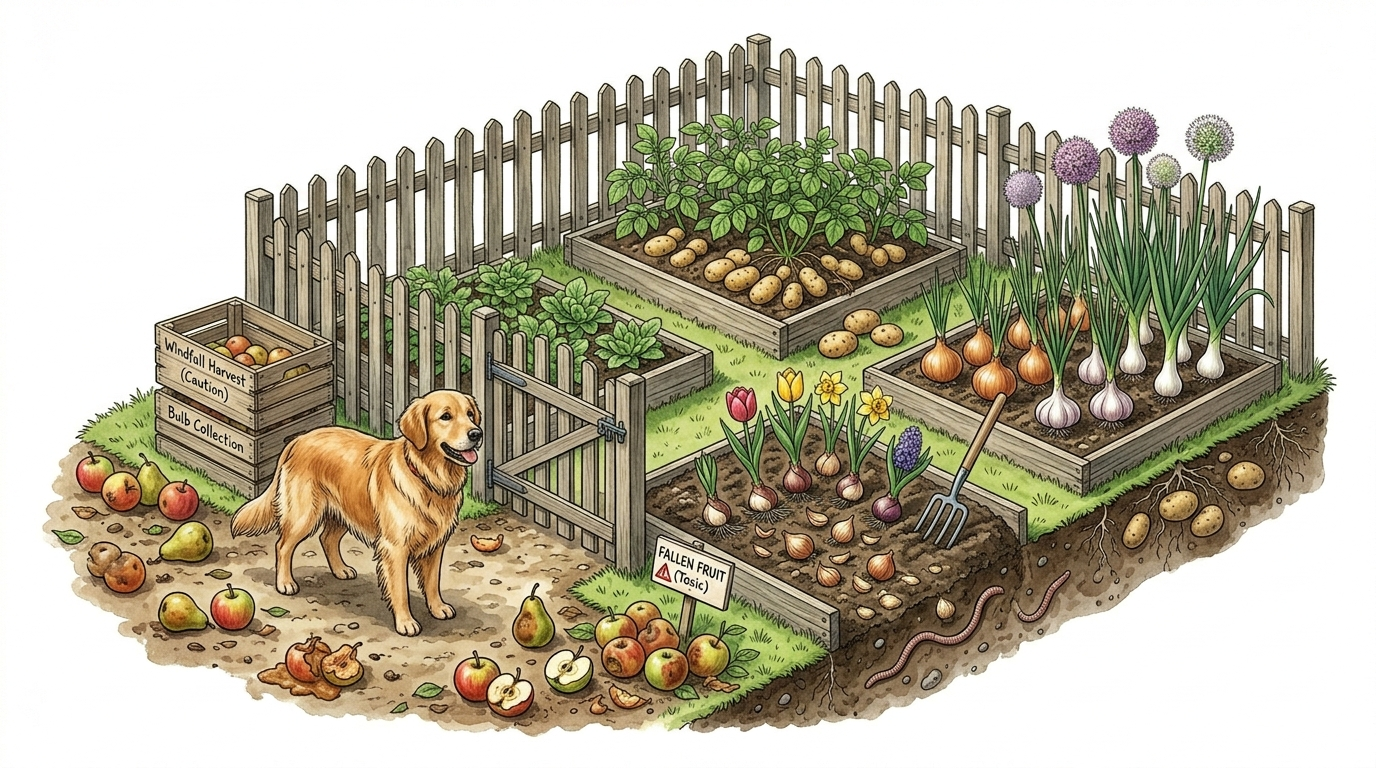
Guide
Dogs in the Garden: Windfall Fruit and Risks
Keep your garden dog-safe by managing windfall fruit, seeds, stored crops, and potentially problematic plant parts.
Guide
Horse Pastures and Garden Plants: Safety Checks
Learn how to identify risks near horse pastures, fences, turnout areas, fruit trees, and garden planting zones.
Internal links
Related plants
Common vervain
Both belong to the Verbenaceae family.
Belongs to the same family (Verbenaceae) but lacks the distinct citrus scent and has a completely different growth habit.
Rosmarinus tomentosus
Both share a preference for full sun, hot summer locations, and cannot tolerate heavy, wet soil.
Cucumber
Both can be affected by powdery mildew under unfavorable weather conditions or poor air circulation.
common sage
Moderate feeders that benefit from a light compost application in spring but lose aroma if over-fertilized.
Moroccan mint
Require consistent soil moisture during hot summer months for lush foliage growth.
Complements it beautifully in tea blends and shares similar summer watering needs.
Lantana
Also a frost-sensitive member of the Verbenaceae family, commonly grown as a container plant.
Lemongrass
Also valued for its intense citrus aroma in teas and Asian culinary dishes.
Lemon Balm
Similar lemon scent, but lemon balm is fully hardy, herbaceous, and spreads aggressively.
Sources
Public sources
- Wikidata search
Wikidata · 2026-05-16
- GBIF species match
GBIF · 2026-05-16