Guide
Growing Autumn Vegetables for Winter Harvests
The vegetable garden can remain productive long after summer ends. Many hardy crops grow especially well during autumn or continue providing harvests deep into winter. With good planning, beds can stay productive for much longer.
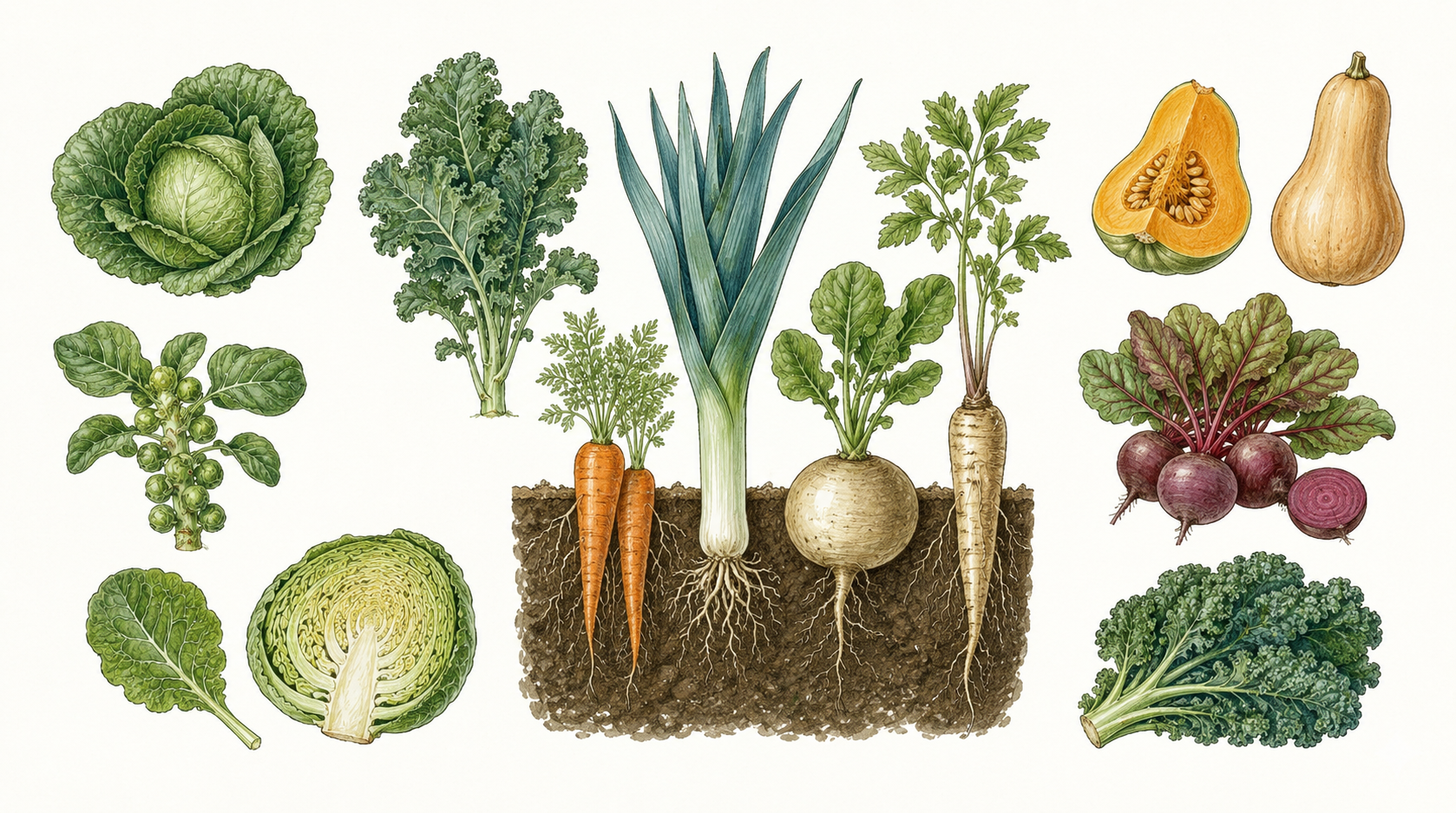
Why grow autumn vegetables?
Autumn and winter vegetables make excellent use of the second half of the gardening season. Cooler temperatures and moister soils create favorable conditions for many crops.
- Garden beds stay productive longer
- Many crops tolerate cooler weather well
- Fresh harvests remain possible into winter
- Empty summer beds can be reused efficiently
Suitable crops for autumn and winter
Some vegetables continue growing reliably in cooler temperatures or remain harvestable for long periods.
- Lamb's lettuce for autumn and winter harvests
- Spinach for cooler seasons
- Kale as a hardy winter vegetable
- Tuscan kale for extended harvests
- Leeks for autumn and winter use
- Radishes for fast succession sowings
Sowing in late summer and autumn
Many autumn vegetables are already sown during midsummer or late summer so they have enough time to establish before cold nights arrive.
- Regular succession sowings extend harvests
- Warm soil supports rapid germination
- Keep newly sown rows evenly moist
- Late sowings may develop more slowly
Preparing the site and soil
Autumn vegetables also benefit from loose soil and good light conditions. Sunny locations become especially important as days shorten.
- Use loose, humus-rich soil
- Avoid waterlogging
- Reuse cleared summer beds quickly
- Mulch helps reduce drying out
Care during cooler months
As temperatures fall, plant growth slows down. Even so, regular maintenance and observation remain important.
- Continue watering during dry periods
- Remove damaged leaves
- Maintain airy bed structures
- Protect small plants from severe frost
Harvesting into winter
Some autumn vegetables can remain in the ground for extended periods and be harvested as needed.
- Lamb's lettuce continues growing slowly
- Kale remains harvestable for a long time
- Leeks can be harvested gradually
- Spinach still provides late leaf harvests
Planning productive autumn beds
- 1
Clear summer crops
Remove harvested plants and loosen the soil.
- 2
Choose autumn vegetables
Select hardy crops suitable for cooler seasons.
- 3
Sow or transplant
Sow seeds in time or plant young vegetables into prepared beds.
- 4
Maintain regularly
Keep the soil evenly moist and monitor growth.
- 5
Harvest gradually
Many crops can be picked continuously over several weeks.
Common mistakes to avoid
- Sowing autumn crops too late
- Leaving summer beds empty
- Allowing seed rows to dry out
- Planting too densely
- Underestimating watering needs in autumn
Frequently asked questions
Which vegetables still grow in autumn?
Lamb's lettuce, spinach, kale, Tuscan kale, and leeks are typical autumn and winter vegetables.
Can vegetables still be sown in autumn?
Yes, many crops are sown in late summer or early autumn for later harvests.
Do autumn vegetables need less water?
Often yes, because cooler temperatures reduce evaporation, but the soil should still not dry out completely.
Internal links
Related plants
Guides
Related guides
Guide
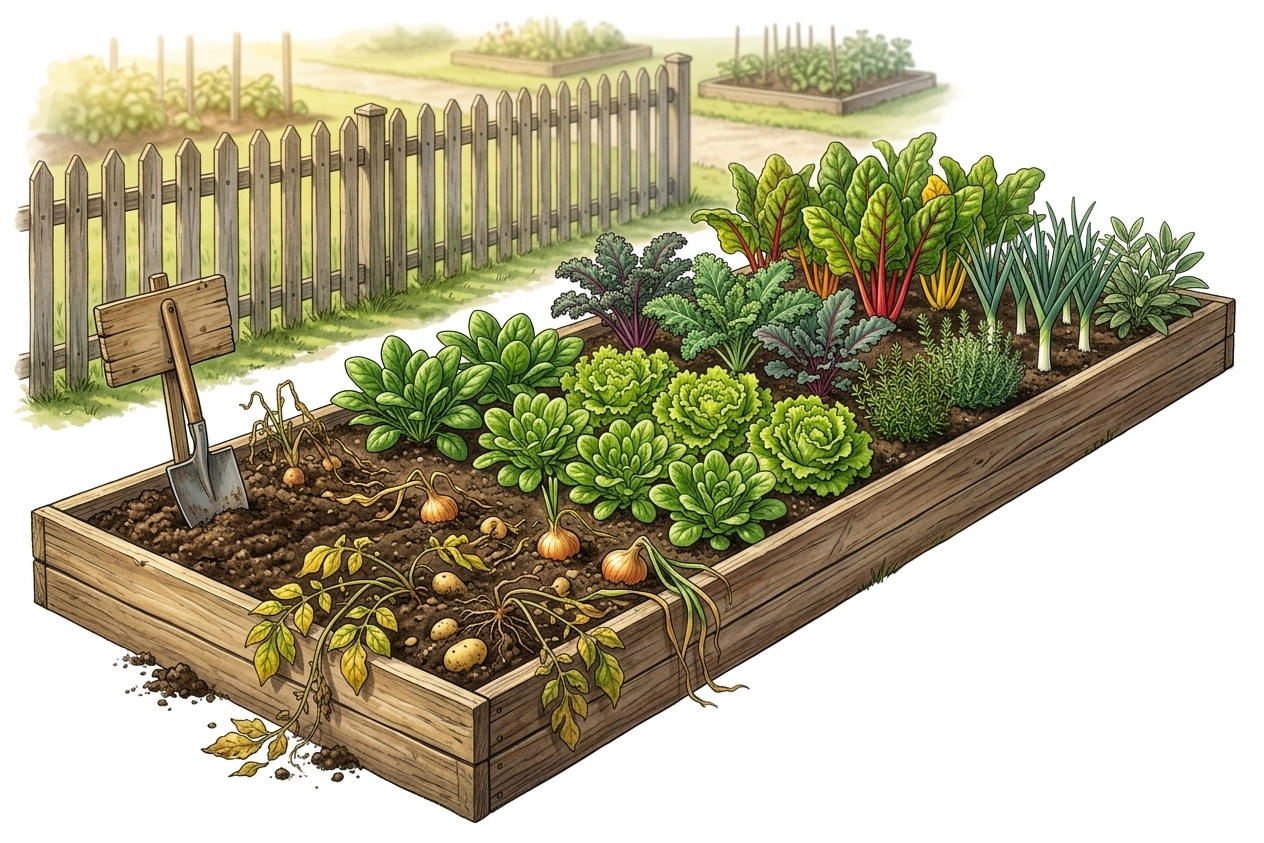
Replanting Raised Beds in Late Summer
After potatoes and onions, raised beds can stay productive. These follow-up crops provide fresh harvests into autumn and winter.
Guide
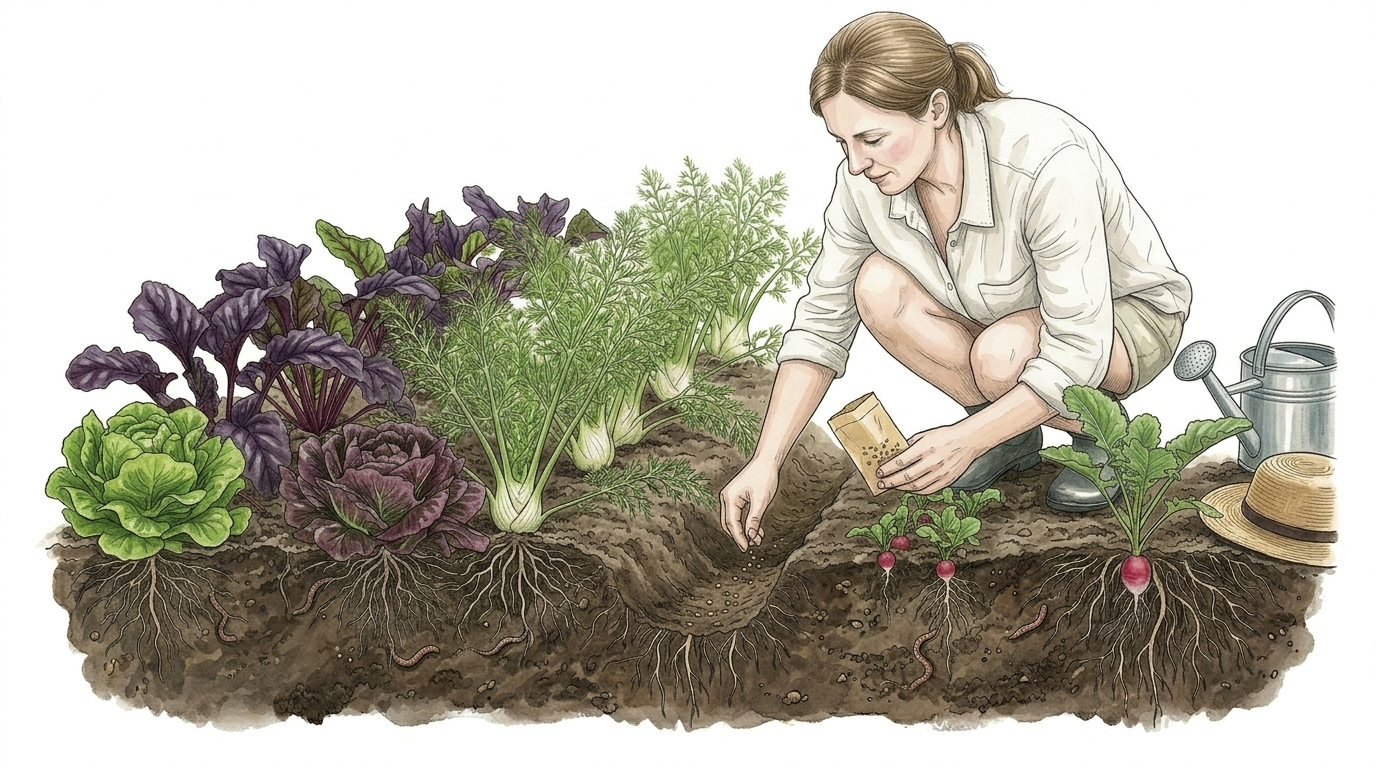
What to Sow in June: Succession Crops and Autumn Harvests
Discover which vegetables to sow in June for succession planting, filling gaps in beds, and planning autumn harvests.
Guide
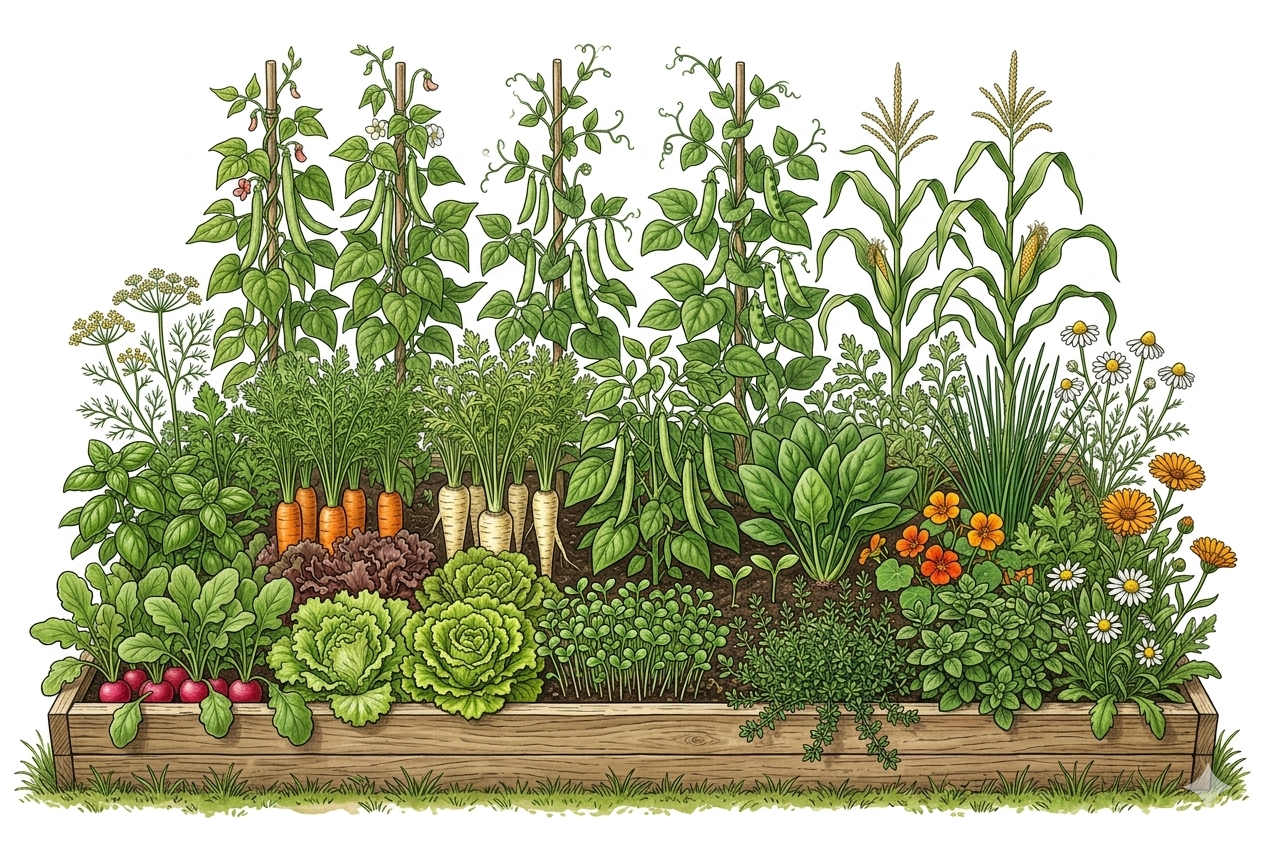
Small Garden Bed Planning: Combine 20 Crops Well
Use small beds efficiently by combining 20 vegetables and herbs, planning successions, and avoiding wasted gaps.
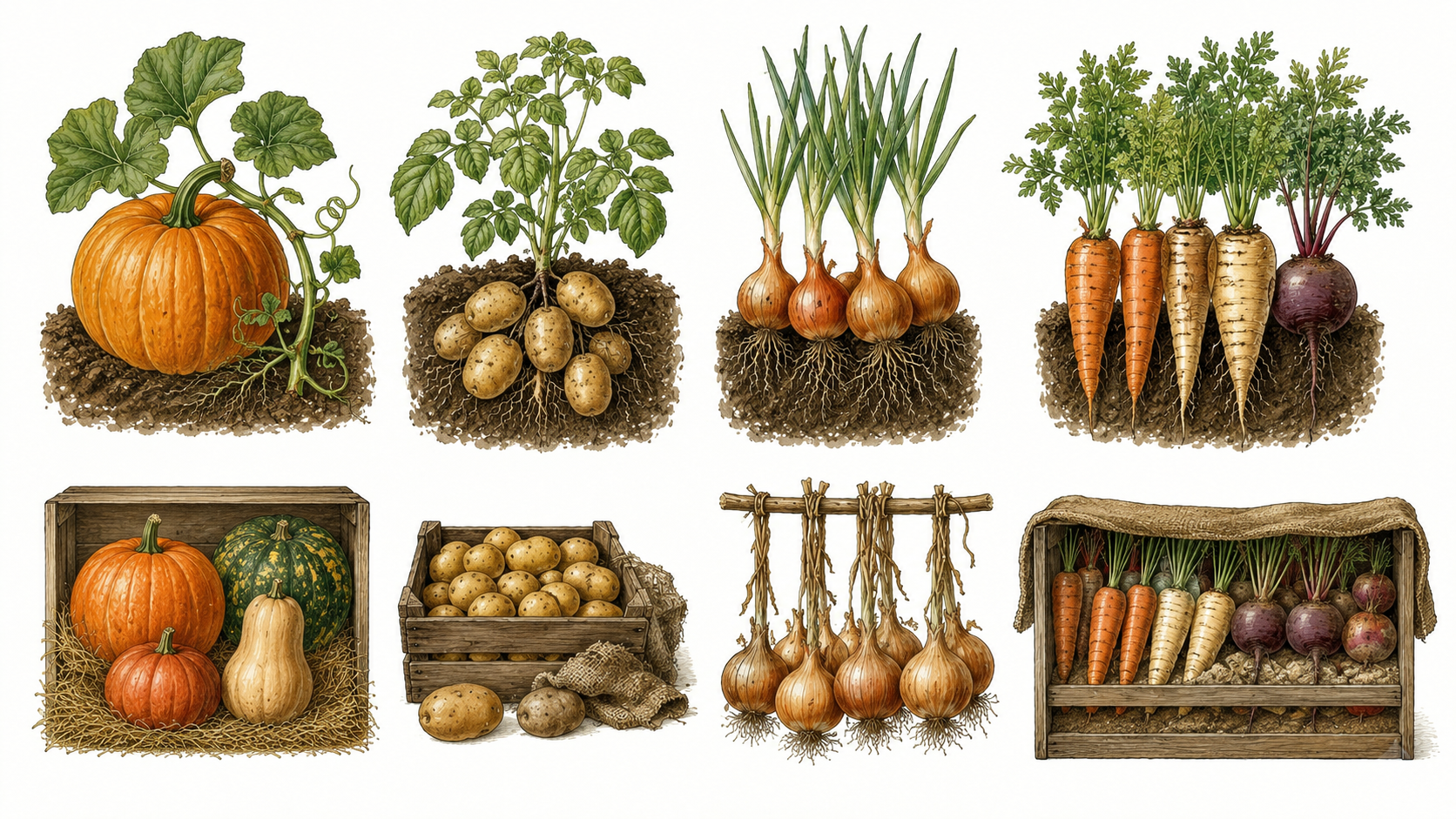
Guide
Autumn Harvest and Storage for Squash and Root Crops
Learn how to harvest and store squash, potatoes, onions, and root vegetables for longer freshness through autumn and winter.