Plant Profile
BlackthornPrunus spinosa
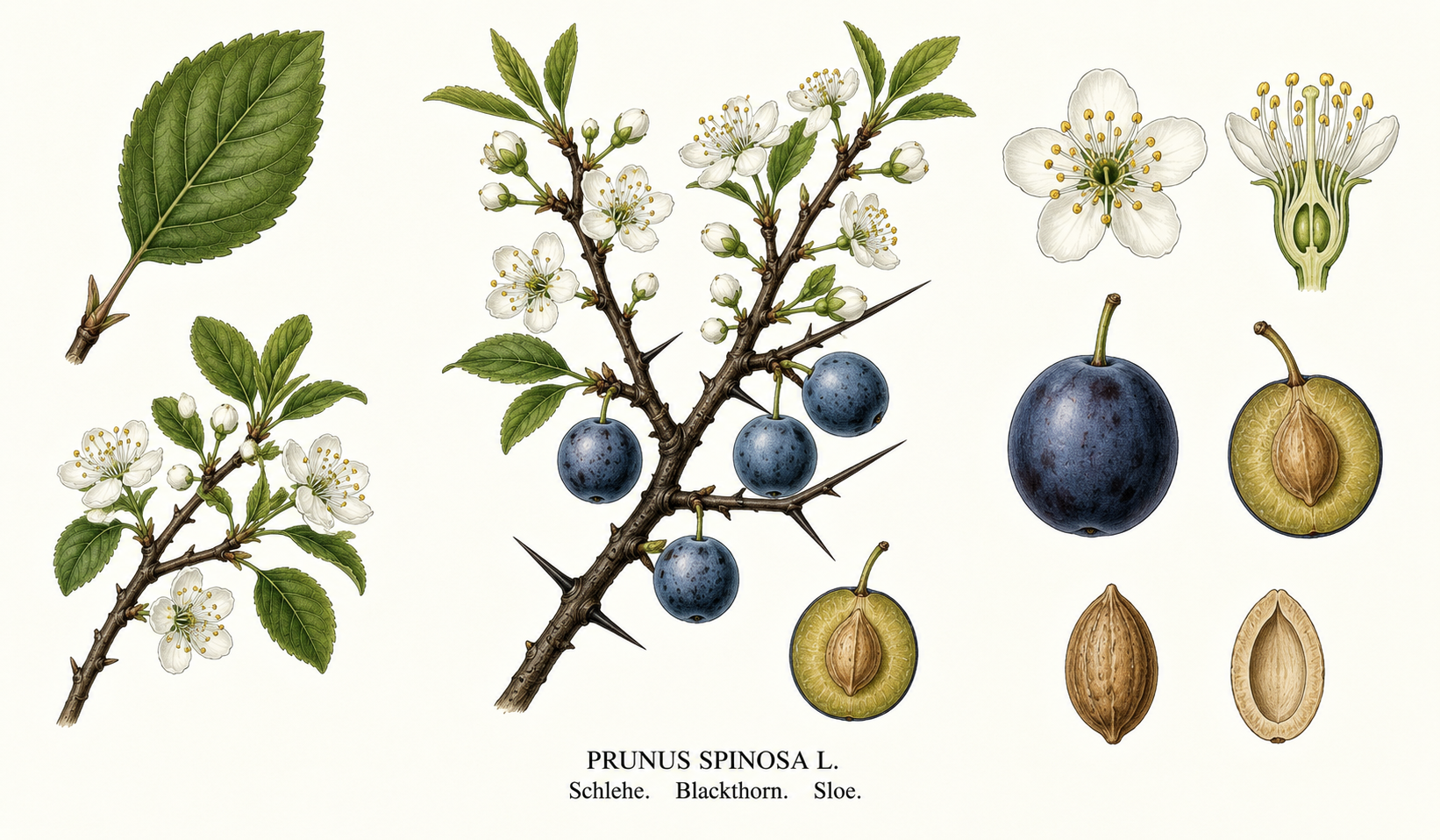
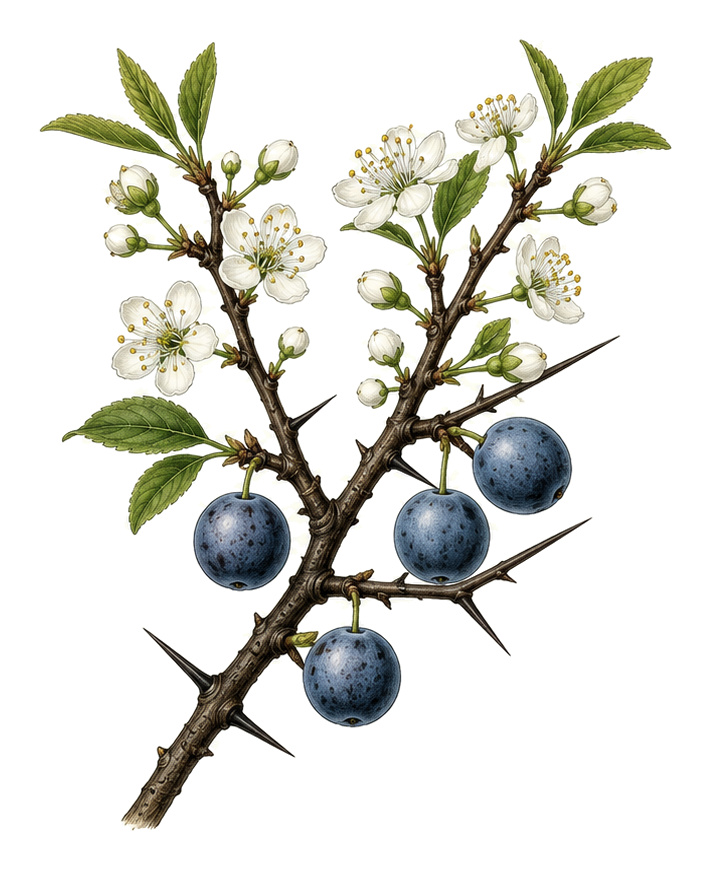
The blackthorn (Prunus spinosa) is a native, thorny shrub known for its tart fruits. These are harvested after the first frost and are excellent for making jams, jellies, and liqueurs. Blackthorns are undemanding, robust, and provide habitat for insects and birds. They are well-suited for hedges and as a pioneer plant.
Quick profile
Key data
Suitable growing locations:
Good neighbors
English LavenderRosemaryGarden Strawberry
Avoid
tomatoCabbage (head cabbage)
Indoor & direct sowing
Blackthorn: Sowing and germination
No indoor sowing is necessary.
Sow in autumn or early spring. Cold germinator.
Planting & site
Blackthorn: Planting and spacing
Plant young plants or cuttings in spring or autumn.
Site & practical notes
Blackthorns are extremely undemanding and easy to care for. They are excellent for naturalistic gardens, as bird protection shrubs, or for dense, thorny hedges. Harvesting the fruits requires caution due to the thorns. After the first frost, the fruits become milder and sweeter.
Temperature & frost
Blackthorn: Temperature and site
Water & nutrients
Blackthorn: Water, nutrients and care
Container & growth
Blackthorn: Container, support and growth
Year plan
Blackthorn Calendar
After the first frost, the sloe berries become sweeter and are perfect for liqueurs and jams.
Recurring tasks
Relevant now
June
- No additional single task
Next up
July
- No additional single task
Monthly tasks
Single tasks from monthly data; repeated seasonal windows are shown in the overview above.
January
No additional single task
February
No additional single task
March
Pruning
- Formative and thinning prune, removal of old wood and disease sources.Prune before bud break, while the plant is dormant.
- Pruningdormant season: Shaping and promoting fruit yield.
April
No additional single task
May
Quiet month
June
Quiet month
August
Quiet month
September
Quiet month
October
Pruning
- Pruningdormant season: Thinning and removal of dead shoots.
November
Planting
- Planting cuttings or young plantsdormant season: Suitable for vegetative propagation.
December
No additional single task
Flowering & pollination
Blackthorn Flowering & pollination
Self-fertility
self-fertile
Pollinator needed
no
Overview
Blackthorns are predominantly self-fertile, but cross-pollination by other blackthorns or related species like plums can improve fruit set.
Notes
Bees, bumblebees, and other insects visit the flowers and contribute to pollination. The blossoms are also an important early food source for these insects.
Pruning & care
Blackthorn Pruning & care
Pruning type
Renewal pruning and structural pruning
Pruning timing
Formative and thinning prune, removal of old wood and disease sources. Prune before bud break, while the plant is dormant.
Removal of unwanted root suckers and, if necessary, light corrections on hedges. Only as needed to control spread.
Remove
Preserve
Avoid
Tools and hygiene
Clean and disinfect all cutting tools before and after use to prevent disease transmission.
Companion guide
Blackthorn Companion guide
Good neighbors
English LavenderRosemaryGarden Strawberry
Avoid
tomatoCabbage (head cabbage)
Use & storage
Blackthorn Use & storage
Harvest fruits after the first frost to improve flavor.
Storage
Cool and dry, dark
Storage life
Fresh: a few days to 1 week. Frozen: up to 1 year. Dried: several months.
Harvest
Harvest fruits after the first frost to improve flavor.
Processing
After harvest
Fruits can be processed directly after harvest or stored in the refrigerator for a few days. Wash thoroughly before processing.
Notes
Freshly harvested fruits have limited shelf life. Preserved, dried, or frozen, they can be stored longer.
Edibility & safety
Blackthorn Edibility & safety
For people
In brief: which parts are edible, which parts remain risky, and whether raw consumption makes sense.
Safety notes
The seeds (kernels) of sloes contain amygdalin, which can be converted to hydrocyanic acid in the body. They should not be consumed. The fruits themselves are safe after processing or frost.
Animal safety
For animals, the specific plant part matters here: some parts may be suitable, while others should be avoided. At least one critical rating is listed for 11 animal types.
Each row shows which parts are more suitable and which parts are critical.
Companion animals
 Dog
DogFruit (after frost or processed)
No risk parts listed
Fruit (after frost or processed)
No risk parts listed
usually no action needed
Fruits are suitable in small amounts for dogs as a treat after frost or processing. Leaves and seeds should be avoided as they contain amygdalin, which can be converted to hydrocyanic acid. No direct species-specific poisoning cases are known in dogs, but caution is advised.
Open animal page Cat
CatFruit (processed or after frost)
Leaves, Seeds
Fruit (processed or after frost)
Leaves, Seeds
Consumption of unripe fruits, Consumption of seeds or leaves
Vomiting, Diarrhea, Abdominal pain
contact a vet if symptoms appear
The fruits of blackthorn can be given in small amounts as a treat, but leaves and seeds are toxic due to amygdalin (cyanide precursor) and should be avoided. If toxic parts are ingested, monitor for symptoms and seek veterinary advice if symptoms occur.
Open animal page Rabbit
Fruit (processed or after frost)
Leaves, Seeds
Fruit (processed or after frost)
Leaves, Seeds
Consumption of leaves or seeds, Unripe fruits
Diarrhea, Abdominal pain
contact a vet if symptoms appear
The fruit of blackthorn can be fed in small amounts as a treat, but leaves and seeds are toxic due to amygdalin (cyanide precursor) and should be avoided. If toxic parts are ingested, monitor for symptoms and contact a veterinarian if symptoms occur.
Open animal page Guinea pig
Fruit (processed or after frost)
No risk parts listed
Fruit (processed or after frost)
No risk parts listed
usually no action needed
No reliable species-specific assessment is available. Fruits might be considered in very small amounts as a treat after frost or processing, but leaves and seeds should be avoided due to amygdalin.
Open animal page Hamster
Fruit (processed or after frost)
No risk parts listed
Fruit (processed or after frost)
No risk parts listed
usually no action needed
No reliable species-specific assessment is available. Fruits might be considered in very small amounts as a treat after frost or processing, but leaves and seeds should be avoided due to amygdalin.
Open animal page Budgie
No suitable parts listed
No risk parts listed
No suitable parts listed
No risk parts listed
unknown
No reliable species-specific assessment is available. Fruits might be considered in very small amounts as a treat after frost or processing, but leaves and seeds should be avoided due to amygdalin.
Open animal pageFarm animals
 Horse
HorseFruit (processed or after frost)
Leaves, Seeds
Fruit (processed or after frost)
Leaves, Seeds
Consumption of unripe fruits, Consumption of seeds or leaves
Vomiting, Diarrhea, Abdominal pain
contact a vet if symptoms appear
The fruit of blackthorn can be fed in small amounts as a treat, but leaves and seeds contain amygdalin, which can be metabolized to cyanide. Poisoning is unlikely with normal fruit feeding, but possible if toxic parts are consumed.
Open animal page Chicken
Fruit (processed or after frost)
Leaves, Seeds
Fruit (processed or after frost)
Leaves, Seeds
Seeds contain cyanogenic precursors, Leaves may be toxic
Vomiting, Diarrhea, Respiratory distress
contact a vet if symptoms appear
Fruits can be given in small amounts as a treat, but leaves and seeds are toxic due to amygdalin (cyanogenic precursor) and should be avoided. If toxic parts are ingested, observe for symptoms and contact a veterinarian if symptoms appear.
Open animal page Duck
DuckFruit (after frost or processing)
Seeds, Leaves
Fruit (after frost or processing)
Seeds, Leaves
Consumption of large quantities of raw fruit, Consumption of seeds or leaves
Gastrointestinal disturbances, Cyanosis (in severe poisoning)
contact a vet if symptoms appear
The fruits are suitable as occasional treats after frost or processing. Seeds and leaves contain amygdalin, which can be converted to hydrogen cyanide and are therefore toxic. Raw consumption only in tiny amounts, as the fruits are astringent.
Open animal page Goose
GooseFruit (processed or after frost)
Leaves, Seeds
Fruit (processed or after frost)
Leaves, Seeds
Seeds contain cyanogenic precursors, Leaves may be toxic
Vomiting, Diarrhea, Breathing difficulties
contact a vet if symptoms appear
The fruit of blackthorn can be fed as an occasional treat in small amounts after processing or frost. Leaves and seeds contain amygdalin, which can hydrolyze to hydrogen cyanide and cause gastrointestinal and respiratory symptoms. No species-specific studies exist for geese, but the compound is toxic to many animals. Caution is advised, especially with unripe fruit or damaged seed material.
Open animal page Sheep
SheepFruit (processed or after frost)
Leaves, Seeds
Fruit (processed or after frost)
Leaves, Seeds
usually no action needed
No reliable species-specific assessment is available. Fruits might be considered in very small amounts as a treat after frost or processing, but leaves and seeds should be avoided due to amygdalin.
Open animal page Goat
GoatFruit (processed or after frost)
Leaves, Seeds
Fruit (processed or after frost)
Leaves, Seeds
usually no action needed
No direct species-specific source was found for goats. This is a cautious inference from the sheep profile and the known plant-part risks. Fruits might be considered in very small amounts as a treat after frost or processing, but leaves and seeds should be avoided due to amygdalin.
Open animal page Cattle
Fruit (processed or after frost)
Leaves, Seeds
Fruit (processed or after frost)
Leaves, Seeds
usually no action needed
No direct species-specific source was found for cattle. This is a cautious inference from the sheep profile and the known plant-part risks. Fruits might be considered in very small amounts as a treat after frost or processing, but leaves and seeds should be avoided due to amygdalin.
Open animal page Pig
PigFruit (processed or after frost)
Leaves, Seeds
Fruit (processed or after frost)
Leaves, Seeds
Consumption of unripe fruits, Consumption of seeds or leaves
Vomiting, Diarrhea, Breathing difficulties
contact a vet if symptoms appear
Sloe fruits can be fed as an occasional treat in small amounts after frost or processing. Leaves and seeds contain amygdalin, which can hydrolyze to hydrogen cyanide and pose a poisoning risk. Feeding should be limited to fruit pulp only, excluding seeds and leaf material. Consult a veterinarian if signs of poisoning appear.
Open animal pageThese guidelines are for general information only and do not replace veterinary diagnosis. If critical plant parts were ingested or the animal shows unusual behaviour or symptoms, seek veterinary advice.
Max risk
unknown
Highest status
do not feed
Urgency
contact a vet if symptoms appear
Practical tips
Blackthorn Practical tips
Common beginner mistakes
Success pattern
High-impact tips
Grower observations
Plant Profile
Additional plant images
Health
Pests, Diseases
Plant health
Diagnosis help
Blackthorn Diagnosis help
Pest groups
Disease groups
Prevention
Diagnosis
Look for yellow leaves, sticky deposits (honeydew) with aphids, or gray coating with mildew. Fruit rot appears as brown, shriveled fruits.
Cultural prevention
Monitoring
First response
Diagnostic rules
Brown, mummified fruits that remain on the branch.
Possible causes: Monilia fructigena
- Are the fruits damaged?
- Was the weather humid during flowering?
White, powdery coating on leaves and young shoots.
Possible causes: Podosphaera pannosa (Echter Mehltau)
- Is air circulation within the stand good?
- Are the shoots young and actively growing?
FAQ
When is the best time to harvest sloes?
The best harvest time for sloes is after the first frost in late autumn (October to December). Frost makes the fruits milder and sweeter in taste.
Can sloes be eaten raw?
Raw sloes are hardly palatable due to their very tart and astringent taste. After the first frost or after processing (e.g., cooking, freezing), they become milder and can then also be consumed raw in small quantities.
How do I care for a blackthorn hedge?
Blackthorn hedges are very low-maintenance. An annual prune in late winter or early spring (March) for shaping and thinning is sufficient. Remove dead or crossing branches. Ensure the hedge remains well-ventilated.
Are blackthorns poisonous?
The fruits of the blackthorn are safe after processing or frost. However, the seeds (kernels) contain amygdalin, which can be converted to hydrocyanic acid in the body and therefore should not be consumed.
Is Blackthorn safe for Dog?
Blackthorn is classified as moderation only for Dog. Risk: unknown. Urgency: usually no action needed. Fruits are suitable in small amounts for dogs as a treat after frost or processing. Leaves and seeds should be avoided as they contain amygdalin, which can be converted to hydrocyanic acid. No direct species-specific poisoning cases are known in dogs, but caution is advised.
Is Blackthorn safe for Cat?
Blackthorn is classified as do not feed for Cat. Risk: unknown. Urgency: contact a vet if symptoms appear. The fruits of blackthorn can be given in small amounts as a treat, but leaves and seeds are toxic due to amygdalin (cyanide precursor) and should be avoided. If toxic parts are ingested, monitor for symptoms and seek veterinary advice if symptoms occur.
Is Blackthorn safe for Rabbit?
Blackthorn is classified as do not feed for Rabbit. Risk: unknown. Urgency: contact a vet if symptoms appear. The fruit of blackthorn can be fed in small amounts as a treat, but leaves and seeds are toxic due to amygdalin (cyanide precursor) and should be avoided. If toxic parts are ingested, monitor for symptoms and contact a veterinarian if symptoms occur.
Is Blackthorn safe for Guinea pig?
Blackthorn is classified as do not feed for Guinea pig. Risk: unknown. Urgency: usually no action needed. No reliable species-specific assessment is available. Fruits might be considered in very small amounts as a treat after frost or processing, but leaves and seeds should be avoided due to amygdalin.
Guides
Related guides
Guide
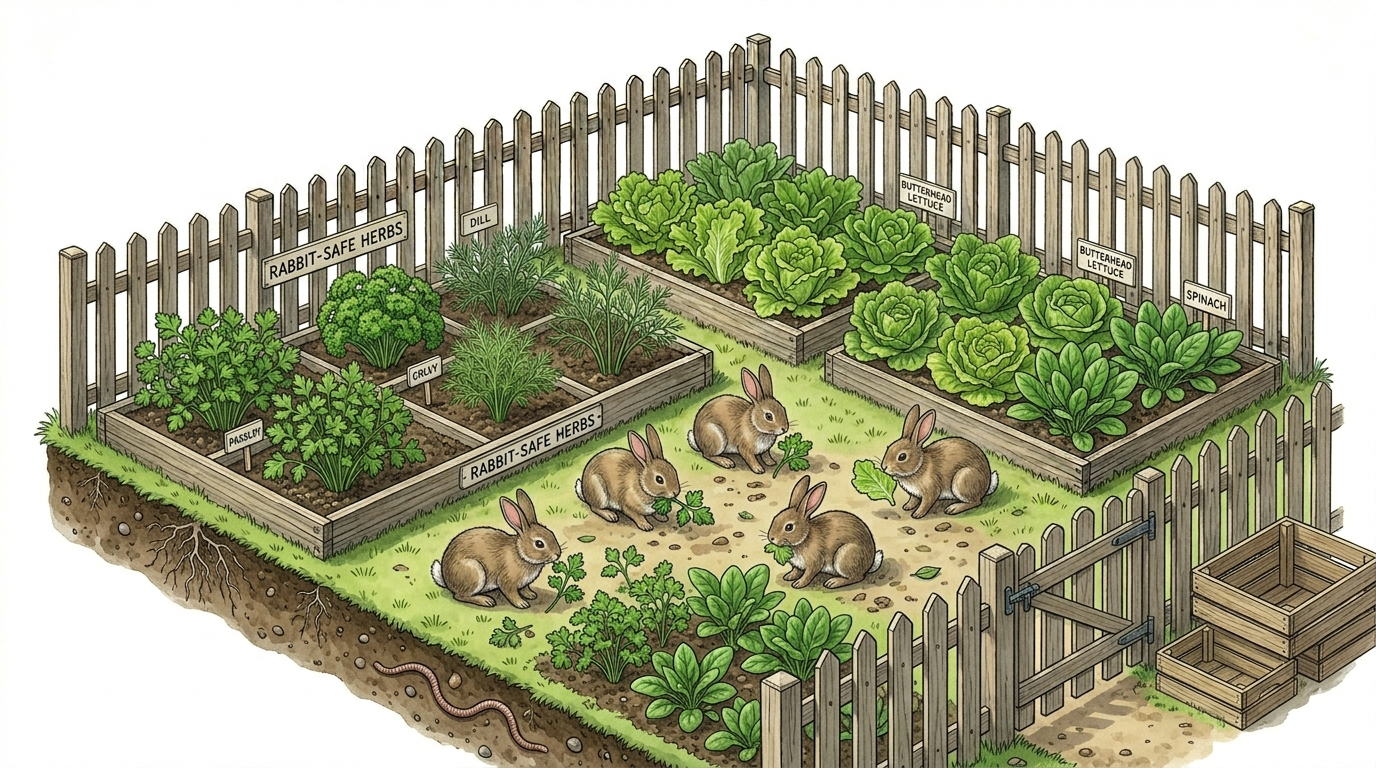
Rabbits in the Garden: Herbs and Vegetables
Learn how to choose suitable herbs and vegetables for rabbits, grow feeding plants, and plan a rabbit-friendly garden.
Guide
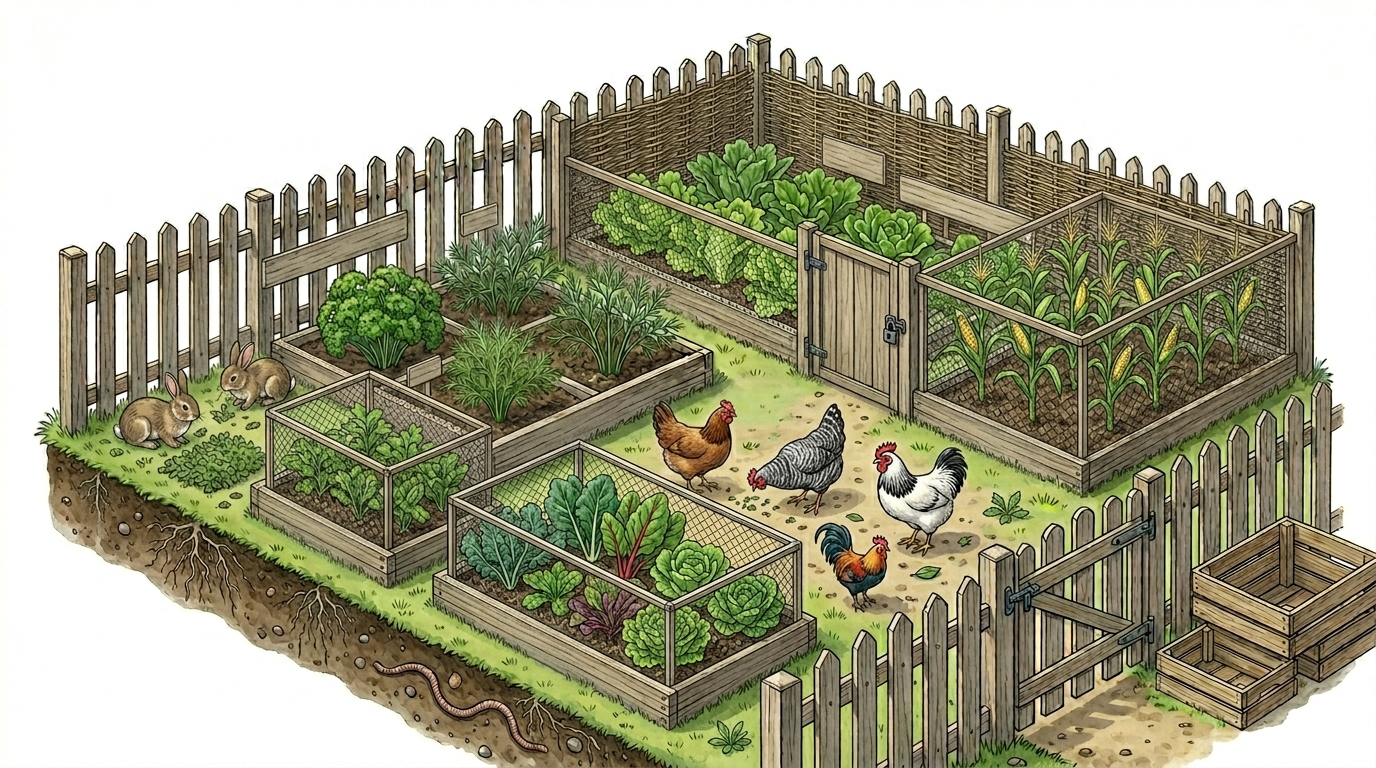
Chickens in the Garden: Safe Plants and Zones
Learn how to design a chicken-friendly garden with suitable plants, protected beds, and well-planned activity areas.
Guide
Horse Pastures and Garden Plants: Safety Checks
Learn how to identify risks near horse pastures, fences, turnout areas, fruit trees, and garden planting zones.
Guide
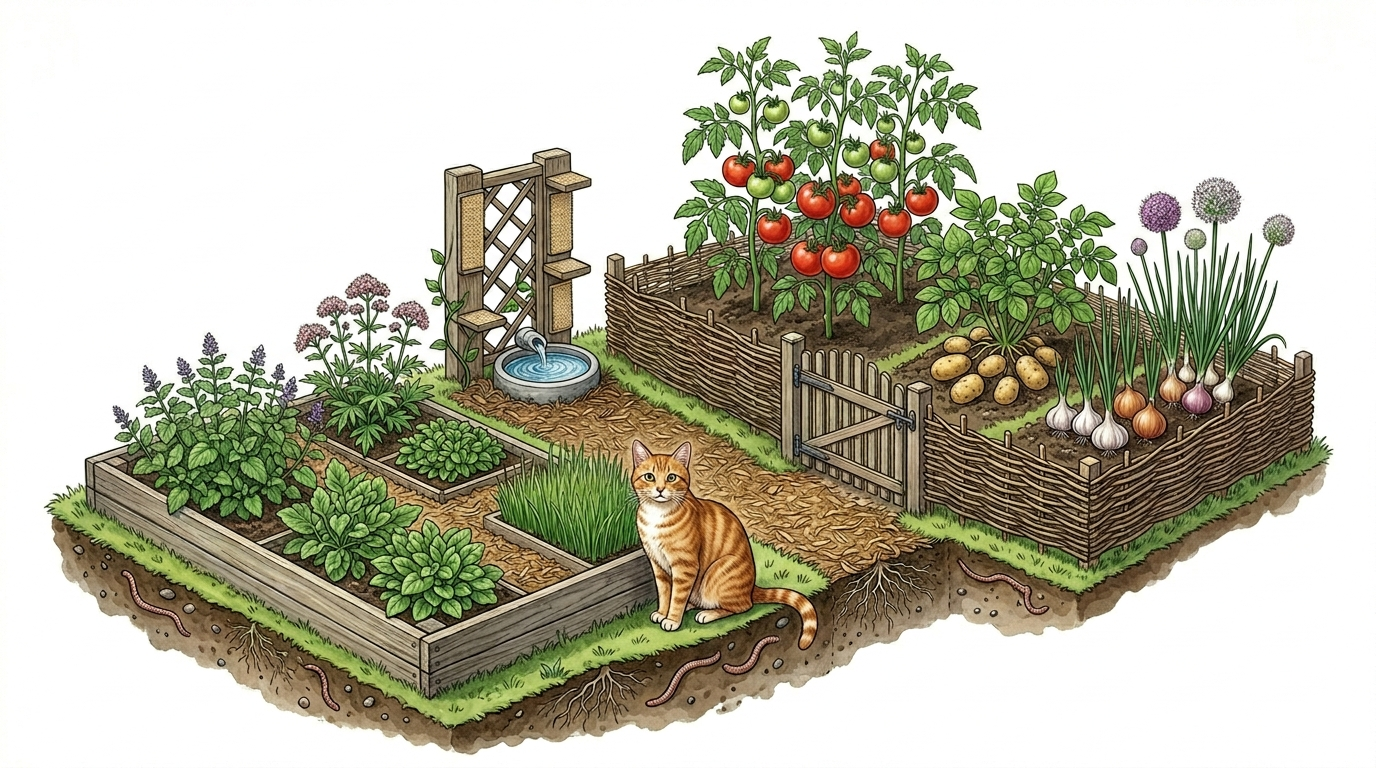
Toxic Garden Plants for Cats: Safer Planning
Learn which garden plants can be risky for cats, how to plan safer beds, and what to do if a cat eats a toxic plant.
Internal links
Related plants
Cultivated Apple
Both belong to the Rose family (Rosaceae).
Garden Strawberry
Both belong to the Rose family (Rosaceae).
Raspberry
Both are native wild fruit varieties valued for their fruits.
Black Elderberry
Both are native shrubs whose fruits are processed.
Plum
Shares diseases like Monilia (fruit rot) and mildew.
Belongs to the same genus (Prunus) and family (Rosaceae), shares similar growing conditions and disease susceptibilities.
Blackcurrant
Both are rather undemanding and do not require intensive fertilization.
Both fruits are used for making jams, juices, and liqueurs and have an intense flavor.
Rugosa Rose
Both are drought-tolerant and do not tolerate waterlogging.
Cherry Plum
Belongs to the same genus (Prunus) and family (Rosaceae), is an early fruit variety with similar requirements.
Highbush Blueberry
Both are native fruits that are well-suited for jams and as healthy snacks.
Sources
Public sources
- Wikidata entity
Wikidata · 2026-05-15
- GBIF species match
GBIF · 2026-05-15
- Deutschsprachige Wikipedia: Schlehdorn
Wikipedia · 2026-05-15
- English Wikipedia: Prunus spinosa
Wikipedia · 2026-05-15