Plant Profile
Tiger NutCyperus esculentus
Tiger nut is an unusual sedge prized for its nutty-sweet root tubers. In Central Europe, it is mostly cultivated as an annual, as it requires significant warmth to reach its full potential. The plants form dense, grass-like clumps that are ideal for container gardening on sunny balconies.
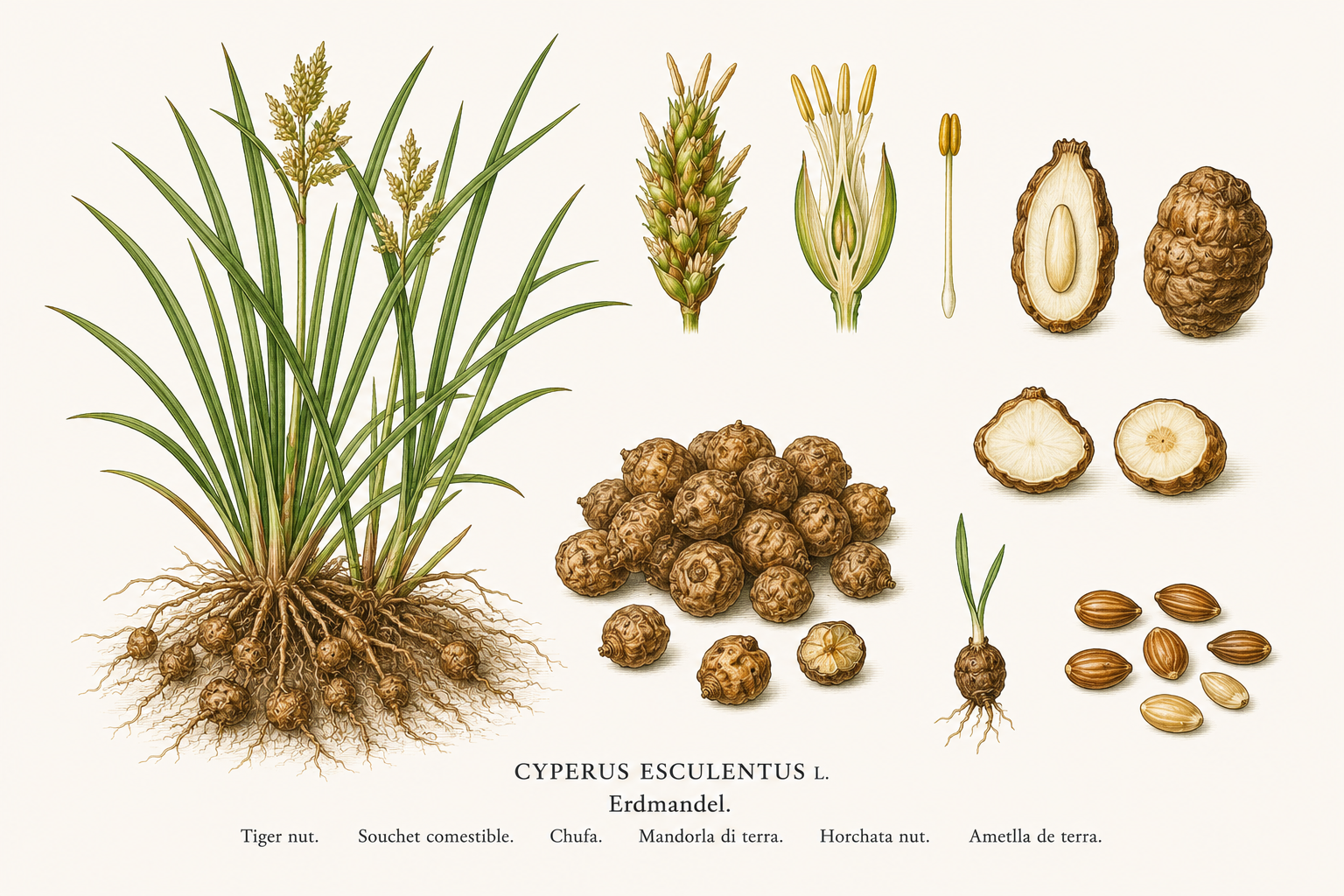
Quick profile
Key data
Suitable growing locations:
Indoor & direct sowing
Tiger Nut: Sowing and germination
Pre-cultivation in pots accelerates the development of heat-loving tubers.
Direct sowing only after the last frost once the soil has warmed up sufficiently.
Planting & site
Tiger Nut: Planting and spacing
Planting out pre-cultivated seedlings mid to late May.
Site & practical notes
Title: Harvest Tip, Text: Use a fine-mesh sieve to sift the small tubers out of the soil.
Temperature & frost
Tiger Nut: Temperature and site
Water & nutrients
Tiger Nut: Water, nutrients and care
Container & growth
Tiger Nut: Container, support and growth
Year plan
Tiger Nut Calendar
Recurring tasks
Relevant now
June
- No additional single task
Next up
July
- No additional single task
Monthly tasks
Single tasks from monthly data; repeated seasonal windows are shown in the overview above.
January
Quiet month
February
Quiet month
March
No additional single task
April
No additional single task
May
Planting
- Planting outMaintain a spacing of 30 cm.
June
No additional single task
August
Quiet month
September
Quiet month
October
No additional single task
November
No additional single task
December
Quiet month
Flowering & pollination
Tiger Nut Flowering & pollination
Flowering period
Months: 7, 8, 9, Notes: Rarely flowers in cooler regions; propagation occurs primarily vegetatively via tubers.
Self-fertility
self-fertile
Pollinator needed
no
Overview
Wind-pollinated, though this plays a minor role in gardening as the harvest focuses on tubers.
Notes
The plant does not rely on insects for pollination.
Pruning & care
Tiger Nut Pruning & care
Pruning type
herbaceous_management
Pruning timing
Harvest preparation Only remove foliage once it has completely withered to ensure maximum nutrient storage in the tubers.
Remove
Preserve
Green, active foliage for photosynthesis and tuber formation
Avoid
Tools and hygiene
Use clean pruning shears for removing residual foliage to prevent disease transmission.
Companion guide
Tiger Nut Companion guide
Use & storage
Tiger Nut Use & storage
Harvest when the foliage withers and turns brown.
Storage
Dry storage
Storage life
Up to 2 years when dried.
Flavor
Sweet, nutty, reminiscent of almonds or hazelnuts.
Harvest
Harvest when the foliage withers and turns brown.
Processing
After harvest
Wash tubers thoroughly, remove root remains, and dry in an airy spot until they become hard.
Edibility & safety
Tiger Nut Edibility & safety
For people
In brief: which parts are edible, which parts remain risky, and whether raw consumption makes sense.
Safety notes
No known toxicity; safe for human consumption.
Animal safety
For many animals, this plant is generally low-risk: 14 animal types are rated suitable or mostly suitable. Quantity, plant part, and individual tolerance still matter.
Each row shows which parts are more suitable and which parts are critical.
Companion animals
 Dog
DogUnderground tubers
Green foliage (very fibrous and sharp-edged)
Underground tubers
Green foliage (very fibrous and sharp-edged)
Excessive consumption of tubers may cause digestive issues due to high fiber content. The foliage is difficult to digest and may cause mechanical irritation.
Gastrointestinal upset with excessive consumption
observe
The underground tubers of tiger nut (Cyperus esculentus) are edible for dogs and are sometimes used as a treat. Due to their high fiber content, they should only be fed in small amounts. The green foliage is very fibrous and sharp-edged and should not be consumed, as it may cause gastrointestinal irritation.
Open animal page Cat
CatUnderground tubers
Green foliage (very fibrous and sharp-edged)
Underground tubers
Green foliage (very fibrous and sharp-edged)
Excessive consumption of tubers may cause digestive issues due to high fiber content. The foliage is difficult to digest and may cause mechanical irritation.
Vomiting, Gastrointestinal upset
observe
The underground tubers of tiger nut are safe for cats in small amounts as a treat and are sometimes used as a supplemental feed due to their nutrient content. The green foliage is very fibrous, sharp-edged, and not suitable for consumption; it may cause gastrointestinal irritation. Overfeeding the tubers should be avoided due to their high fiber content.
Open animal page Rabbit
Underground tubers
Green foliage (very fibrous and sharp-edged)
Underground tubers
Green foliage (very fibrous and sharp-edged)
Excessive consumption of fibrous foliage may cause digestive issues.
Gastrointestinal upset from excessive foliage consumption
observe
The underground tubers of tiger nut are edible for rabbits and are occasionally fed as a treat. The green foliage is very fibrous and sharp-edged, and excessive consumption may cause gastrointestinal upset. No known toxic compounds.
Open animal page Guinea pig
Underground tubers
Green foliage (very fibrous and sharp-edged)
Underground tubers
Green foliage (very fibrous and sharp-edged)
Overconsumption may cause digestive upset due to high fiber content., Sharp foliage may cause mechanical injury if ingested.
observe
The underground tubers of tiger nut (Cyperus esculentus) are suitable for guinea pigs in small amounts as a treat and are not known to be toxic. The green foliage is very fibrous, sharp-edged, and not recommended for consumption.
Open animal page Hamster
Underground tubers
Green foliage (very fibrous and sharp-edged)
Underground tubers
Green foliage (very fibrous and sharp-edged)
High fiber content may cause digestive issues if overconsumed.
Gastrointestinal upset with excessive consumption
 Budgie
Underground tubers
Green foliage (very fibrous and sharp-edged)
Underground tubers
Green foliage (very fibrous and sharp-edged)
High fiber content may cause digestive issues in small birds.
Gastrointestinal upset with excessive consumption
observe
The underground tubers of tiger nut are suitable for budgies in small amounts as a treat. The green foliage is very fibrous and sharp-edged and should be avoided, as it may cause obstructions or gastrointestinal irritation. Due to high fiber content, feeding should be limited.
Open animal pageFarm animals
 Horse
HorseUnderground tubers
Green foliage (very fibrous and sharp-edged)
Underground tubers
Green foliage (very fibrous and sharp-edged)
Overconsumption may cause digestive discomfort due to high fiber content., The foliage is difficult to digest and may cause mechanical irritation.
observe
The underground tubers of tiger nut are edible for horses and are occasionally used as a treat. The green foliage is very fibrous and sharp-edged, posing a mechanical hazard but no known chemical toxicity. Due to high fiber content, feeding should be limited.
Open animal page Chicken
Underground tubers
Green foliage (very fibrous and sharp-edged)
Underground tubers
Green foliage (very fibrous and sharp-edged)
High fiber content may cause digestive issues with excessive consumption., Sharp-edged leaves can cause injury to beak or digestive tract.
Gastrointestinal upset with excessive consumption
observe
The underground tubers of tiger nut are suitable for chickens in moderation as a treat, providing energy and some nutrients. The green foliage is very fibrous, sharp-edged, and not suitable for consumption - it can cause injury and should be avoided. Due to high fiber content, feeding should be limited to avoid digestive issues. No known toxic compounds in the tubers.
Open animal page Duck
DuckUnderground tubers
Green foliage (very fibrous and sharp-edged)
Underground tubers
Green foliage (very fibrous and sharp-edged)
Excessive consumption of fibrous foliage may cause digestive issues.
Gastrointestinal upset from excessive foliage consumption
observe
The underground tubers of tiger nut (Cyperus esculentus) are edible for ducks and are occasionally fed as a treat. The green foliage is very fibrous and sharp-edged, which may cause gastrointestinal upset if consumed in excess, but contains no known toxic compounds. Ducks should only be given the tubers in moderation, not the foliage. If foliage is consumed, observe and contact a veterinarian if symptoms persist.
Open animal page Goose
GooseUnderground tubers
Green foliage (very fibrous and sharp-edged)
Underground tubers
Green foliage (very fibrous and sharp-edged)
Excessive consumption of fibrous foliage may cause digestive issues.
Gastrointestinal upset from excessive foliage ingestion
 Sheep
SheepUnderground tubers
Green foliage (very fibrous and sharp-edged)
Underground tubers
Green foliage (very fibrous and sharp-edged)
Excessive consumption of fibrous foliage may cause digestive issues.
Gastrointestinal upset from excessive foliage consumption
observe
The underground tubers of tiger nut (Cyperus esculentus) are edible for sheep and are occasionally used as a nutritious snack. The green foliage is very fibrous and sharp-edged, which may cause gastrointestinal upset if consumed excessively. No known toxic compounds.
Open animal page Goat
GoatUnderground tubers
Green foliage (very fibrous and sharp-edged)
Underground tubers
Green foliage (very fibrous and sharp-edged)
Excessive consumption of fibrous foliage may cause digestive issues.
Gastrointestinal upset from excessive foliage consumption
observe
No direct species-specific source was found for goats. This is a cautious inference from the sheep profile and the known plant-part risks.
Open animal page Cattle
Underground tubers
Green foliage (very fibrous and sharp-edged)
Underground tubers
Green foliage (very fibrous and sharp-edged)
Excessive consumption of tubers may cause digestive issues due to high fiber and fat content., The foliage is difficult to digest and may cause mechanical irritation.
observe
No reliable species-specific assessment is available. Classification is based on general knowledge of the fibrous and sharp-edged nature of the foliage and the high fiber content of the tubers, which can cause digestive issues if overconsumed.
Open animal page Pig
PigUnderground tubers
Green foliage (very fibrous and sharp-edged)
Underground tubers
Green foliage (very fibrous and sharp-edged)
High fiber content in foliage may cause digestive issues.
Gastrointestinal upset from excessive foliage consumption
observe
The underground tubers of tiger nut are edible for pigs and are sometimes used as an energy source. The green foliage is very fibrous and sharp-edged, which can cause gastrointestinal upset if consumed. No known toxic compounds.
Open animal pageThese guidelines are for general information only and do not replace veterinary diagnosis. If critical plant parts were ingested or the animal shows unusual behaviour or symptoms, seek veterinary advice.
Max risk
unknown
Highest status
moderation only
Urgency
observe
Saving seed
Tiger Nut Saving seed
Seed viability
2 - 5 years
Practical tips
Tiger Nut Practical tips
Common beginner mistakes
Planting out too early before the last frost.
Success pattern
Plenty of sun and regular watering in late summer guarantee a rich harvest.
High-impact tips
Soak tubers for 24 hours before planting.
Health
Pests, Diseases
Plant health
Diagnosis help
Tiger Nut Diagnosis help
Pest groups
Rodents
Disease groups
Fungal diseases (if too wet)
Prevention
Diagnosis
Wilting leaves despite moist soil often indicate root problems or pests attacking the tubers.
Cultural prevention
Monitoring
Check for vole tunnels from August onwards
First response
Diagnostic rules
Yellow leaf tips
Possible causes: Waterlogging, Nutrient deficiency
- Check soil moisture
- Review fertilization
FAQ
Are tiger nuts hardy in Germany?
Usually not. The foliage dies back with the first frost. Tubers may survive in mild areas but are typically replanted annually.
Is Tiger Nut safe for Dog?
Tiger Nut is classified as moderation only for Dog. Risk: unknown. Urgency: observe. The underground tubers of tiger nut (Cyperus esculentus) are edible for dogs and are sometimes used as a treat. Due to their high fiber content, they should only be fed in small amounts. The green foliage is very fibrous and sharp-edged and should not be consumed, as it may cause gastrointestinal irritation.
Is Tiger Nut safe for Cat?
Tiger Nut is classified as moderation only for Cat. Risk: unknown. Urgency: observe. The underground tubers of tiger nut are safe for cats in small amounts as a treat and are sometimes used as a supplemental feed due to their nutrient content. The green foliage is very fibrous, sharp-edged, and not suitable for consumption; it may cause gastrointestinal irritation. Overfeeding the tubers should be avoided due to their high fiber content.
Is Tiger Nut safe for Rabbit?
Tiger Nut is classified as moderation only for Rabbit. Risk: unknown. Urgency: observe. The underground tubers of tiger nut are edible for rabbits and are occasionally fed as a treat. The green foliage is very fibrous and sharp-edged, and excessive consumption may cause gastrointestinal upset. No known toxic compounds.
Is Tiger Nut safe for Guinea pig?
Tiger Nut is classified as moderation only for Guinea pig. Risk: unknown. Urgency: observe. The underground tubers of tiger nut (Cyperus esculentus) are suitable for guinea pigs in small amounts as a treat and are not known to be toxic. The green foliage is very fibrous, sharp-edged, and not recommended for consumption.
Guides
Related guides
Guide
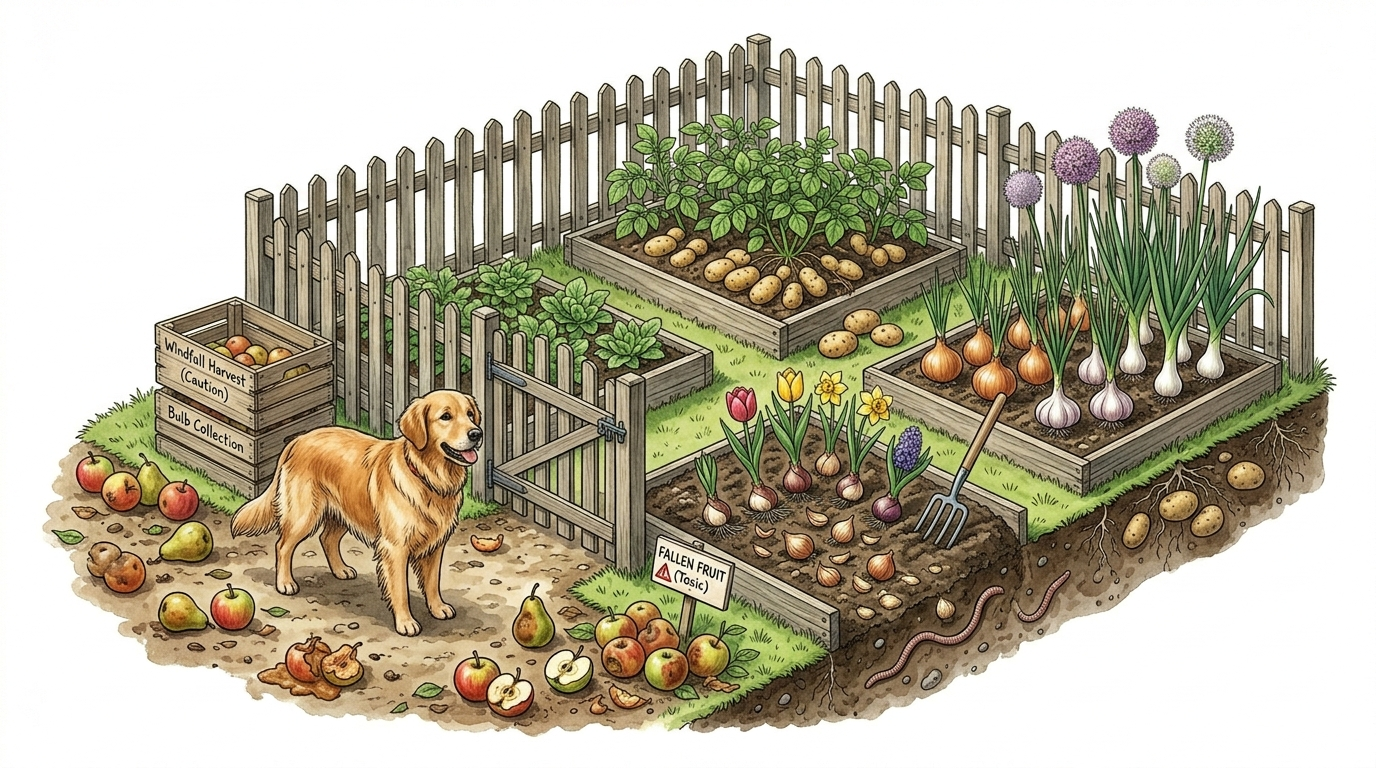
Dogs in the Garden: Windfall Fruit and Risks
Keep your garden dog-safe by managing windfall fruit, seeds, stored crops, and potentially problematic plant parts.
Guide
Horse Pastures and Garden Plants: Safety Checks
Learn how to identify risks near horse pastures, fences, turnout areas, fruit trees, and garden planting zones.
Guide
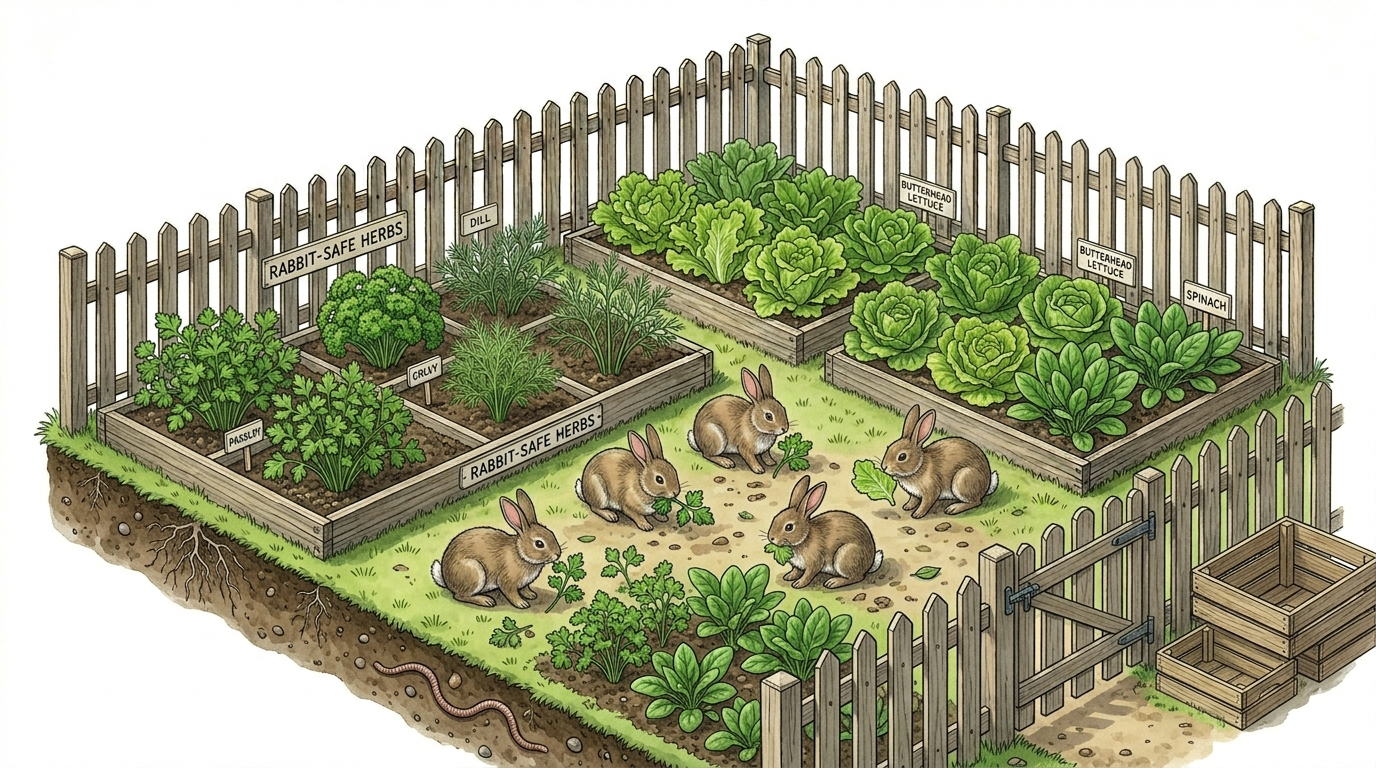
Rabbits in the Garden: Herbs and Vegetables
Learn how to choose suitable herbs and vegetables for rabbits, grow feeding plants, and plan a rabbit-friendly garden.
Guide
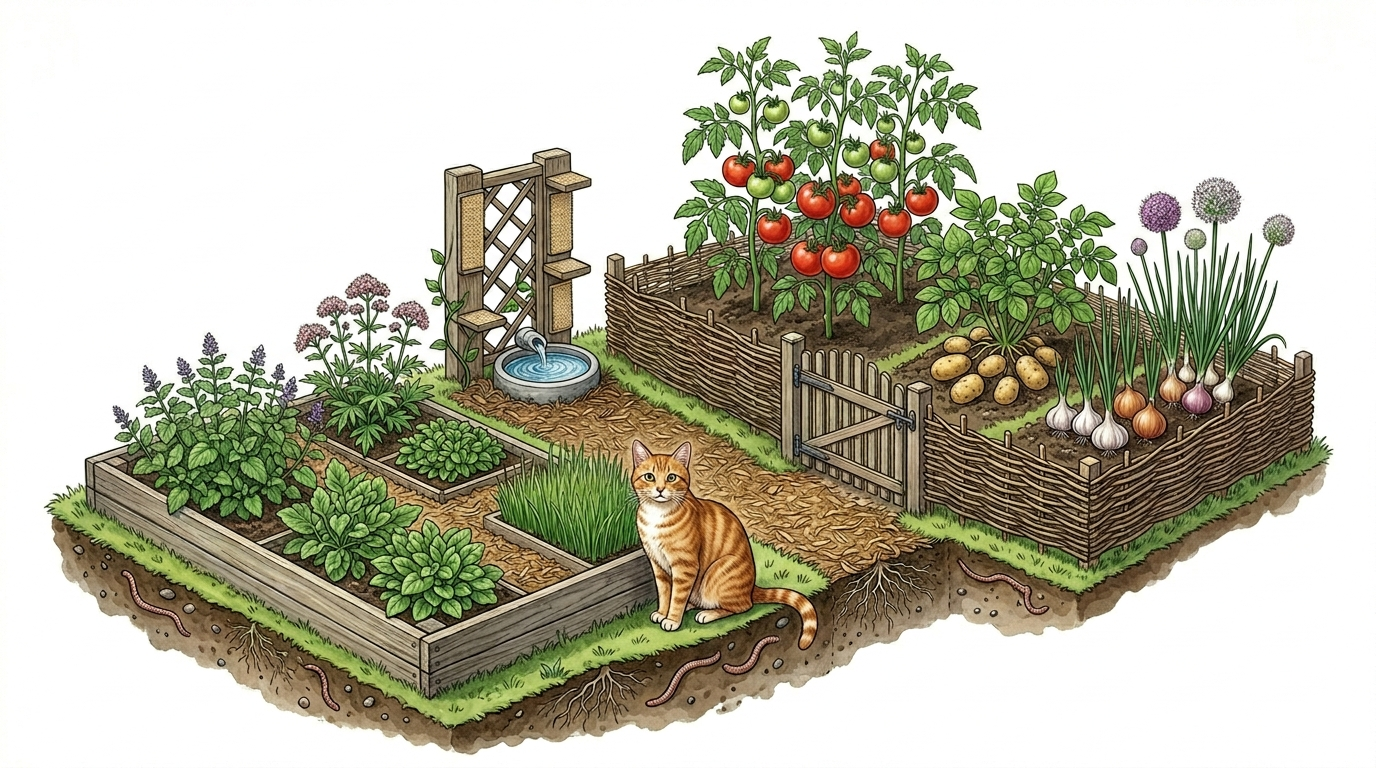
Toxic Garden Plants for Cats: Safer Planning
Learn which garden plants can be risky for cats, how to plan safer beds, and what to do if a cat eats a toxic plant.
Internal links
Related plants
Purple nutsedge
Closely related but often considered a weed.
Jerusalem artichoke
Both form edible root tubers.
Papyrus
Belongs to the same genus Cyperus.
Water chestnut
Also an edible member of the sedge family.
Almond
Similar flavor profile and use in milk alternatives.
peanut
Similar name but completely different plant family (legumes).
Sources
Public sources
- Wikidata entity
Wikidata · 2026-05-13
- GBIF species match
GBIF · 2026-05-13
- Deutschsprachige Wikipedia: Erdmandel
Wikipedia · 2026-05-13
- English Wikipedia: Cyperus esculentus
Wikipedia · 2026-05-13