Plant Profile
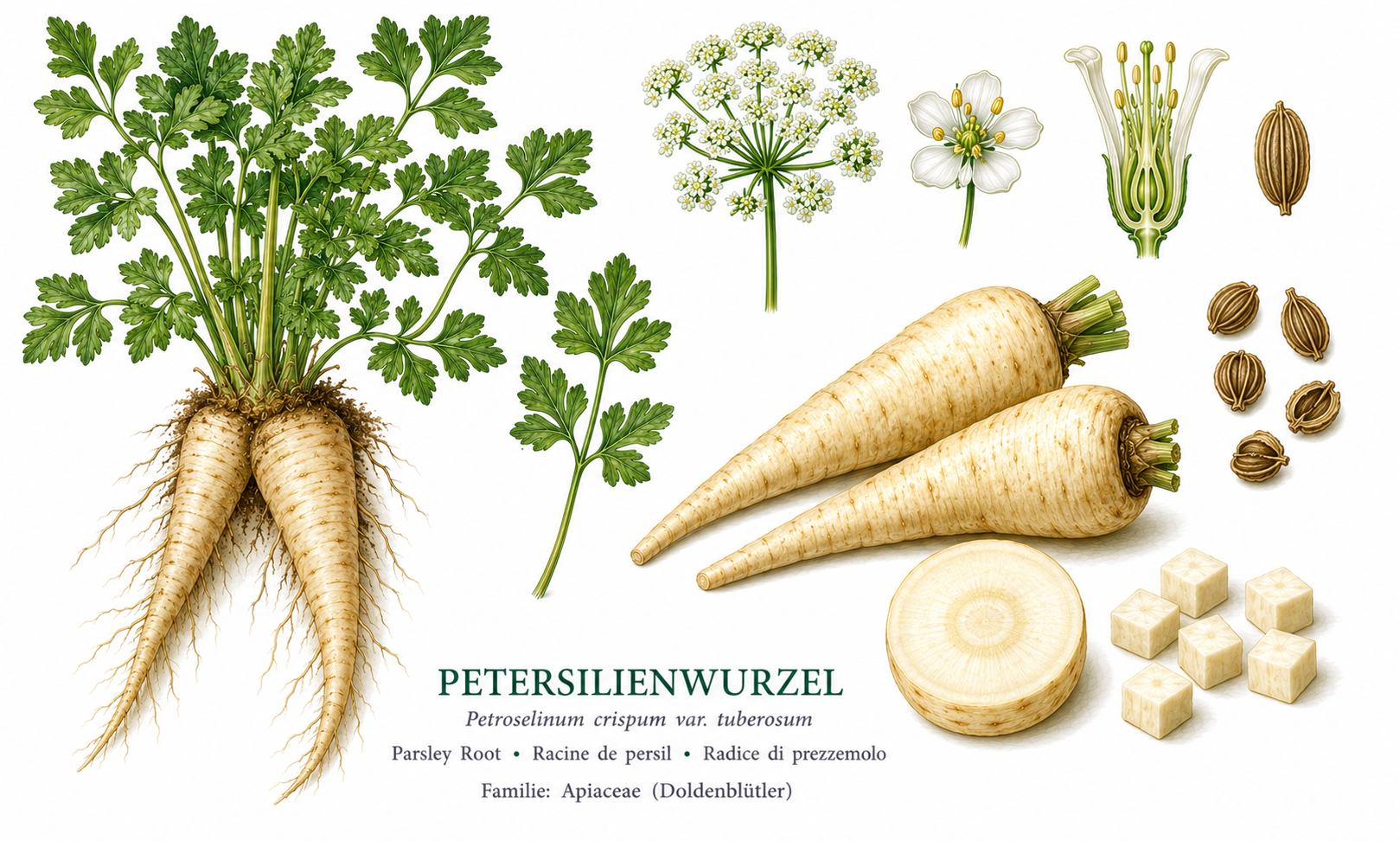
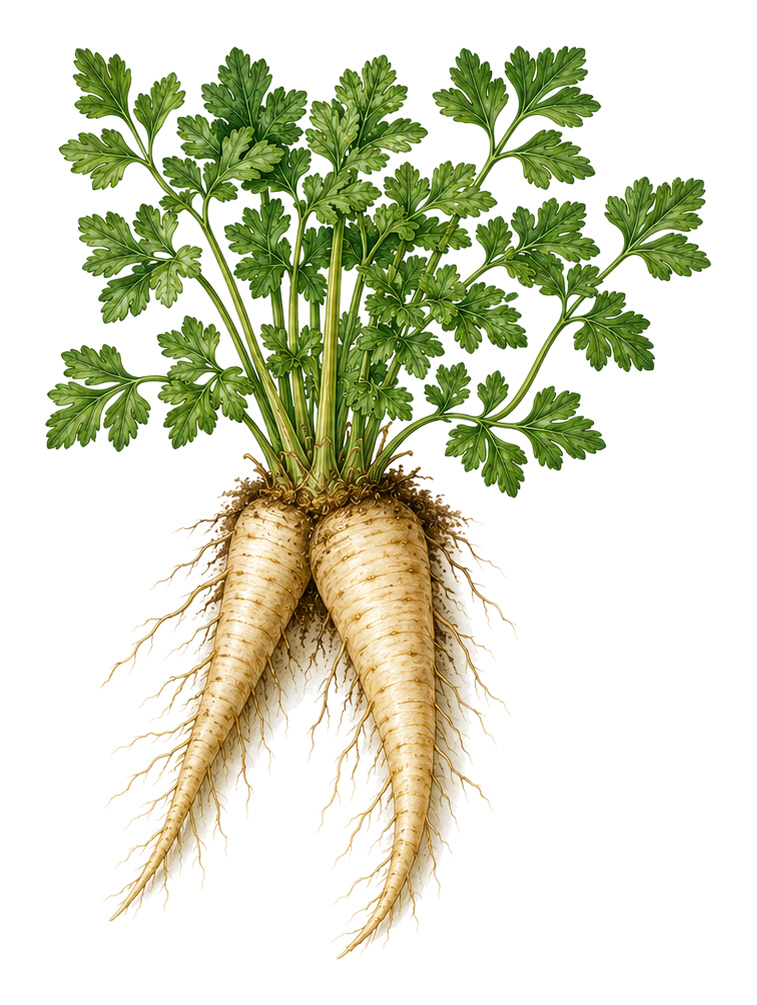
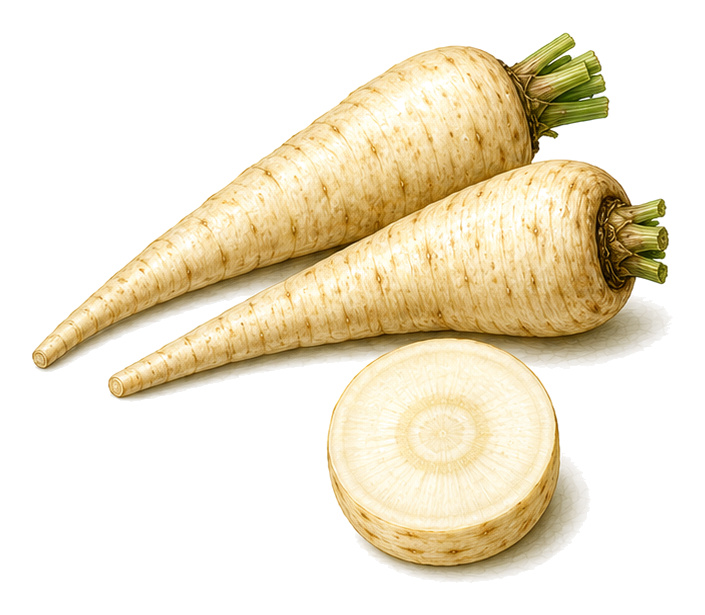
Root ParsleyPetroselinum crispum subsp. tuberosum
Biennial root plant with intense aroma and high storage capacity.
Quick profile
Key data
Suitable growing locations:
Indoor & direct sowing
Root Parsley: Sowing and germination
Pre-culture unusual as taproots do not tolerate transplanting well.
Early sowing possible from March as soon as the soil is workable.
Planting & site
Root Parsley: Planting and spacing
Direct sowing is strongly recommended.
Site & practical notes
Germination tip: Patience is key: Germination can take up to 4 weeks. Keep soil consistently moist., Soil prep: Loosen the soil deeply and remove stones to encourage straight, long roots.
Temperature & frost
Root Parsley: Temperature and site
Water & nutrients
Root Parsley: Water, nutrients and care
Container & growth
Root Parsley: Container, support and growth
Year plan
Root Parsley Calendar
When the first frosts arrive, the flavor of the roots becomes even more intense.
Recurring tasks
Relevant now
June
- No additional single task
Next up
July
- No additional single task
Monthly tasks
Single tasks from monthly data; repeated seasonal windows are shown in the overview above.
January
Quiet month
February
Quiet month
March
Quiet month
April
Quiet month
May
No additional single task
June
Quiet month
August
Quiet month
September
No additional single task
October
No additional single task
November
No additional single task
December
No additional single task
Flowering & pollination
Root Parsley Flowering & pollination
Flowering period
Months: 6, 7, Notes: Flowering occurs only if the roots overwinter in the ground.
Self-fertility
partial
Pollinator needed
yes
Overview
Cross-pollination by insects such as hoverflies and wild bees.
Notes
The flowers are an excellent food source for beneficial insects.
Pruning & care
Root Parsley Pruning & care
Pruning timing
Crop maintenance Only remove dead leaves to prevent disease.
Remove
Preserve
Avoid
Tools and hygiene
Use clean knives to avoid pathogens at the root collar.
Companion guide
Root Parsley Companion guide
Use & storage
Root Parsley Use & storage
Main harvest in late autumn; can remain in the ground over winter if soil is not frozen.
Storage
Winter storage vegetable
Storage life
Very good storage life under cool, moist conditions (0-1°C, 95% RH).
Primary use
Soup greens and seasoning root
Harvest
Main harvest in late autumn; can remain in the ground over winter if soil is not frozen.
Processing
After harvest
Trim foliage to 2-3 cm, do not wash if long-term storage is planned.
Edibility & safety
Root Parsley Edibility & safety
For people
In brief: which parts are edible, which parts remain risky, and whether raw consumption makes sense.
Safety notes
Contains apiol; levels increase significantly during flowering, which can be harmful in large quantities (especially during pregnancy).
Animal safety
For many animals, this plant is generally low-risk: 14 animal types are rated suitable or mostly suitable. Quantity, plant part, and individual tolerance still matter.
Each row shows which parts are more suitable and which parts are critical.
Companion animals
 Dog
DogRoot, Leaves
Flowering plants in the second year (increased apiol content), Seeds (in larger amounts)
Root, Leaves
Flowering plants in the second year (increased apiol content), Seeds (in larger amounts)
Excessive consumption, Consumption of flowering plants, Consumption of seeds
Gastrointestinal upset (with excessive consumption), Vomiting
observe
The root and leaves are safe in moderation for dogs and are used as food. Large quantities, especially of flowering plants or seeds, may have adverse effects due to apiol and myristicin content, such as gastrointestinal upset and vomiting.
Open animal page Cat
CatRoot, Leaves
Flowering plants in the second year (increased apiol content), Seeds (in larger amounts)
Root, Leaves
Flowering plants in the second year (increased apiol content), Seeds (in larger amounts)
Excessive consumption, Consumption of flowering plants, Consumption of seeds
Gastrointestinal upset (with excessive consumption), Vomiting
observe
The root and leaves of root parsley are generally safe for cats when fed in small amounts. Large quantities or flowering plants can be problematic due to apiol and myristicin content, causing gastrointestinal upset and vomiting.
Open animal page Rabbit
Root, Leaves
Flowering plants in the second year (increased apiol content), Seeds (in larger amounts)
Root, Leaves
Flowering plants in the second year (increased apiol content), Seeds (in larger amounts)
Excessive consumption, Consumption of flowering plants, Consumption of seeds
Gastrointestinal upset with excessive consumption
observe
The root and leaves of root parsley are safe for rabbits in moderation and can be offered as a dietary supplement. Consumption of flowering plants in their second year and larger amounts of seeds should be avoided as apiol and myristicin content is higher and can lead to health issues. Excessive consumption may cause gastrointestinal upset.
Open animal page Guinea pig
Root, Leaves
Seeds (in larger amounts), Flowering plants in the second year
Root, Leaves
Seeds (in larger amounts), Flowering plants in the second year
High apiol content in seeds and flowering plants, Pregnancy, Excessive consumption
Gastrointestinal upset, Nausea
observe
Root parsley is safe for guinea pigs in small amounts, with the root and leaves being suitable for feeding. Seeds and flowering plants should be avoided due to increased apiol and myristicin content. Overconsumption may cause gastrointestinal upset and nausea.
Open animal page Hamster
Root, Leaves
Flowering plants in the second year (increased apiol content), Seeds (in larger amounts)
Root, Leaves
Flowering plants in the second year (increased apiol content), Seeds (in larger amounts)
High apiol content in seeds and flowering plants, Excessive consumption
Gastrointestinal upset
observe
Root parsley can be offered to hamsters in small amounts as a treat, with the root and leaves being suitable. Flowering plants and larger amounts of seeds should be avoided due to increased apiol and myristicin content, which can lead to gastrointestinal upset. A reliable species-specific assessment is not available, so this evaluation is based on toxin information and general plant tolerability.
Open animal page Budgie
Root, Leaves
Flowering plants in the second year (increased apiol content), Seeds (in larger amounts)
Root, Leaves
Flowering plants in the second year (increased apiol content), Seeds (in larger amounts)
Flowering period (higher apiol content), Excessive consumption, Seeds in large amounts
Gastrointestinal upset, Vomiting, Diarrhea
observe
Root parsley is suitable for budgies in small amounts as a treat. The leaves and root are edible and nutritious, while flowering plants and larger amounts of seeds should be avoided due to increased apiol and myristicin content. Excessive consumption may cause gastrointestinal upset, vomiting, and diarrhea. Consult an avian veterinarian if symptoms occur.
Open animal pageFarm animals
 Horse
HorseRoot, Leaves
Flowering plants in the second year (increased apiol content), Seeds (in larger amounts)
Root, Leaves
Flowering plants in the second year (increased apiol content), Seeds (in larger amounts)
High apiol content in flowering plants, Pregnancy, Excessive consumption
Gastrointestinal upset with excessive consumption
observe
Root parsley is safe for horses in normal amounts, with the root and leaves being suitable for feeding. Flowering plants in the second year and larger amounts of seeds contain increased apiol and myristicin levels and should be avoided, particularly in pregnant mares. Excessive consumption may cause gastrointestinal upset.
Open animal page Chicken
Root, Leaves
Flowering plants in the second year (increased apiol content), Seeds (in larger amounts)
Root, Leaves
Flowering plants in the second year (increased apiol content), Seeds (in larger amounts)
High apiol content in seeds and flowering plants, Excessive consumption
Gastrointestinal upset
observe
Root parsley can be offered to chickens in small amounts, with the root and leaves being suitable. Flowering plants and larger amounts of seeds should be avoided due to increased apiol and myristicin content, which can lead to gastrointestinal upset. A reliable species-specific assessment is not available, so this evaluation is based on toxin information and general plant tolerability.
Open animal page Duck
DuckRoot, Leaves
Flowering plants in the second year (increased apiol content), Seeds (in larger amounts)
Root, Leaves
Flowering plants in the second year (increased apiol content), Seeds (in larger amounts)
High apiol content in flowering plants, Overconsumption, Consumption of seeds
Gastrointestinal upset with overconsumption
observe
Root and leaves of root parsley are safe for ducks in moderation. Avoid flowering period and larger amounts of seeds due to increased apiol and myristicin content, which can lead to gastrointestinal upset.
Open animal page Goose
GooseRoot, Leaves
Flowering plants in the second year (increased apiol content), Seeds (in larger amounts)
Root, Leaves
Flowering plants in the second year (increased apiol content), Seeds (in larger amounts)
High apiol content in seeds and flowering plants, Excessive consumption
Gastrointestinal upset
observe
Root parsley can be offered to geese in small amounts, with the root and leaves being suitable. Flowering plants and larger amounts of seeds should be avoided due to increased apiol and myristicin content, which can lead to gastrointestinal upset. A reliable species-specific assessment is not available, so this evaluation is based on toxin information and general plant tolerability.
Open animal page Sheep
SheepRoot, Leaves
Seeds (in large amounts), Flowering plants in second year
Root, Leaves
Seeds (in large amounts), Flowering plants in second year
High apiol content in seeds and flowering plants, Pregnancy in sheep, Excessive consumption
Gastrointestinal upset with excessive seed consumption
observe
Root parsley is safe for sheep in moderation, with the root and leaves being suitable for feeding. Seeds and flowering plants contain elevated apiol and myristicin levels and should be avoided, particularly in pregnant sheep due to potential uterine stimulation. Excessive seed consumption may cause gastrointestinal upset.
Open animal page Goat
GoatRoot, Leaves
Flowering plants in the second year (increased apiol content), Seeds (in larger amounts)
Root, Leaves
Flowering plants in the second year (increased apiol content), Seeds (in larger amounts)
High apiol content in seeds and flowering plants, Pregnancy, Excessive consumption
Gastrointestinal upset
observe
Root parsley is safe for goats in moderation, with the root and leaves being suitable for feeding. Flowering plants and larger amounts of seeds contain elevated apiol and myristicin levels and should be avoided, particularly in pregnant goats. Excessive consumption may cause gastrointestinal upset. A reliable species-specific assessment is not available, so this evaluation is based on toxin information and general…
Open animal page Cattle
Root, Leaves
Flowering plants in the second year (increased apiol content), Seeds (in larger amounts)
Root, Leaves
Flowering plants in the second year (increased apiol content), Seeds (in larger amounts)
High apiol content in seeds and flowering plants, Pregnancy, Excessive consumption
Gastrointestinal upset
observe
Root parsley is safe for cattle in moderation, with the root and leaves being suitable for feeding. Flowering plants and larger amounts of seeds contain elevated apiol and myristicin levels and should be avoided, particularly in pregnant animals. Excessive consumption may cause gastrointestinal upset. A reliable species-specific assessment is not available, so this evaluation is based on toxin information and…
Open animal page Pig
PigRoot
Leaves, Seeds, Flowering plants in the second year
Root
Leaves, Seeds, Flowering plants in the second year
High apiol content in seeds and flowering plants, Pregnancy in sows, Excessive consumption
Gastrointestinal upset, Nausea, Vomiting
observe
The root of root parsley is safe for pigs in small amounts and provides nutritional value. Leaves, seeds, and flowering plants contain higher concentrations of apiol and myristicin, which can cause gastrointestinal upset, nausea, and vomiting if consumed excessively. Pregnant sows should particularly avoid access to flowering plants.
Open animal pageThese guidelines are for general information only and do not replace veterinary diagnosis. If critical plant parts were ingested or the animal shows unusual behaviour or symptoms, seek veterinary advice.
Max risk
unknown
Highest status
moderation only
Urgency
observe
Saving seed
Root Parsley Saving seed
Seed viability
2 - 3 years
Practical tips
Root Parsley Practical tips
Common beginner mistakes
Thinning out too late results in tangled, thin roots.
Success pattern
A loose, sandy-humus bed usually guarantees straight, magnificent roots.
High-impact tips
Soak seeds in lukewarm water overnight before sowing.
Grower observations
In heavy soils, the roots tend to branch significantly.
Plant Profile
Additional plant images
Health
Pests, Diseases
Pests
psila_rosae
Feeding tunnels in the root, reddish discoloration.
Diseases
septoria_petroselini
Small brown spots with black borders on the leaves.
Deficiencies
boron_deficiency
Heart and dry rot, cracked roots.
Plant health
Diagnosis help
Root Parsley Diagnosis help
Pest groups
Disease groups
Prevention
Diagnosis
Always check soil structure and previous fertilization when diagnosing root problems.
Cultural prevention
Monitoring
Yellow sticky traps for carrot fly
First response
Removal of infested plant parts
Diagnostic rules
Leaves yellow and wilt prematurely
Possible causes: Psila rosae, Waterlogging
- Check root for feeding tunnels
- Check soil moisture
FAQ
Why is my root parsley growing so slowly?
The germination phase is very long, up to 30 days. Even after that, it grows slower than leaf parsley as it puts energy into root development.
Can you eat the leaves of root parsley?
Yes, the leaves are edible and taste similar to flat-leaf parsley. However, harvest moderately to avoid weakening the root.
Is Root Parsley safe for Dog?
Root Parsley is classified as moderation only for Dog. Risk: unknown. Urgency: observe. The root and leaves are safe in moderation for dogs and are used as food. Large quantities, especially of flowering plants or seeds, may have adverse effects due to apiol and myristicin content, such as gastrointestinal upset and vomiting.
Is Root Parsley safe for Cat?
Root Parsley is classified as moderation only for Cat. Risk: unknown. Urgency: observe. The root and leaves of root parsley are generally safe for cats when fed in small amounts. Large quantities or flowering plants can be problematic due to apiol and myristicin content, causing gastrointestinal upset and vomiting.
Is Root Parsley safe for Rabbit?
Root Parsley is classified as moderation only for Rabbit. Risk: unknown. Urgency: observe. The root and leaves of root parsley are safe for rabbits in moderation and can be offered as a dietary supplement. Consumption of flowering plants in their second year and larger amounts of seeds should be avoided as apiol and myristicin content is higher and can lead to health issues. Excessive consumption may cause gastrointestinal upset.
Is Root Parsley safe for Guinea pig?
Root Parsley is classified as moderation only for Guinea pig. Risk: unknown. Urgency: observe. Root parsley is safe for guinea pigs in small amounts, with the root and leaves being suitable for feeding. Seeds and flowering plants should be avoided due to increased apiol and myristicin content. Overconsumption may cause gastrointestinal upset and nausea.
Guides
Related guides
Guide
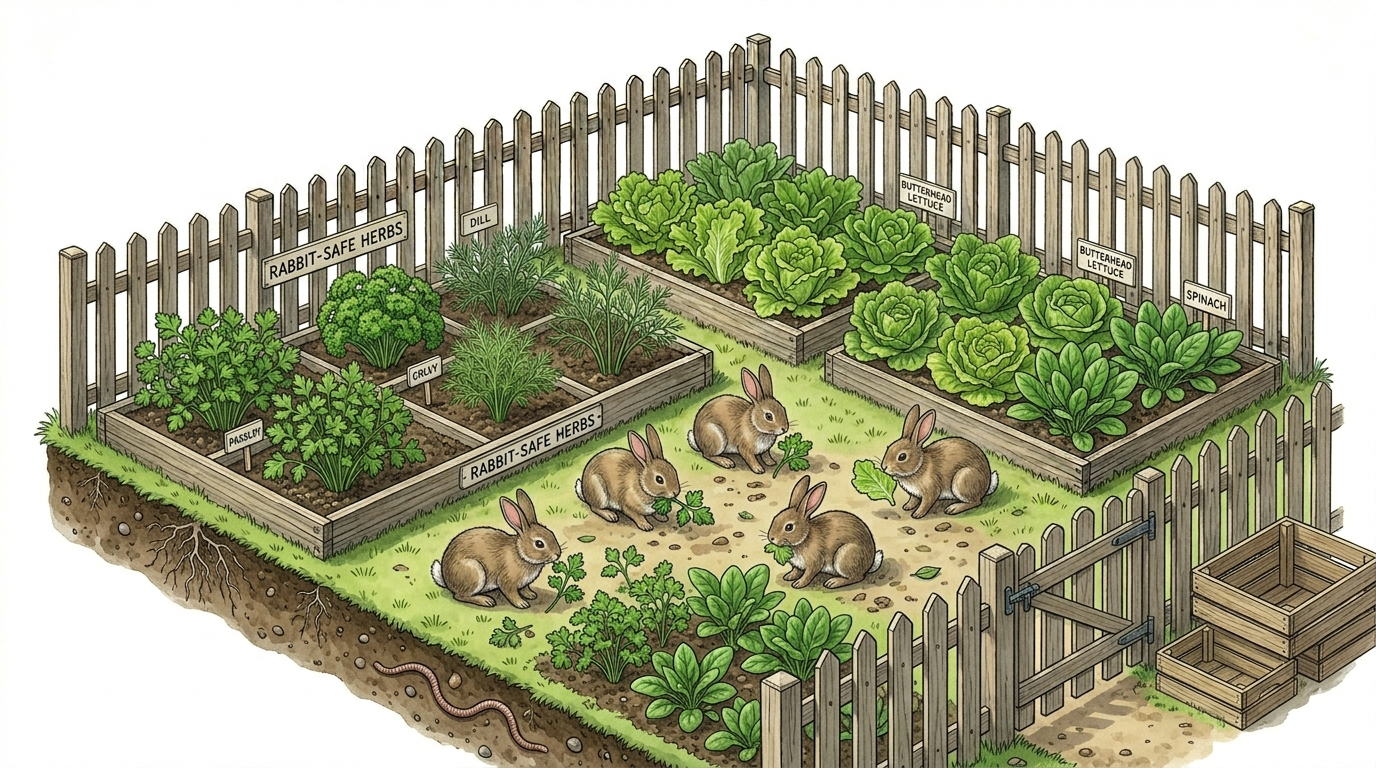
Rabbits in the Garden: Herbs and Vegetables
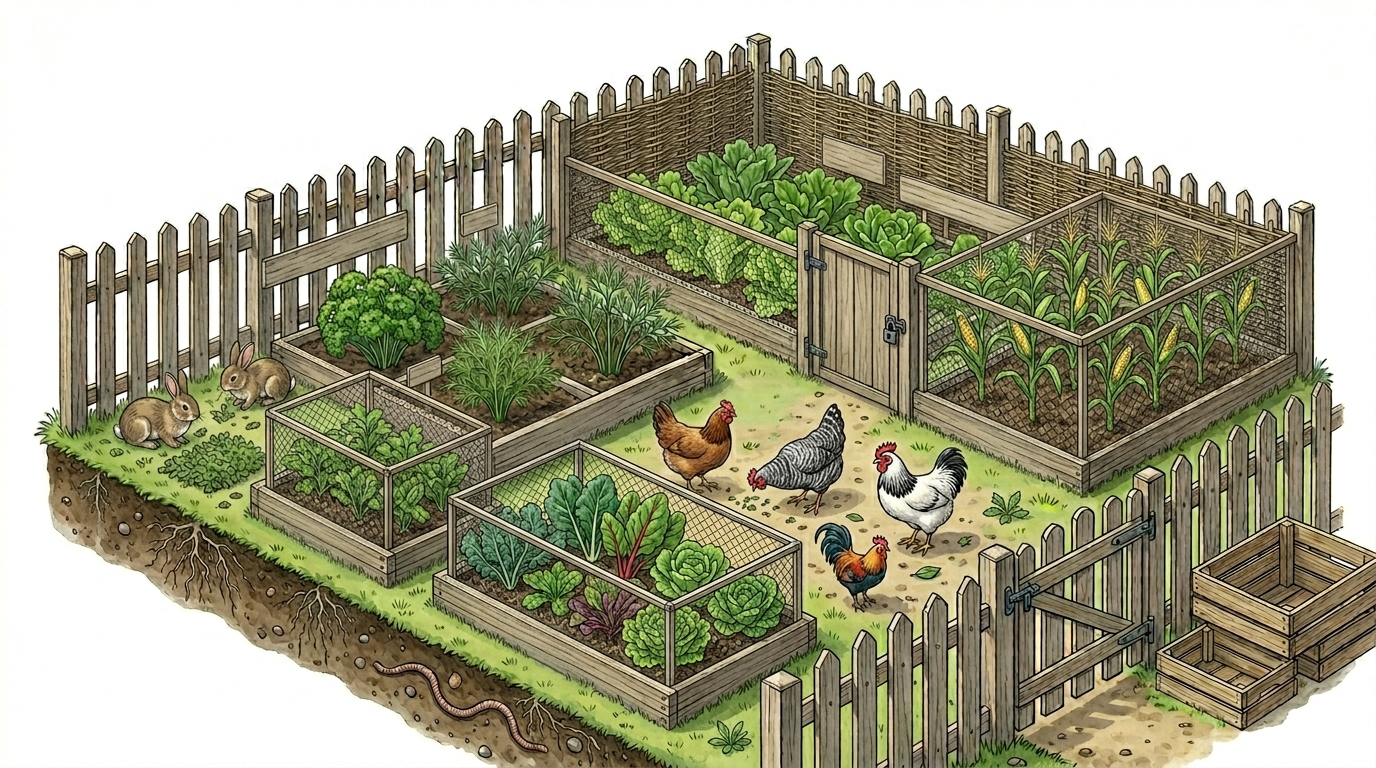
Learn how to choose suitable herbs and vegetables for rabbits, grow feeding plants, and plan a rabbit-friendly garden.
Guide
Chickens in the Garden: Safe Plants and Zones
Learn how to design a chicken-friendly garden with suitable plants, protected beds, and well-planned activity areas.
Guide
Dogs in the Garden: Windfall Fruit and Risks
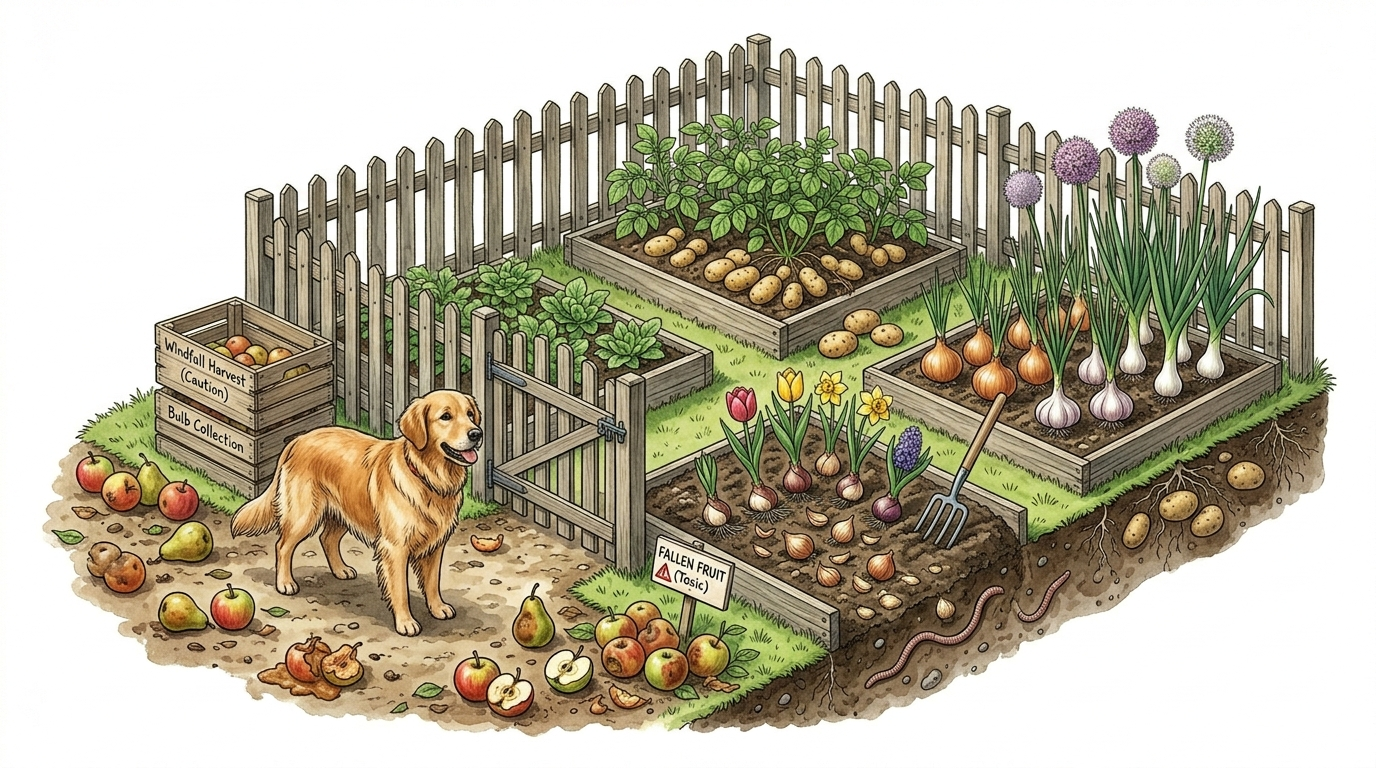
Keep your garden dog-safe by managing windfall fruit, seeds, stored crops, and potentially problematic plant parts.
Guide
Horse Pastures and Garden Plants: Safety Checks
Learn how to identify risks near horse pastures, fences, turnout areas, fruit trees, and garden planting zones.
Internal links
Related plants
Carrot
Related crop with similar soil requirements.
Parsnip
Both are classically used as roasted vegetables or in soups.
Similar root shape; root parsley smells like parsley and has a convex leaf attachment.
Celery
Susceptible to carrot fly and Septoria leaf spot.
Both belong to the Apiaceae family.
Onion
Sources
Public sources
- Wikidata entity
Wikidata · 2026-05-14
- GBIF species match
GBIF · 2026-05-14
- Deutschsprachige Wikipedia: Wurzelpetersilie
Wikipedia · 2026-05-14
- GBIF species match
GBIF · 2026-05-14