Plant Profile
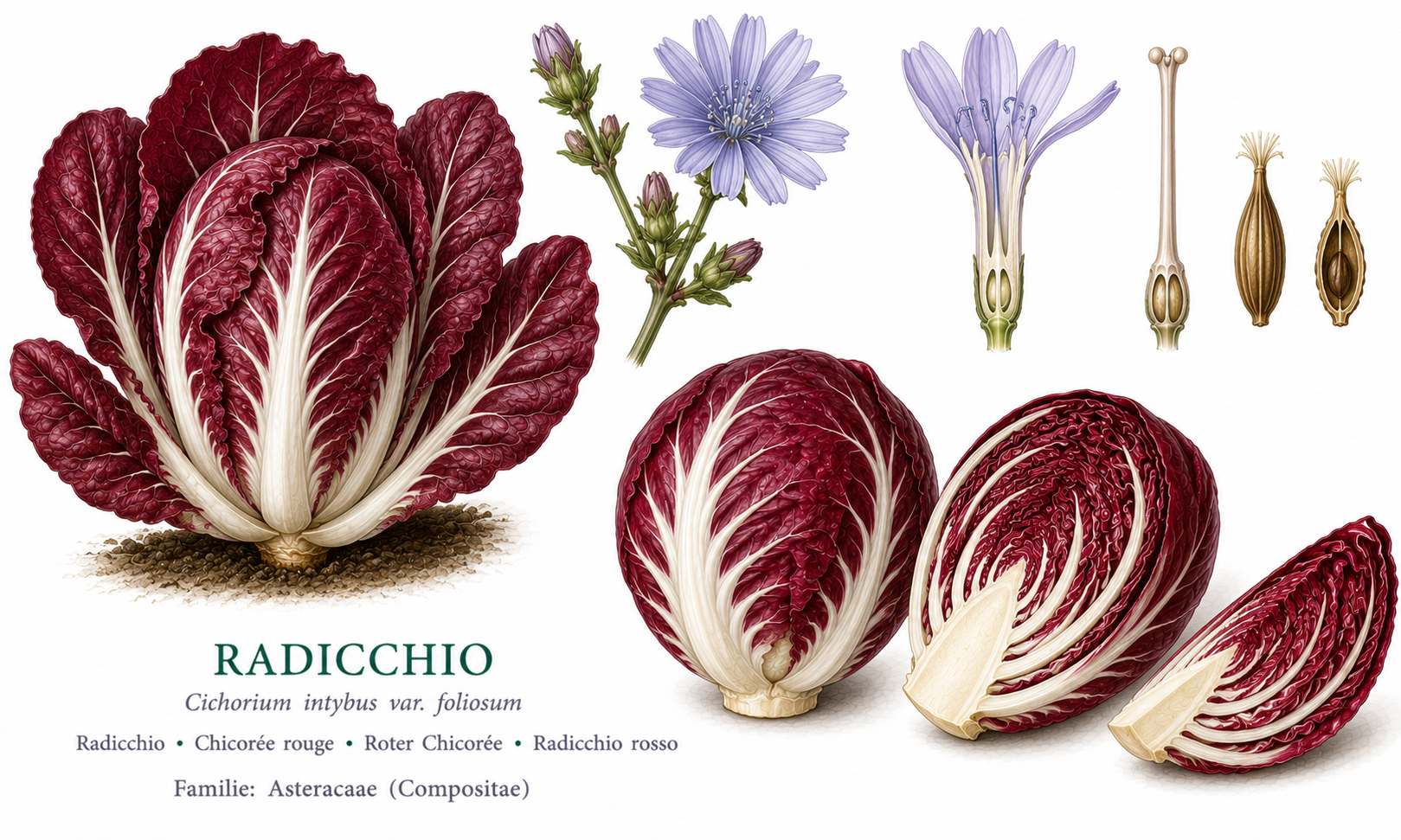
RadicchioCichorium intybus var. foliosum
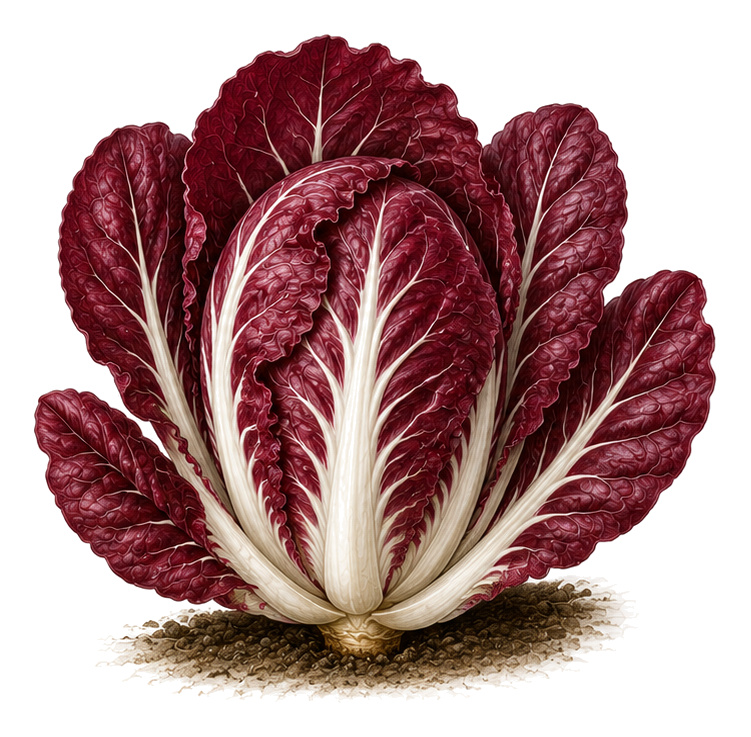
Radicchio is an essential component of Italian cuisine, bringing bold bitterness and vibrant color to the autumn garden. As a member of the chicory family, it is closely related to common chicory and endive. It is particularly valued for its cold tolerance, which allows for harvests deep into the winter months.
Quick profile
Key data
Suitable growing locations:
Indoor & direct sowing
Radicchio: Sowing and germination
Pre-culture possible for early harvests, but be mindful of bolting risk if exposed to cold.
Main sowing period for autumn and winter radicchio from June to July.
Planting & site
Radicchio: Planting and spacing
Transplant with approx. 30 cm spacing; do not plant seedlings too deep.
Site & practical notes
Topic: Bitterkeit, Content: Frost mellows the bitterness. Soaking in lukewarm water during preparation also helps.
Temperature & frost
Radicchio: Temperature and site
Water & nutrients
Radicchio: Water, nutrients and care
Container & growth
Radicchio: Container, support and growth
Year plan
Radicchio Calendar
Recurring tasks
Relevant now
June
- No additional single task
Next up
July
- No additional single task
Monthly tasks
Single tasks from monthly data; repeated seasonal windows are shown in the overview above.
January
No additional single task
February
No additional single task
March
No additional single task
April
No additional single task
May
No additional single task
June
No additional single task
August
No additional single task
September
No additional single task
October
No additional single task
November
No additional single task
December
No additional single task
Flowering & pollination
Radicchio Flowering & pollination
Flowering period
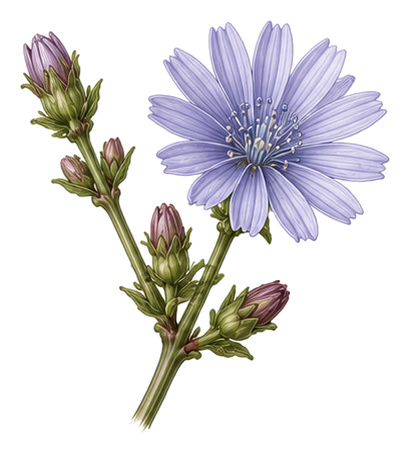
June to August (in the second year)
Flower color
Sky blue
Self-fertility
partial
Pollinator needed
yes
Overview
Pollination is primarily carried out by insects such as bees and hoverflies.
Notes
Cross-pollination by insects significantly increases seed set.
Pruning & care
Radicchio Pruning & care
Pruning type
leaf_thinning
Pruning timing
Crop maintenance and hygiene Regularly check for rot on the lowest leaves, especially during wet weather.
Remove
Preserve
Avoid
Tools and hygiene
Use clean knives to prevent the transmission of Sclerotinia rot.
Companion guide
Radicchio Companion guide
Use & storage
Radicchio Use & storage
Harvest depends on variety; many types tolerate light frosts, which intensifies their color.
Storage
Short to medium-term storage
Storage life
Up to 4 weeks in the refrigerator; longer if stored in a root cellar/clamp.
Harvest
Harvest depends on variety; many types tolerate light frosts, which intensifies their color.
Processing
After harvest
Cut roots just above the soil; remove unsightly outer leaves.
Edibility & safety
Radicchio Edibility & safety
For people
In brief: which parts are edible, which parts remain risky, and whether raw consumption makes sense.
Safety notes
Non-toxic; the bitter substances (intybin) aid digestion.
Animal safety
For many animals, this plant is generally low-risk: 14 animal types are rated suitable or mostly suitable. Quantity, plant part, and individual tolerance still matter.
Each row shows which parts are more suitable and which parts are critical.
Companion animals
 Dog
DogLeaves
No risk parts listed
Leaves
No risk parts listed
Overconsumption may cause gastrointestinal upset due to high fiber and bitter compound content.
Gastrointestinal upset with overfeeding
usually no action needed
Radicchio is safe for dogs in small amounts as a treat. The leaves contain intybin, which may aid digestion, but large quantities can cause gas or diarrhea due to fiber and bitter compounds. The tough core should be removed as it is difficult to digest.
Open animal page Cat
CatLeaves
No risk parts listed
Leaves
No risk parts listed
Overconsumption may cause gastrointestinal upset due to high fiber and bitter compound content.
Gastrointestinal upset with overfeeding
usually no action needed
Radicchio leaves are safe for cats in small amounts and can be offered occasionally as a treat. The bitter compounds (intybin) may aid digestion but are difficult to digest in large quantities.
Open animal page Rabbit
Leaves
No risk parts listed
Leaves
No risk parts listed
High oxalate content may contribute to urinary stone formation with excessive consumption, Sudden diet changes can cause digestive upset
Gastrointestinal upset with overfeeding, Urinary stone formation with chronic overfeeding
observe
Radicchio leaves are suitable for rabbits in moderation and are often eagerly consumed due to their bitter taste. The bitter compounds (intybin) may stimulate digestion, but due to moderate oxalate and nitrate levels, only limited amounts should be fed. A gradual introduction is recommended.
Open animal page Guinea pig
Leaves
No risk parts listed
Leaves
No risk parts listed
High oxalate content may contribute to urinary stone formation with excessive consumption, Sudden diet changes can cause digestive upset
Gastrointestinal upset with overfeeding, Urinary stone formation with chronic overfeeding
observe
No direct species-specific source was found for guinea pigs. This is a cautious inference from the rabbits profile and the known plant-part risks.
Open animal page Hamster
Leaves
No risk parts listed
Leaves
No risk parts listed
High fiber content may cause gas if overfed
Gastrointestinal upset with overfeeding
observe
Radicchio leaves are suitable for hamsters in small amounts as an occasional treat. The bitter compounds (intybin) may support digestion, but overconsumption due to high fiber content may cause gas or loose stools. Not suitable as a staple food.
Open animal page Budgie
Leaves
No risk parts listed
Leaves
No risk parts listed
Overfeeding may cause digestive discomfort due to high fiber and bitter compound content.
Gastrointestinal upset with overfeeding
usually no action needed
Radicchio is suitable for budgies in moderation as a leafy green. The bitter compounds (intybin) aid digestion, but excessive consumption may cause bloating or loose droppings due to high fiber content. It should only be offered as a supplement to the main diet.
Open animal pageFarm animals
 Horse
HorseLeaves
No risk parts listed
Leaves
No risk parts listed
Overconsumption may cause bloating or diarrhea due to high fiber and bitter compound content.
Gastrointestinal upset with overfeeding
observe
Radicchio leaves are generally safe for horses in moderation. The bitter compounds (intybin) may stimulate digestion, but large quantities can cause gastrointestinal upset. No severe toxicities are documented for horses.
Open animal page Chicken
Leaves
No risk parts listed
Leaves
No risk parts listed
Overconsumption may cause digestive upset
Gastrointestinal upset with overfeeding
usually no action needed
Radicchio leaves are safe for chickens and can be fed as part of a varied diet. The bitter compounds (intybin) may aid digestion but should not constitute the main portion of feed. The tough core should be removed as it is difficult to digest.
Open animal page Duck
DuckLeaves
No risk parts listed
Leaves
No risk parts listed
Excessive consumption may cause digestive discomfort due to high fiber and bitter compound content.
Gastrointestinal upset with overfeeding
observe
Radicchio leaves are suitable for ducks in moderation and are often accepted due to their bitter taste. The tough core should be removed as it is difficult to digest. No known toxic effects under normal feeding.
Open animal page Goose
GooseLeaves
No risk parts listed
Leaves
No risk parts listed
Overconsumption may cause digestive discomfort due to high fiber and bitter compound content.
Gastrointestinal upset with overfeeding
observe
Radicchio leaves are tolerable for geese in moderation and can be offered as part of a varied diet. The bitter compounds (intybin) may stimulate digestion, but consumption should be limited to avoid potential gastrointestinal discomfort.
Open animal page Sheep
SheepLeaves
No risk parts listed
Leaves
No risk parts listed
Overconsumption may cause bloat
Gastrointestinal upset with overfeeding
usually no action needed
Radicchio is generally safe for sheep in moderation. The leaves are edible and contain intybin, which aids digestion. Overconsumption may cause bloat due to high water and fiber content. No known severe toxicities documented for sheep. Suitable as part of a varied diet.
Open animal page Goat
GoatLeaves
No risk parts listed
Leaves
No risk parts listed
Overconsumption may cause bloat
Gastrointestinal upset with overfeeding
usually no action needed
Leaves are edible for goats and valued for their digestive benefits due to bitter intybin. Tough core should be avoided as it is poorly digestible. No known toxic effects under normal feeding. Overconsumption may cause bloat, typical for fresh forage.
Open animal page Cattle
Leaves
No risk parts listed
Leaves
No risk parts listed
Overconsumption may cause bloat
Gastrointestinal upset with overfeeding
usually no action needed
No direct species-specific source was found for cattle. This is a cautious inference from the sheep profile and the known plant-part risks.
Open animal page Pig
PigLeaves, Flowers
No risk parts listed
Leaves, Flowers
No risk parts listed
usually no action needed
Radicchio is edible for pigs and used as a leafy salad. The leaves contain intybin, which aids digestion and is non-toxic. No known harmful parts or compounds identified for pigs. Suitable as part of a balanced diet.
Open animal pageThese guidelines are for general information only and do not replace veterinary diagnosis. If critical plant parts were ingested or the animal shows unusual behaviour or symptoms, seek veterinary advice.
Max risk
unknown
Highest status
moderation only
Urgency
observe
Saving seed
Radicchio Saving seed
Seed viability
3 - 5 years
Practical tips
Radicchio Practical tips
Common beginner mistakes
Planting too deep encourages heart rot.
Success pattern
Consistent water supply leads to firm heads.
High-impact tips
Wash in lukewarm water to mellow the bitterness.
Grower observations
The color intensifies significantly after the first night frosts.
Plant Profile
Additional plant images

Health
Pests, Diseases
Pests
Slugs
Holes eaten in leaves, slime trails.
Aphids
Distorted heart leaves, sticky honeydew.
Diseases
Downy mildew
Yellowish spots on leaf upper side, grey coating underneath.
Sclerotinia rot
Watery rot at the base of the stem with white mycelium.
Deficiencies
Nitrogen deficiency
Pale, yellowish leaves; stunted growth.
Plant health
Diagnosis help
Radicchio Diagnosis help
Pest groups
Disease groups
Prevention
Diagnosis
Regularly check the heart of the plant for rot or aphids.
Cultural prevention
Monitoring
Weekly check for slugs
First response
Diagnostic rules
Plant forms a long stem instead of a head
Possible causes: Bolting
- Check sowing time
- Check for temperature extremes
FAQ
Why is my radicchio too bitter?
Drought stress or heat during growth increases bitterness. Water sufficiently and choose cooler locations if necessary.
Is Radicchio safe for Dog?
Radicchio is classified as moderation only for Dog. Risk: unknown. Urgency: usually no action needed. Radicchio is safe for dogs in small amounts as a treat. The leaves contain intybin, which may aid digestion, but large quantities can cause gas or diarrhea due to fiber and bitter compounds. The tough core should be removed as it is difficult to digest.
Is Radicchio safe for Cat?
Radicchio is classified as moderation only for Cat. Risk: unknown. Urgency: usually no action needed. Radicchio leaves are safe for cats in small amounts and can be offered occasionally as a treat. The bitter compounds (intybin) may aid digestion but are difficult to digest in large quantities.
Is Radicchio safe for Rabbit?
Radicchio is classified as moderation only for Rabbit. Risk: unknown. Urgency: observe. Radicchio leaves are suitable for rabbits in moderation and are often eagerly consumed due to their bitter taste. The bitter compounds (intybin) may stimulate digestion, but due to moderate oxalate and nitrate levels, only limited amounts should be fed. A gradual introduction is recommended.
Is Radicchio safe for Guinea pig?
Radicchio is classified as moderation only for Guinea pig. Risk: unknown. Urgency: observe. No direct species-specific source was found for guinea pigs. This is a cautious inference from the rabbits profile and the known plant-part risks.
Guides
Related guides
Guide
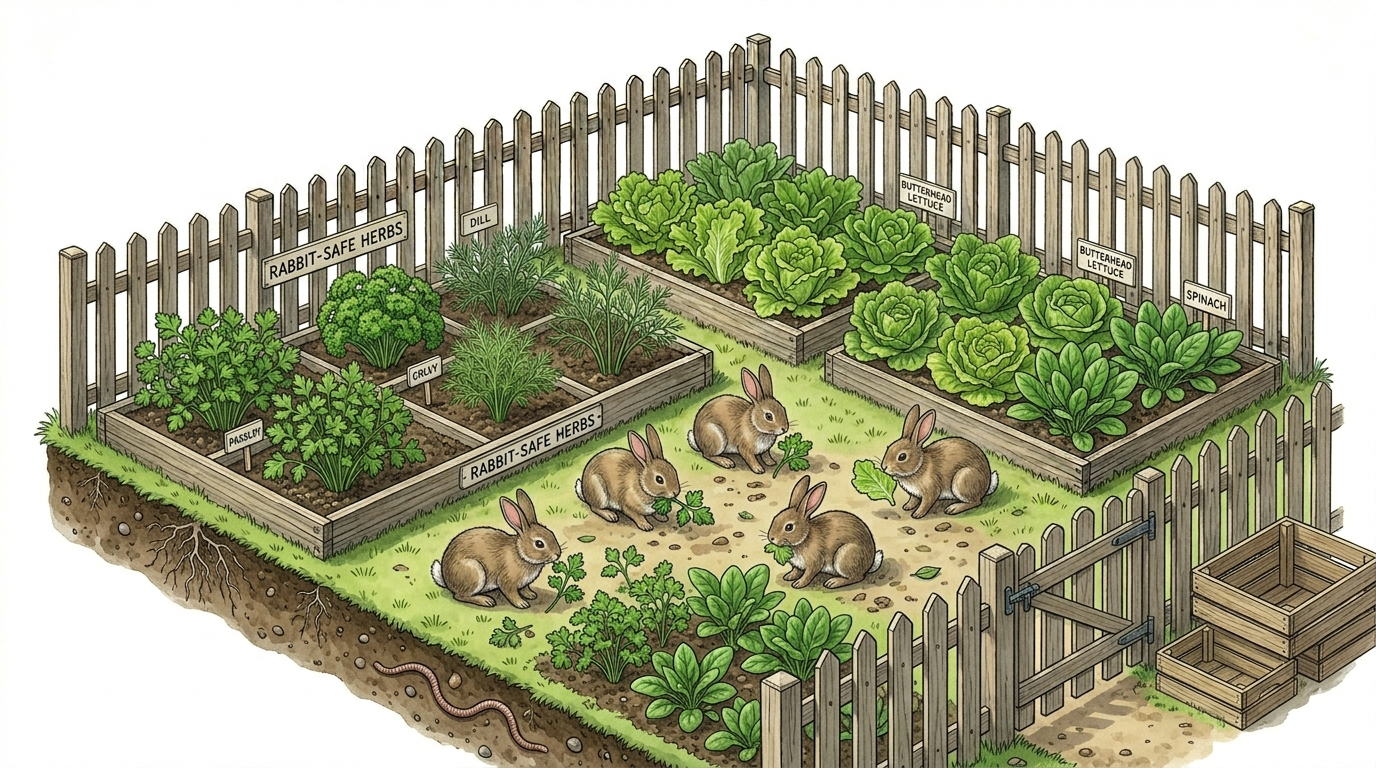
Rabbits in the Garden: Herbs and Vegetables
Learn how to choose suitable herbs and vegetables for rabbits, grow feeding plants, and plan a rabbit-friendly garden.
Guide
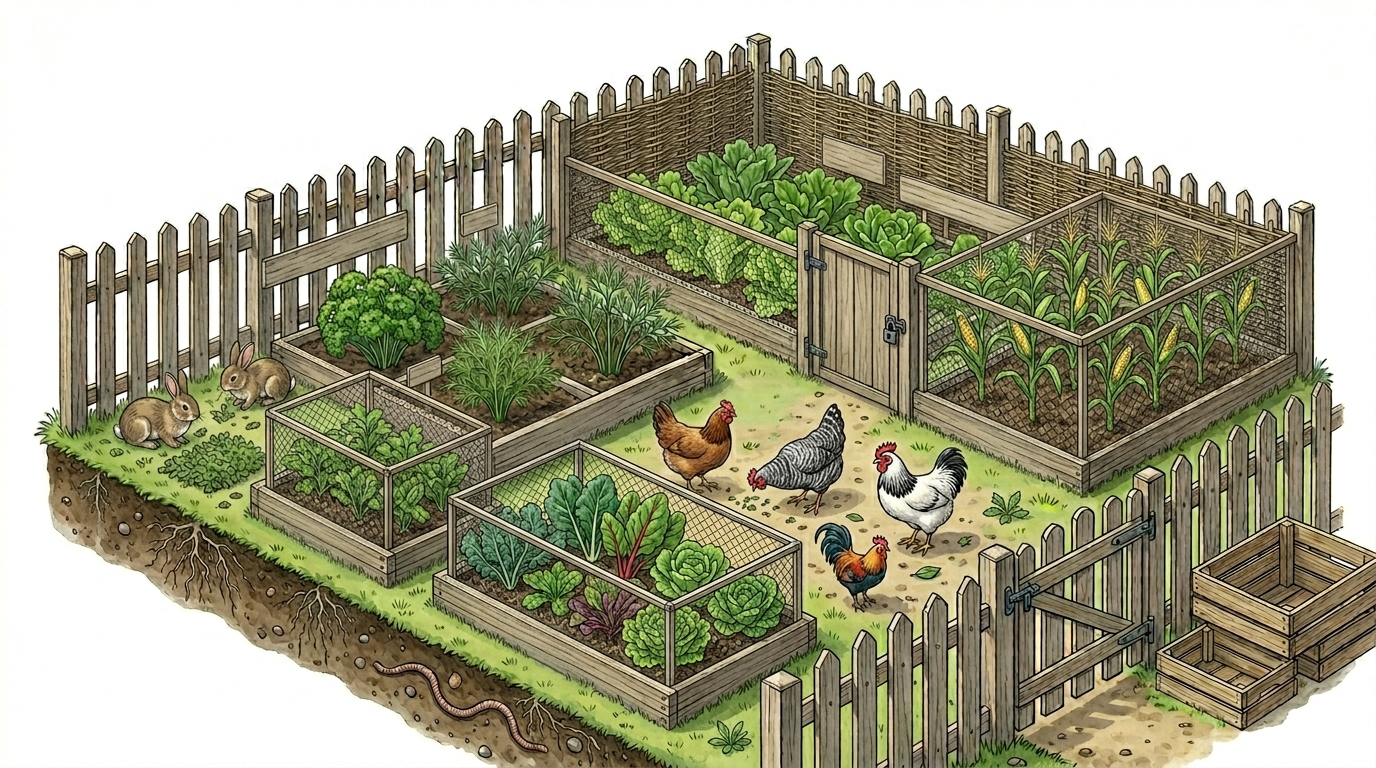
Chickens in the Garden: Safe Plants and Zones
Learn how to design a chicken-friendly garden with suitable plants, protected beds, and well-planned activity areas.
Guide
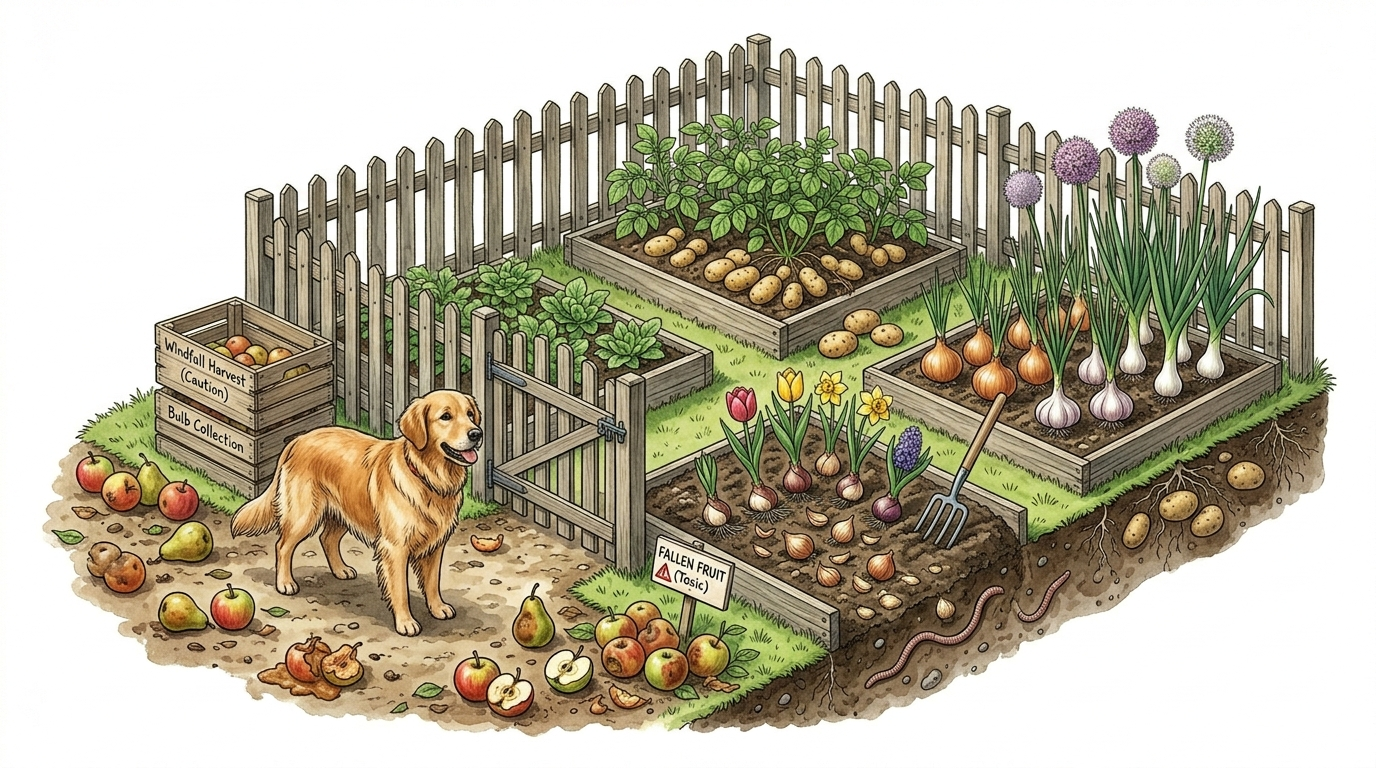
Dogs in the Garden: Windfall Fruit and Risks
Keep your garden dog-safe by managing windfall fruit, seeds, stored crops, and potentially problematic plant parts.
Guide
Horse Pastures and Garden Plants: Safety Checks
Learn how to identify risks near horse pastures, fences, turnout areas, fruit trees, and garden planting zones.
Internal links
Related plants
Chicory
Both valued for bitter compounds and root usage.
Endive
Closely related, similar cultivation requirements.
Lettuce
Susceptible to Sclerotinia rot and aphids.
Carrot
Spinach
Artichoke
Alpine sow-thistle
Taxonomic confusion in some databases; Cicerbita is a wild plant.
Sources
Public sources
- Wikidata entity Radicchio
Wikidata · 2026-05-15
- GBIF: Cichorium intybus var. foliosum
GBIF · 2026-05-15
- Wikidata entity
Wikidata · 2026-05-15
- GBIF species match
GBIF · 2026-05-15
- Deutschsprachige Wikipedia: Alpen-Milchlattich
Wikipedia · 2026-05-15
- English Wikipedia: Cicerbita alpina
Wikipedia · 2026-05-15