Problems
Bird damage
Identify Bird damage: symptoms, possible causes, prevention, and practical actions for 3 affected plants. Birds love the ripe berries and can quickly…
Editorial diagnosis
Diagnosis overview
Bird damage appears as pecked fruit, pulled seedlings, or missing seed depending on the crop. Birds are also important beneficial animals, so the goal is targeted protection rather than complete exclusion.
In gardens, Bird damage can occur on plants including Serviceberry, Mulberry, sweet cherry. In the available profiles, it is linked mainly with Berries, Pome fruit, Stone fruit.
Its importance depends on how quickly it spreads and whether seedlings, shoot tips, flowers, or fruit are affected.
Check whether individual plants, one bed area, or the whole crop is affected. Onset after frost, heat, transplanting, heavy watering, or a recent care step often provides the strongest clue. Compare an unaffected plant in the same location and observe for two or three days whether the pattern changes without another intervention.
A common mistake is to assess only the plant's current appearance. Weather history, watering, site conditions, and recent care also matter.
At a glance
Plants
3
Category
Berries, Pome fruit, Stone fruit
Typical signs
- Birds love the ripe berries and can quickly destroy the harvest.
- Birds eat fruit before harvest.
Possible confusion
- Similar stress damage: Check soil moisture, recent weather, and affected plant parts. The overall pattern matters more than one symptom.
- Diseases: Diseases more often show spots, coatings, rot, or progressive spread.
- Nutrient deficiency: Deficiencies often follow typical leaf patterns and are not always directly linked to weather events.
Immediate actions
- Narrow down the cause using soil moisture, weather, and affected plant parts
- Remove badly damaged or rotting tissue
- Stabilise water and site conditions
- Check roots, drainage, and pot size in containers
- Watch for further spread or recurrence
Prevention
- Choose suitable season and site
- Maintain even watering
- Keep enough spacing and airflow
- Improve soil structure long term
- Check regularly before damage becomes severe
Affected plants
Guides
Related guides
Guide
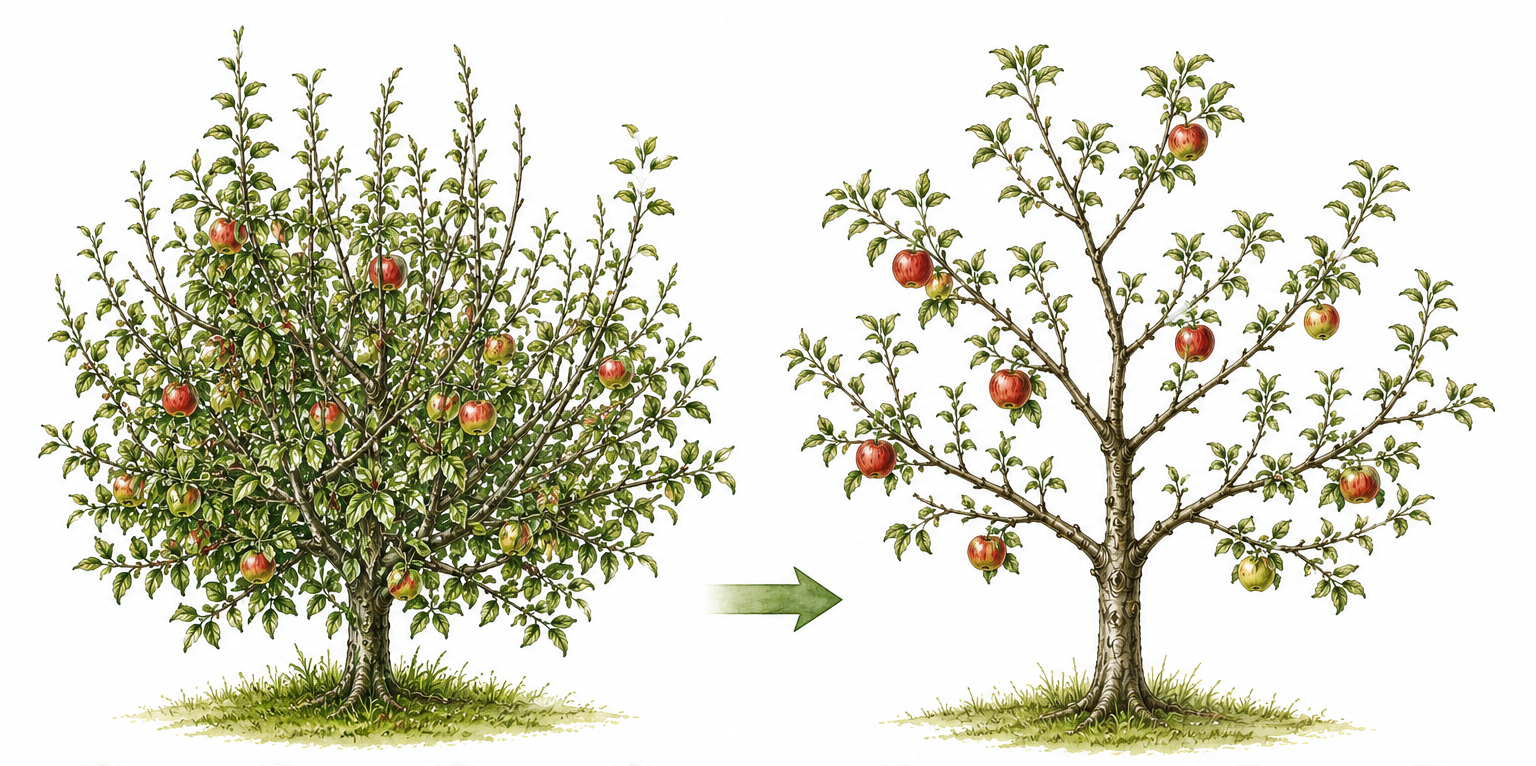
Pruning Apple Trees: Timing, Techniques, and Common Mistakes
Learn when and how to prune apple trees properly, including winter pruning, summer pruning, training cuts, and maintenance tips for healthy, productive…
FAQ
Can a plant recover from bird damage?
Mild damage often grows out once the cause is corrected. Badly damaged leaves, fruit, or roots usually remain visibly affected.
Should I fertilise immediately?
Not automatically. Many problems are caused by water, weather, roots, or site conditions. Identify the likely cause first.
When should plant parts be removed?
Remove rotting, badly damaged, or disease-promoting tissue. With pure stress damage, some leaves may still provide shade and should not always be removed immediately.