Plant Profile
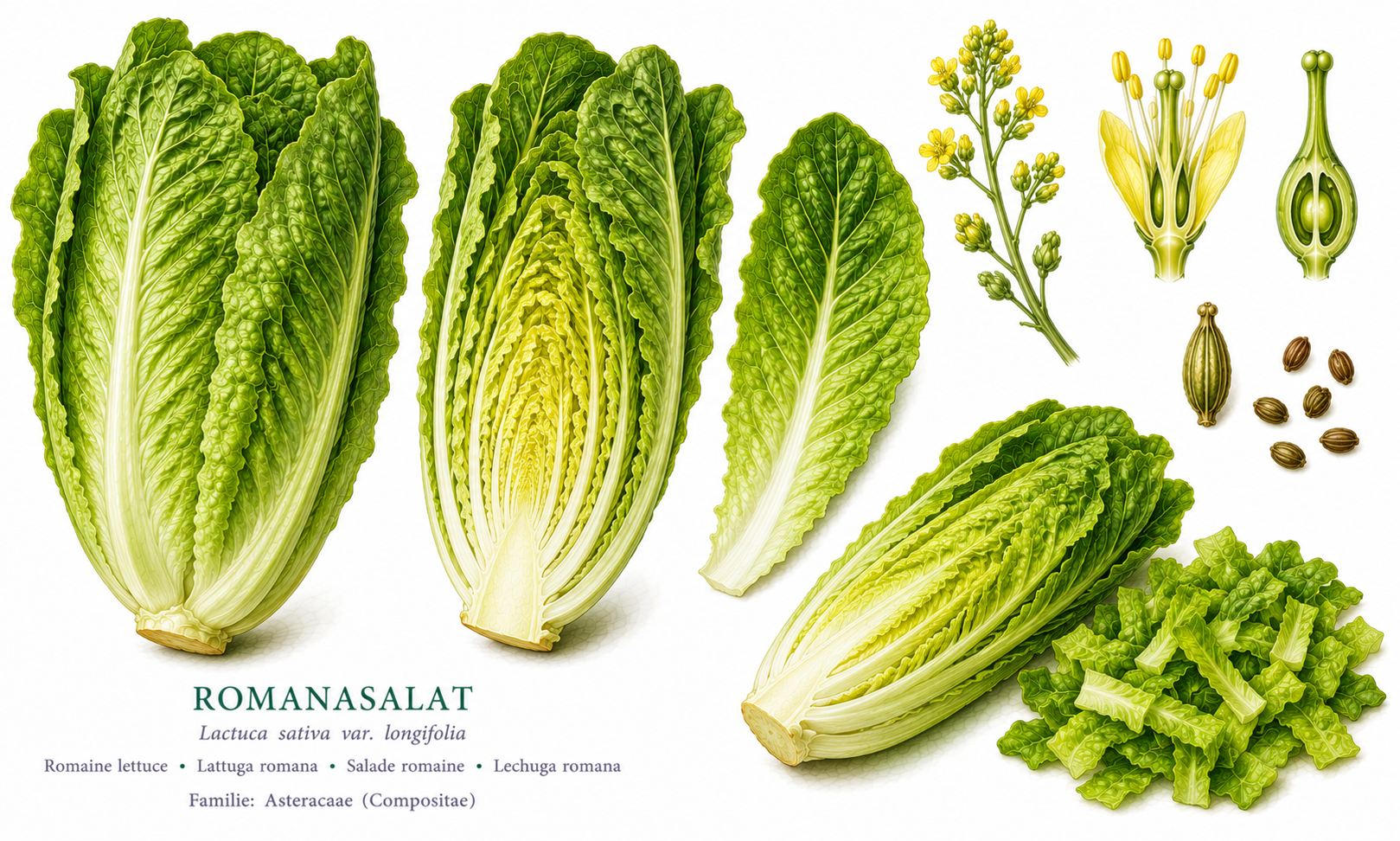
Romaine lettuceLactuca sativa var. longifolia
Upright growing lettuce with firm leaves and robust flavor.
Quick profile
Key data
Suitable growing locations:
Good neighbors
StrawberriesCarrotsRadishes
Avoid
parsleyCelery
Indoor & direct sowing
Romaine lettuce: Sowing and germination
Pre-culture in trays or pots on a windowsill or in a greenhouse.
Direct sowing into open ground possible once soil is frost-free.
Planting & site
Romaine lettuce: Planting and spacing
Hardening off young plants before transplanting is important.
Site & practical notes
Quick tips: Avoid midday sun when sowing in midsummer., Harvest in the morning for maximum crispness.
Temperature & frost
Romaine lettuce: Temperature and site
Water & nutrients
Romaine lettuce: Water, nutrients and care
Container & growth
Romaine lettuce: Container, support and growth
Year plan
Romaine lettuce Calendar
Romaine lettuce harvested in autumn is often milder in flavor.
Recurring tasks
Relevant now
June
- No additional single task
Next up
July
- No additional single task
Monthly tasks
Single tasks from monthly data; repeated seasonal windows are shown in the overview above.
January
Quiet month
February
No additional single task
March
Direct sowing
- Indoor sowingindoor: Sow in seed compost at approx. 15-18°C.
April
No additional single task
May
No additional single task
June
No additional single task
August
No additional single task
September
No additional single task
October
No additional single task
November
Quiet month
December
Quiet month
Flowering & pollination
Romaine lettuce Flowering & pollination
Flowering period
July to September (only when bolting)
Flower color
Yellow
Self-fertility
high
Pollinator needed
no
Overview
Predominantly self-pollinating; flowers usually open only for a few hours in the morning.
Notes
Insect visits are not mandatory for fertilization but can occur.
Pruning & care
Romaine lettuce Pruning & care
Pruning timing
Ongoing maintenance and harvest preparation Regular removal of diseased leaves prevents rot.
Remove
Preserve
Avoid
Tools and hygiene
Use clean knives to minimize the risk of Sclerotinia rot.
Companion guide
Romaine lettuce Companion guide
Good neighbors
StrawberriesCarrotsRadishes
Avoid
parsleyCelery
Use & storage
Romaine lettuce Use & storage
Harvest approx. 8–12 weeks after sowing depending on sowing date.
Storage
Short-term storage
Storage life
1 to 2 weeks in the refrigerator
Flavor
Robust, slightly bitter note, very crunchy texture.
Harvest
Harvest approx. 8–12 weeks after sowing depending on sowing date.
Processing
After harvest
Remove wilted outer leaves and briefly dip in cold water to maintain freshness.
Edibility & safety
Romaine lettuce Edibility & safety
For people
In brief: which parts are edible, which parts remain risky, and whether raw consumption makes sense.
Safety notes
Non-toxic. Can accumulate nitrate if over-fertilized.
Animal safety
For many animals, this plant is generally low-risk: 13 animal types are rated suitable or mostly suitable. Quantity, plant part, and individual tolerance still matter.
Each row shows which parts are more suitable and which parts are critical.
Companion animals
 Dog
DogNo suitable parts listed
No risk parts listed
No suitable parts listed
No risk parts listed
Vomiting, Diarrhea
unknown
Romaine lettuce is generally safe for dogs, but overconsumption may cause gastrointestinal upset. Roots and old, woody stems should be avoided. If over-fertilized, it can accumulate nitrate, which may be problematic in large amounts. No specific toxic compounds are known.
Open animal page Cat
CatLeaves, Tender inner stalk
No risk parts listed
Leaves, Tender inner stalk
No risk parts listed
Overconsumption may cause gastrointestinal upset, Nitrate accumulation if over-fertilized
Vomiting, Diarrhea
usually no action needed
Romaine lettuce is generally safe for cats but should only be fed as an occasional treat. Overconsumption may cause gastrointestinal upset. Roots and old, woody stems should be avoided. If over-fertilized, it can accumulate nitrate, which may be problematic in large amounts. Consult a veterinarian if symptoms like vomiting or diarrhea occur.
Open animal page Rabbit
Leaves, Tender inner stalk
No risk parts listed
Leaves, Tender inner stalk
No risk parts listed
Nitrate accumulation if over-fertilized
usually no action needed
Romaine lettuce is safe for rabbits and a common part of their diet. Leaves and tender inner stalk can be fed regularly. If over-fertilized, nitrate can accumulate, so organically grown lettuce is preferred. No known toxic compounds or parts. Overfeeding may lead to soft stools, which is not a poisoning.
Open animal page Guinea pig
Leaves, Tender inner stalk
No risk parts listed
Leaves, Tender inner stalk
No risk parts listed
Nitrate accumulation if over-fertilized
usually no action needed
No direct species-specific source was found for guinea pigs. This is a cautious inference from the rabbits profile and the known plant-part risks.
Open animal page Hamster
Leaves, Tender inner stalk
No risk parts listed
Leaves, Tender inner stalk
No risk parts listed
Nitrate accumulation if over-fertilized
usually no action needed
No direct species-specific source was found for hamsters. This is a cautious inference from the rabbits profile and the known plant-part risks.
Open animal page Budgie
Leaves, Tender inner stalk
No risk parts listed
Leaves, Tender inner stalk
No risk parts listed
Over-fertilization can lead to nitrate accumulation
usually no action needed
Romaine lettuce is safe for budgies and can be part of a balanced diet. Leaves and tender inner stalk are safe. Over-fertilization can lead to nitrate accumulation, so lettuce should be sourced from a trusted provider.
Open animal pageFarm animals
 Horse
HorseLeaves, Tender inner stalk
No risk parts listed
Leaves, Tender inner stalk
No risk parts listed
Nitrate accumulation if over-fertilized
usually no action needed
Romaine lettuce is non-toxic for horses and can be fed as part of a balanced diet. Leaves and tender inner stalk are safe. Over-fertilization may lead to nitrate accumulation, which poses a risk if consumed in large quantities.
Open animal page Chicken
Leaves, Tender inner stalk
No risk parts listed
Leaves, Tender inner stalk
No risk parts listed
Nitrate accumulation if over-fertilized
usually no action needed
Romaine lettuce is safe for chickens and can be fed as part of a balanced diet. The leaves and tender inner stalk are safe to eat. Over-fertilization can lead to nitrate accumulation, which may pose a risk only with very large amounts, but under normal feeding conditions this is not a concern.
Open animal page Duck
DuckLeaves, Tender inner stalk
No risk parts listed
Leaves, Tender inner stalk
No risk parts listed
Over-fertilization can lead to nitrate accumulation
usually no action needed
No direct species-specific source was found for ducks. This is a cautious inference from the geese profile and the known plant-part risks.
Open animal page Goose
GooseLeaves, Tender inner stalk
No risk parts listed
Leaves, Tender inner stalk
No risk parts listed
Over-fertilization can lead to nitrate accumulation
usually no action needed
Romaine lettuce is safe for geese and is commonly used as part of their diet. The leaves and tender inner stalk are safe to eat. Over-fertilization can lead to nitrate accumulation, which may pose a risk only with very large amounts, but under normal feeding conditions this is not a concern.
Open animal page Sheep
SheepLeaves, Tender inner stalk
No risk parts listed
Leaves, Tender inner stalk
No risk parts listed
Nitrate accumulation if over-fertilized
usually no action needed
Romaine lettuce is safe for sheep and can be fed as part of their diet. Nitrate may accumulate if over-fertilized, posing a risk only at very high intakes. Normal feeding is safe.
Open animal page Goat
GoatLeaves, Tender inner stalk
No risk parts listed
Leaves, Tender inner stalk
No risk parts listed
Nitrate accumulation if over-fertilized
usually no action needed
No direct species-specific source was found for goats. This is a cautious inference from the sheep profile and the known plant-part risks.
Open animal page Cattle
Leaves, Tender inner stalk
No risk parts listed
Leaves, Tender inner stalk
No risk parts listed
Nitrate accumulation if over-fertilized
usually no action needed
No direct species-specific source was found for cattle. This is a cautious inference from the sheep profile and the known plant-part risks.
Open animal page Pig
PigLeaves, Tender inner stalk
No risk parts listed
Leaves, Tender inner stalk
No risk parts listed
Nitrate accumulation if over-fertilized
usually no action needed
Romaine lettuce is safe for pigs and can be fed as part of a balanced diet. If over-fertilized, it may accumulate nitrate, which poses a risk only at very high intake levels.
Open animal pageThese guidelines are for general information only and do not replace veterinary diagnosis. If critical plant parts were ingested or the animal shows unusual behaviour or symptoms, seek veterinary advice.
Max risk
unknown
Highest status
not established
Urgency
unknown
Saving seed
Romaine lettuce Saving seed
Seed viability
3 - 5 years
Practical tips
Romaine lettuce Practical tips
Common beginner mistakes
Planting too deep often leads to heart rot.
Success pattern
Succession planting every 3 weeks ensures a continuous harvest.
High-impact tips
A layer of mulch keeps moisture in the soil and minimizes dirt on the leaves.
Grower observations
In cool summers, romaine lettuce develops particularly tender leaf ribs.
Plant Profile
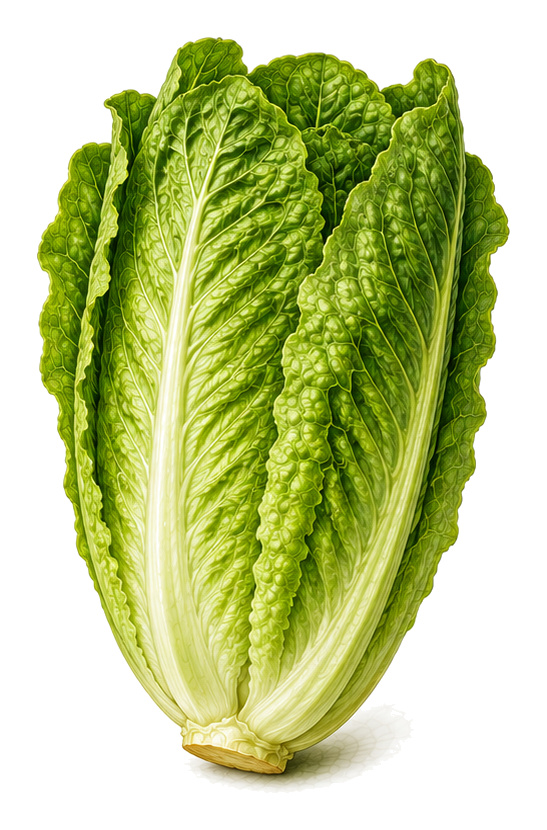
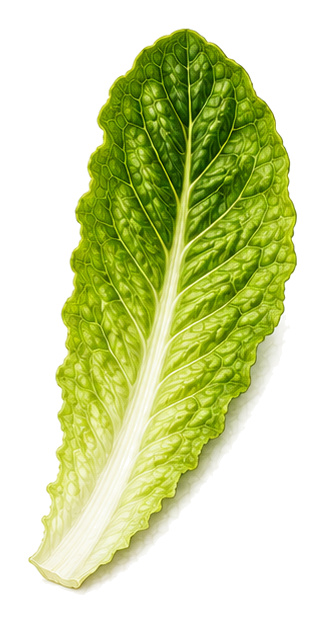
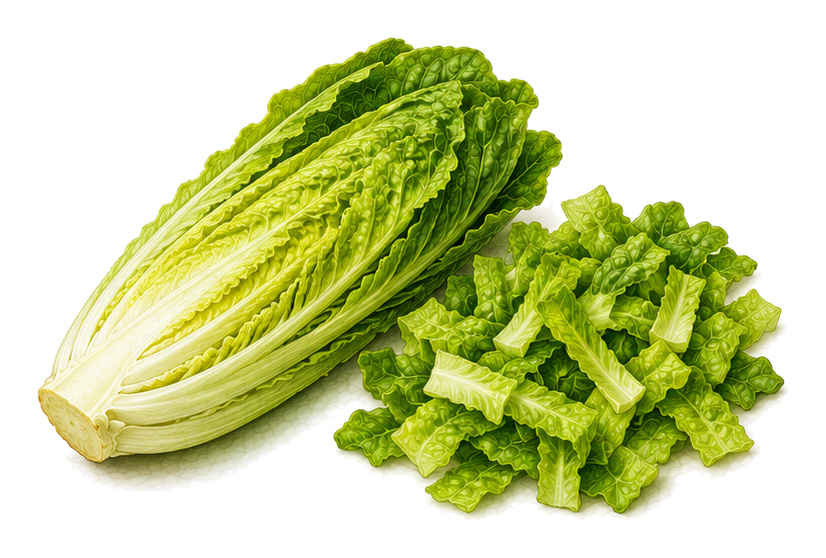
Additional plant images

Health
Pests, Diseases
Pests
Slugs
Holes in leaves, slime trails.
Aphids
Crumpled heart leaves, sticky excretions (honeydew).
Diseases
Downy Mildew
Yellowish spots on leaf upper side, white coating underneath.
Sclerotinia rot
Watery rot at the base, white fungal mycelium.
Deficiencies
Nitrogen deficiency
Pale, yellowish leaves, stunted growth.
Plant health
Diagnosis help
Romaine lettuce Diagnosis help
Pest groups
Disease groups
Prevention
Diagnosis
Regularly check leaf undersides for pests; watch for heart rot.
Cultural prevention
Monitoring
First response
Diagnostic rules
Sudden wilting despite moist soil
Possible causes: Sclerotinia minor, Root pests
- Check root collar for rot
- Examine roots for feeding marks
FAQ
Why does my romaine lettuce taste bitter?
Bitterness is usually caused by stress such as heat or lack of water, which triggers the plant to bolt (flower).
Is Romaine lettuce safe for Dog?
Romaine lettuce is classified as not established for Dog. Risk: unknown. Urgency: unknown. Romaine lettuce is generally safe for dogs, but overconsumption may cause gastrointestinal upset. Roots and old, woody stems should be avoided. If over-fertilized, it can accumulate nitrate, which may be problematic in large amounts. No specific toxic compounds are known.
Is Romaine lettuce safe for Cat?
Romaine lettuce is classified as moderation only for Cat. Risk: unknown. Urgency: usually no action needed. Romaine lettuce is generally safe for cats but should only be fed as an occasional treat. Overconsumption may cause gastrointestinal upset. Roots and old, woody stems should be avoided. If over-fertilized, it can accumulate nitrate, which may be problematic in large amounts. Consult a veterinarian if symptoms like vomiting or diarrhea occur.
Is Romaine lettuce safe for Rabbit?
Romaine lettuce is classified as suitable for Rabbit. Risk: unknown. Urgency: usually no action needed. Romaine lettuce is safe for rabbits and a common part of their diet. Leaves and tender inner stalk can be fed regularly. If over-fertilized, nitrate can accumulate, so organically grown lettuce is preferred. No known toxic compounds or parts. Overfeeding may lead to soft stools, which is not a poisoning.
Is Romaine lettuce safe for Guinea pig?
Romaine lettuce is classified as suitable for Guinea pig. Risk: unknown. Urgency: usually no action needed. No direct species-specific source was found for guinea pigs. This is a cautious inference from the rabbits profile and the known plant-part risks.
Guides
Related guides
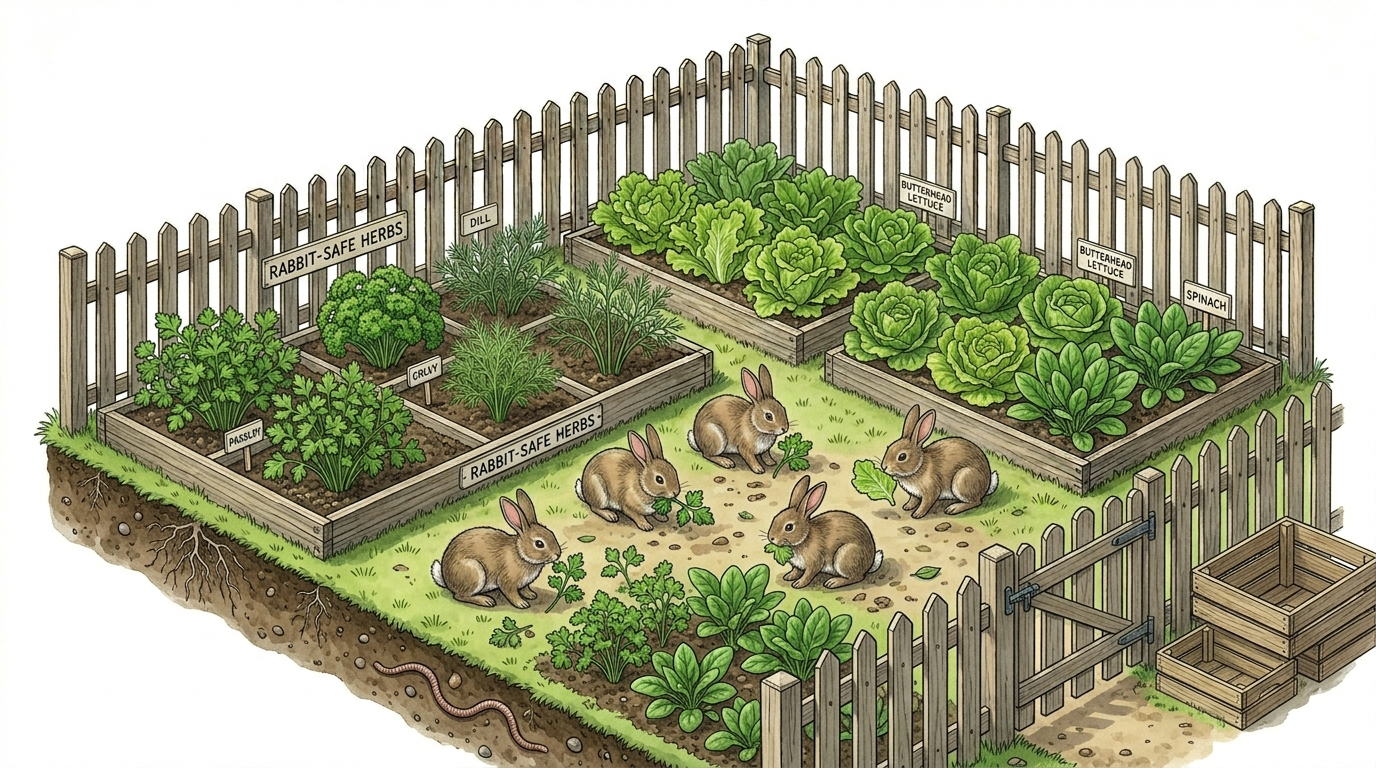
Guide
Rabbits in the Garden: Herbs and Vegetables
Learn how to choose suitable herbs and vegetables for rabbits, grow feeding plants, and plan a rabbit-friendly garden.
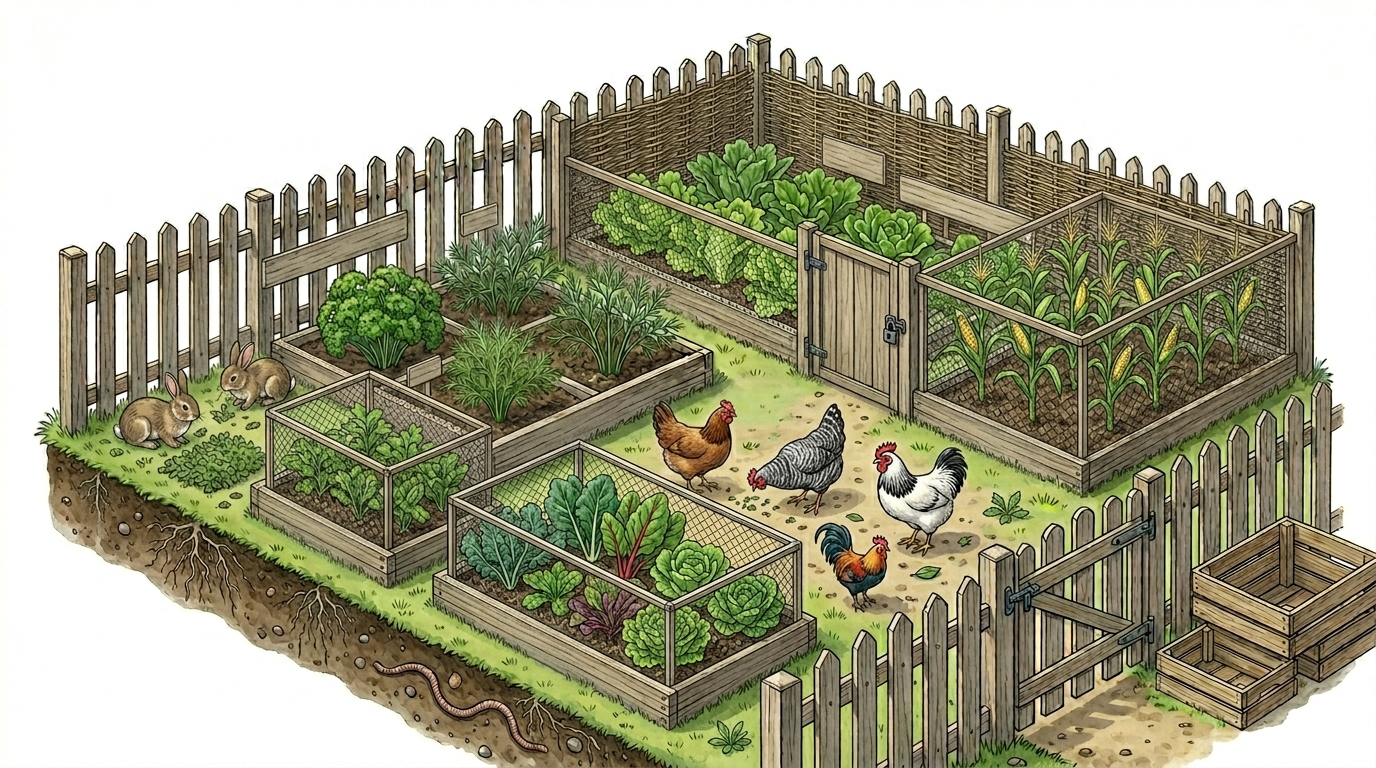
Guide
Chickens in the Garden: Safe Plants and Zones
Learn how to design a chicken-friendly garden with suitable plants, protected beds, and well-planned activity areas.
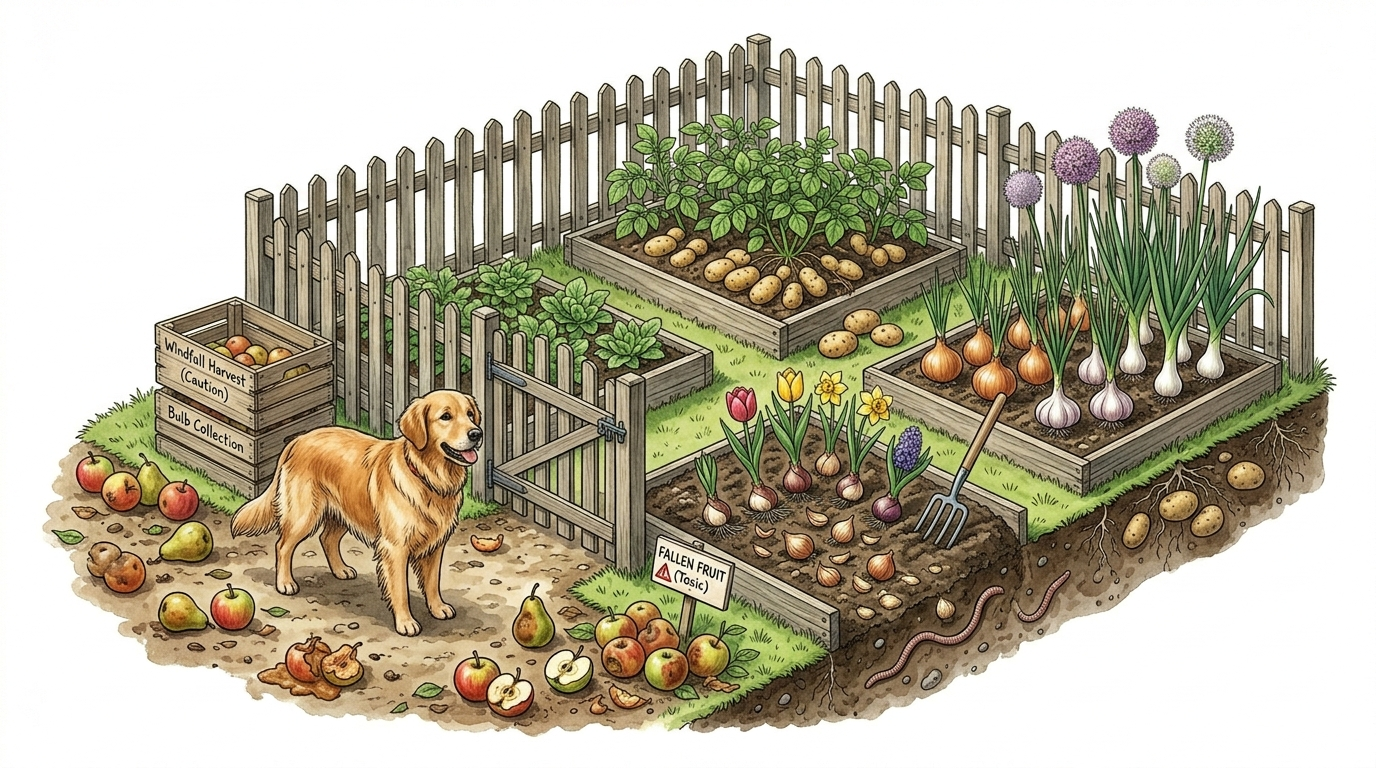
Guide
Dogs in the Garden: Windfall Fruit and Risks
Keep your garden dog-safe by managing windfall fruit, seeds, stored crops, and potentially problematic plant parts.
Guide
Horse Pastures and Garden Plants: Safety Checks
Learn how to identify risks near horse pastures, fences, turnout areas, fruit trees, and garden planting zones.
Internal links
Related plants
Chicory
Loose-leaf lettuce
Butterhead lettuce
Both susceptible to Downy Mildew and Sclerotinia.
Spinach
Similar use as leafy greens, both raw and braised.
Cucumber
Butterhead lettuce
Closely related but with softer leaves and round heads.
Endive
Both belong to the Asteraceae family.
Wild lettuce
Shared name 'lettuce', but botanically distinct and not edible.
Sources
Public sources
- Wikidata search
Wikidata · 2026-05-15
- GBIF species match
GBIF · 2026-05-15
- GBIF species match
GBIF · 2026-05-15