Plant Profile
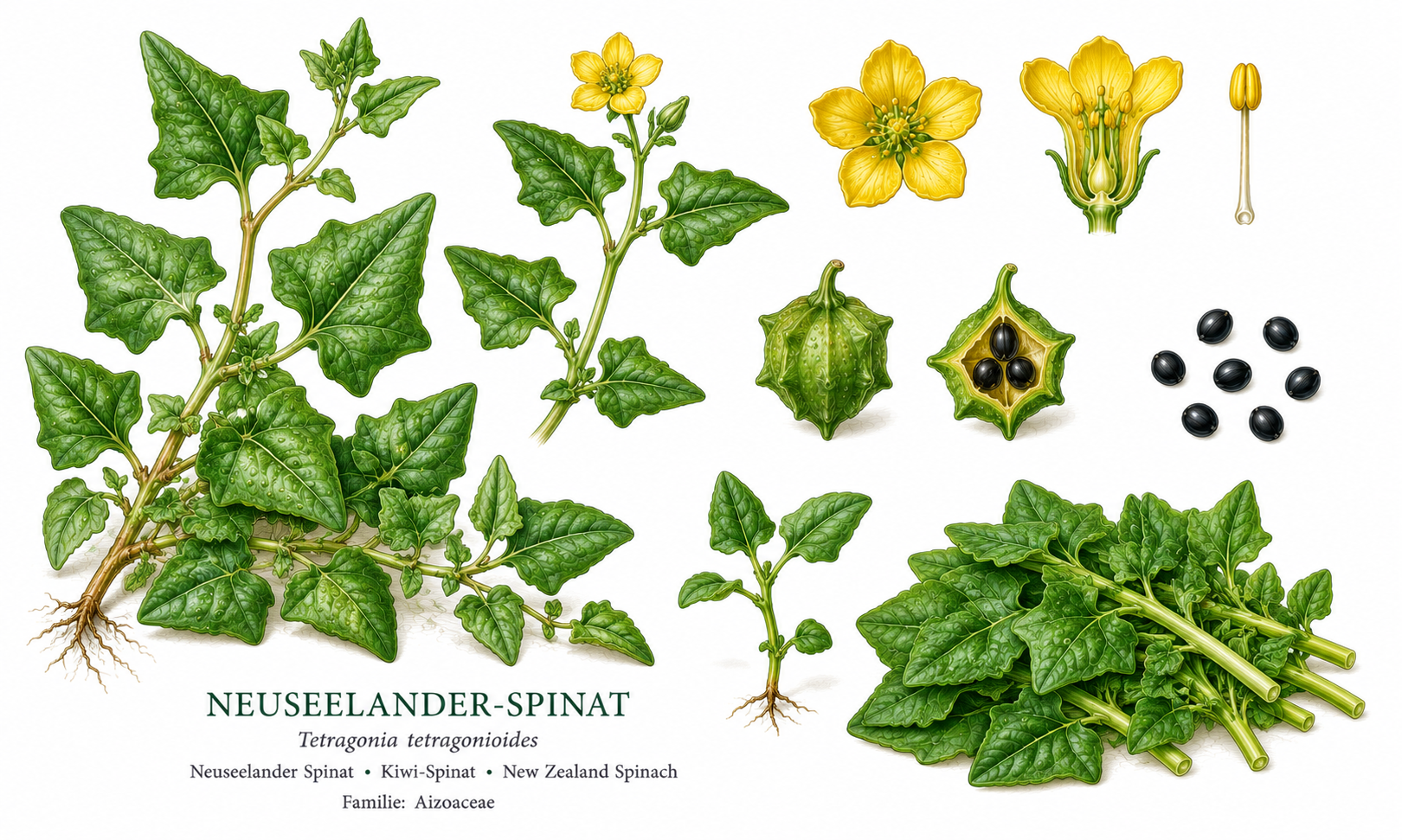
New Zealand spinachTetragonia tetragonoides
New Zealand spinach is the ultimate summer green for hot climates. While true spinach bolts quickly in the heat, this trailing member of the fig-marigold family thrives as temperatures rise. It produces succulent, triangular leaves and forms a dense carpet, making it an excellent living mulch or underplanting for tomatoes and corn.
Quick profile
Key data
Suitable growing locations:
Good neighbors
tomatoCornCabbage
Avoid
No data
Indoor & direct sowing
New Zealand spinach: Sowing and germination
Indoor pre-culture in pots recommended due to slow germination.
Direct sowing only after the last frost when soil is sufficiently warm.
Planting & site
New Zealand spinach: Planting and spacing
Plant out after the last frost; plants require significant space.
Site & practical notes
Temperature & frost
New Zealand spinach: Temperature and site
Water & nutrients
New Zealand spinach: Water, nutrients and care
Container & growth
New Zealand spinach: Container, support and growth
Year plan
New Zealand spinach Calendar
A must-have for the self-sufficient garden in midsummer.
Recurring tasks
Relevant now
June
- No additional single task
Next up
July
- No additional single task
Monthly tasks
Single tasks from monthly data; repeated seasonal windows are shown in the overview above.
January
Quiet month
February
Quiet month
March
No additional single task
April
No additional single task
May
No additional single task
June
No additional single task
August
No additional single task
September
No additional single task
October
No additional single task
November
Quiet month
December
Quiet month
Flowering & pollination
New Zealand spinach Flowering & pollination
Flowering period
July to September
Flower type
Inconspicuous solitary flowers in leaf axils
Flower color
Yellow-green
Self-fertility
self-fertile
Pollinator needed
no
Overview
Self-pollination or pollination by small insects; wind pollination is also possible.
Notes
The small flowers attract few conspicuous pollinators but are mostly self-fertile.
Pruning & care
New Zealand spinach Pruning & care
Pruning type
pinching_and_heading_back
Pruning timing
Ongoing harvest and growth control Regular cutting every 1-2 weeks encourages bushy growth.
Remove
Preserve
Avoid
Tools and hygiene
Use clean tools to avoid soft rot at the cut surfaces.
Companion guide
New Zealand spinach Companion guide
Good neighbors
tomatoCornCabbage
Avoid
No data
Use & storage
New Zealand spinach Use & storage
Continuous harvesting of shoot tips encourages bushy growth.
Storage
Short-term storage (fresh vegetable)
Storage life
Very short; loses crispness quickly.
Flavor
Mild, slightly acidic, similar to true spinach but more robust.
Harvest
Continuous harvesting of shoot tips encourages bushy growth.
Processing
After harvest
Use immediately or wrap in a damp cloth; wilts quickly.
Edibility & safety
New Zealand spinach Edibility & safety
For people
In brief: which parts are edible, which parts remain risky, and whether raw consumption makes sense.
Safety notes
Contains oxalic acid and saponins; blanching reduces the content.
Animal safety
For animals, the specific plant part matters here: some parts may be suitable, while others should be avoided. At least one critical rating is listed for 2 animal types.
Each row shows which parts are more suitable and which parts are critical.
Companion animals
 Dog
DogYoung leaves, Tender shoot tips
Tough, woody stems, Mature fruits (seed capsules)
Young leaves, Tender shoot tips
Tough, woody stems, Mature fruits (seed capsules)
Oxalic acid content, Saponin content, Mature plant parts
Gastrointestinal upset, Vomiting, Diarrhea
observe
New Zealand spinach contains oxalic acid and saponins that can cause gastrointestinal upset in dogs when consumed in large amounts. Young leaves and tender shoot tips are suitable as an occasional treat in small amounts after blanching. Mature stems and seeds should be avoided. Consult a veterinarian if large amounts are ingested.
Open animal page Cat
CatYoung leaves, Tender shoot tips
Tough, woody stems, Mature fruits (seed capsules), Seeds
Young leaves, Tender shoot tips
Tough, woody stems, Mature fruits (seed capsules), Seeds
Oxalic acid content, Saponin content, Mature plant parts
Gastrointestinal upset, Vomiting, Diarrhea
observe
Young leaves and shoot tips can be fed in small amounts after blanching. Mature parts and seeds contain higher concentrations of oxalic acid and saponins and should be avoided. Consumption of raw plant material may cause gastrointestinal upset. Blanching significantly reduces oxalic acid content.
Open animal page Rabbit
Young leaves, Tender shoot tips
Tough, woody stems, Mature fruits (seed capsules), Seeds
Young leaves, Tender shoot tips
Tough, woody stems, Mature fruits (seed capsules), Seeds
High oxalic acid content in mature parts, Blanching reduces risk
Gastrointestinal upset, Diarrhea, Kidney strain with overconsumption
observe
Young leaves and shoot tips are suitable for rabbits in small amounts after blanching. Mature parts and seeds contain higher concentrations of oxalic acid and saponins and should be avoided. Overconsumption may lead to kidney strain.
Open animal page Guinea pig
Young leaves, Tender shoot tips
Tough, woody stems, Mature fruits (seed capsules), Seeds
Young leaves, Tender shoot tips
Tough, woody stems, Mature fruits (seed capsules), Seeds
High oxalic acid content when raw, Mature plant parts
Gastrointestinal upset, Diarrhea
observe
Young leaves and shoot tips can be fed in small amounts after blanching. Mature parts and seeds contain higher concentrations of oxalic acid and saponins and should be avoided. Overconsumption may pose a risk of kidney strain due to oxalates.
Open animal page Hamster
Young leaves, Tender shoot tips
Tough, woody stems, Mature fruits (seed capsules), Seeds
Young leaves, Tender shoot tips
Tough, woody stems, Mature fruits (seed capsules), Seeds
High oxalic acid content in raw parts, Mature plant parts, Overfeeding
Gastrointestinal upset, Diarrhea, Kidney strain with excessive intake
observe
:Blanching reduces oxalic acid and saponins. Young leaves and shoot tips suitable as occasional treats in small amounts. Avoid mature parts and seeds due to oxalate risk. No hamster-specific studies, but conservative classification based on known compounds and tolerance in rabbits/guinea pigs. Kidney strain possible with excessive intake. Consult vet if symptoms occur.
Open animal page Budgie
Young leaves, Tender shoot tips
Tough, woody stems, Mature fruits (seed capsules), Seeds
Young leaves, Tender shoot tips
Tough, woody stems, Mature fruits (seed capsules), Seeds
High oxalic acid content in raw leaves, Mature plant parts, Overfeeding
Gastrointestinal upset, Diarrhea, Vomiting
observe
Young leaves and shoot tips can be fed in small amounts as a treat but should be blanched due to oxalic acid content. Tough stems, seeds, and mature fruits are not suitable and may cause gastrointestinal upset. Consult a veterinarian if signs of poisoning appear.
Open animal pageFarm animals
 Horse
HorseYoung leaves, Tender shoot tips
Tough, woody stems, Mature fruits (seed capsules)
Young leaves, Tender shoot tips
Tough, woody stems, Mature fruits (seed capsules)
Oxalic acid content, Saponin content, Mature plant parts
Gastrointestinal upset, Kidney strain with excessive intake
observe
Young leaves and shoot tips can be fed in small amounts after blanching. Mature parts and raw consumption pose risks from oxalic acid and saponins. Not suitable as primary feed.
Open animal page Chicken
Young leaves, Tender shoot tips
Tough, woody stems, Mature fruits (seed capsules), Seeds
Young leaves, Tender shoot tips
Tough, woody stems, Mature fruits (seed capsules), Seeds
High oxalic acid content when raw, Mature plant parts, Overfeeding
Gastrointestinal upset, Diarrhea, Vomiting
observe
New Zealand spinach contains oxalic acid and saponins, which can cause gastrointestinal upset in chickens when consumed in large quantities. Young leaves and tender shoot tips are tolerable after blanching or in small amounts raw and can be used as occasional greens. Tough stems, mature fruits, and seeds should be avoided due to higher concentrations of antinutrients. A balanced diet with sufficient calcium can…
Open animal page Duck
DuckYoung leaves, Tender shoot tips
Tough, woody stems, Mature fruits (seed capsules), Seeds
Young leaves, Tender shoot tips
Tough, woody stems, Mature fruits (seed capsules), Seeds
High oxalic acid content when raw, Mature plant parts, Overfeeding
Gastrointestinal upset, Diarrhea, Vomiting
observe
No direct species-specific source was found for ducks. This is a cautious inference from the geese profile and the known plant-part risks.
Open animal page Goose
GooseYoung leaves, Tender shoot tips
Tough, woody stems, Mature fruits (seed capsules), Seeds
Young leaves, Tender shoot tips
Tough, woody stems, Mature fruits (seed capsules), Seeds
High oxalic acid content when raw, Mature plant parts, Overfeeding
Gastrointestinal upset, Diarrhea, Vomiting
observe
New Zealand spinach contains oxalic acid and saponins that can cause gastrointestinal upset in geese when consumed in large amounts. Young leaves and tender shoot tips are suitable in moderation after blanching. Mature stems, seeds, and fruits should be avoided. Blanching significantly reduces oxalic acid content. If large amounts of raw plant material are consumed, observe and contact a veterinarian if symptoms…
Open animal page Sheep
SheepYoung leaves, Tender shoot tips
Tough, woody stems, Mature fruits (seed capsules)
Young leaves, Tender shoot tips
Tough, woody stems, Mature fruits (seed capsules)
High oxalic acid content in raw leaves, Consumption of mature seeds or woody stems
Gastrointestinal upset, Kidney strain with excessive intake
observe
Young leaves and shoot tips are suitable for sheep after blanching and are occasionally used as supplemental feed. Mature parts and seeds contain higher concentrations of oxalic acid and saponins, which can cause health issues if consumed excessively. Blanching significantly reduces oxalic acid content.
Open animal page Goat
GoatYoung leaves, Tender shoot tips
Tough, woody stems, Mature fruits (seed capsules), Seeds
Young leaves, Tender shoot tips
Tough, woody stems, Mature fruits (seed capsules), Seeds
High oxalic acid content in mature parts, Consumption of large amounts unblanched
Gastrointestinal upset, Kidney strain with excessive intake
observe
Young leaves and shoot tips are suitable for goats in moderation after blanching. Mature parts and seeds contain higher concentrations of oxalic acid and saponins and should be avoided. Excessive intake may pose kidney strain due to oxalate accumulation. Blanching significantly reduces oxalic acid content. No species-specific toxicity cases documented, but conservative assessment based on known compounds and…
Open animal page Cattle
Young leaves, Tender shoot tips
Tough, woody stems, Mature fruits (seed capsules)
Young leaves, Tender shoot tips
Tough, woody stems, Mature fruits (seed capsules)
High oxalic acid content in mature parts, Blanching reduces risk
Gastrointestinal upset, Kidney strain with high consumption
observe
Young leaves and shoot tips can be used as supplemental feed after blanching. Mature parts and seeds contain higher concentrations of oxalic acid and saponins and should be avoided. Consult a veterinarian if poisoning is suspected.
Open animal page Pig
PigYoung leaves, Tender shoot tips
Tough, woody stems, Mature fruits (seed capsules), Seeds
Young leaves, Tender shoot tips
Tough, woody stems, Mature fruits (seed capsules), Seeds
High oxalic acid content when raw, Consumption of mature seeds or woody parts
Gastrointestinal upset, Diarrhea
observe
Young leaves and shoot tips are suitable for pigs in small amounts after blanching. Mature plant parts and seeds contain higher concentrations of oxalic acid and saponins and should be avoided. Overconsumption may cause gastrointestinal upset. Blanching significantly reduces oxalic acid content.
Open animal pageThese guidelines are for general information only and do not replace veterinary diagnosis. If critical plant parts were ingested or the animal shows unusual behaviour or symptoms, seek veterinary advice.
Max risk
unknown
Highest status
do not feed
Urgency
observe
Saving seed
New Zealand spinach Saving seed
Seed viability
3 - 5 years
Practical tips
New Zealand spinach Practical tips
Common beginner mistakes
Planting too closely; do not underestimate its urge to spread.
Success pattern
Lush carpet starting in July with regular watering.
High-impact tips
Plant as ground cover under tomatoes to save on mulch.
Grower observations
Germination can take frustratingly long; patience and warmth are key.
Health
Pests, Diseases
Deficiencies
Nitrogen deficiency
Pale green to yellowish leaves, slow growth.
Plant health
Diagnosis help
New Zealand spinach Diagnosis help
Pest groups
Disease groups
Fungal diseases (rare)
Prevention
Diagnosis
The plant is overall very robust against pests and diseases.
Cultural prevention
Monitoring
Weekly check of shoot tips for aphids
First response
Spraying with a water jet for aphid infestation
Diagnostic rules
Yellow leaves at the base
Possible causes: Nitrogen deficiency, Natural aging, Waterlogging
- Check soil moisture
- Check fertilization status
FAQ
Can you eat New Zealand spinach raw?
In small amounts yes, but blanching is recommended due to oxalic acid and saponins.
Is New Zealand spinach safe for Dog?
New Zealand spinach is classified as moderation only for Dog. Risk: unknown. Urgency: observe. New Zealand spinach contains oxalic acid and saponins that can cause gastrointestinal upset in dogs when consumed in large amounts. Young leaves and tender shoot tips are suitable as an occasional treat in small amounts after blanching. Mature stems and seeds should be avoided. Consult a veterinarian if large amounts are ingested.
Is New Zealand spinach safe for Cat?
New Zealand spinach is classified as do not feed for Cat. Risk: unknown. Urgency: observe. Young leaves and shoot tips can be fed in small amounts after blanching. Mature parts and seeds contain higher concentrations of oxalic acid and saponins and should be avoided. Consumption of raw plant material may cause gastrointestinal upset. Blanching significantly reduces oxalic acid content.
Is New Zealand spinach safe for Rabbit?
New Zealand spinach is classified as moderation only for Rabbit. Risk: unknown. Urgency: observe. Young leaves and shoot tips are suitable for rabbits in small amounts after blanching. Mature parts and seeds contain higher concentrations of oxalic acid and saponins and should be avoided. Overconsumption may lead to kidney strain.
Is New Zealand spinach safe for Cattle?
New Zealand spinach is classified as do not feed for Cattle. Risk: unknown. Urgency: observe. Young leaves and shoot tips can be used as supplemental feed after blanching. Mature parts and seeds contain higher concentrations of oxalic acid and saponins and should be avoided. Consult a veterinarian if poisoning is suspected.
Guides
Related guides
Guide
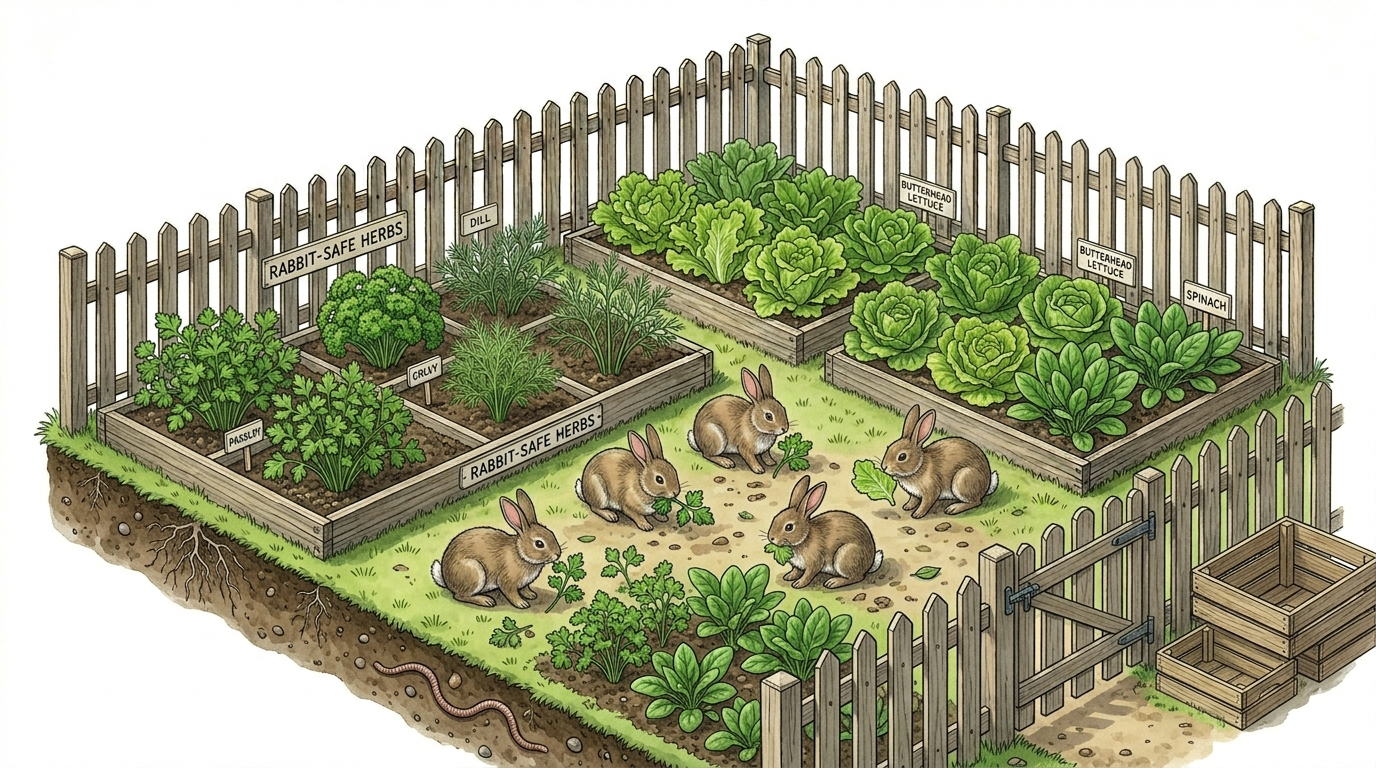
Rabbits in the Garden: Herbs and Vegetables
Learn how to choose suitable herbs and vegetables for rabbits, grow feeding plants, and plan a rabbit-friendly garden.
Guide
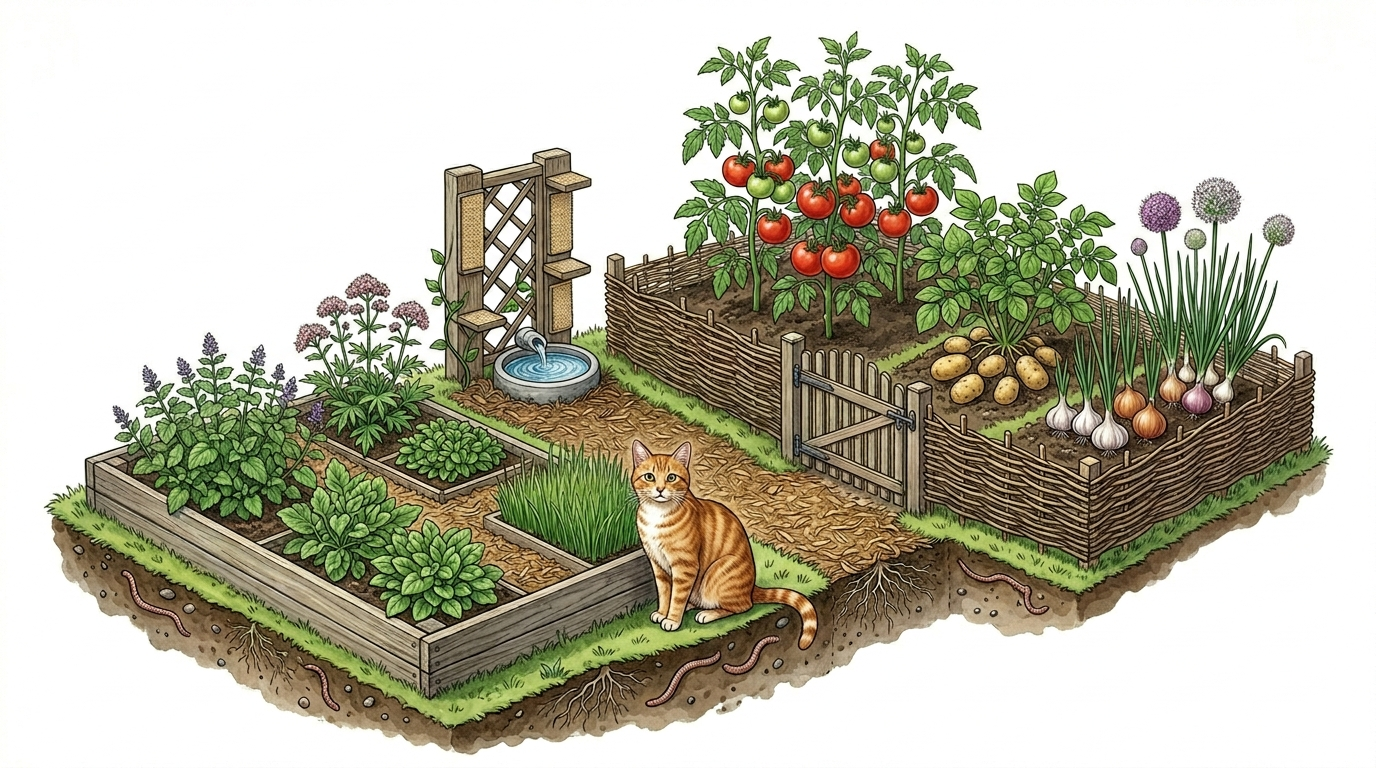
Toxic Garden Plants for Cats: Safer Planning
Learn which garden plants can be risky for cats, how to plan safer beds, and what to do if a cat eats a toxic plant.
Guide
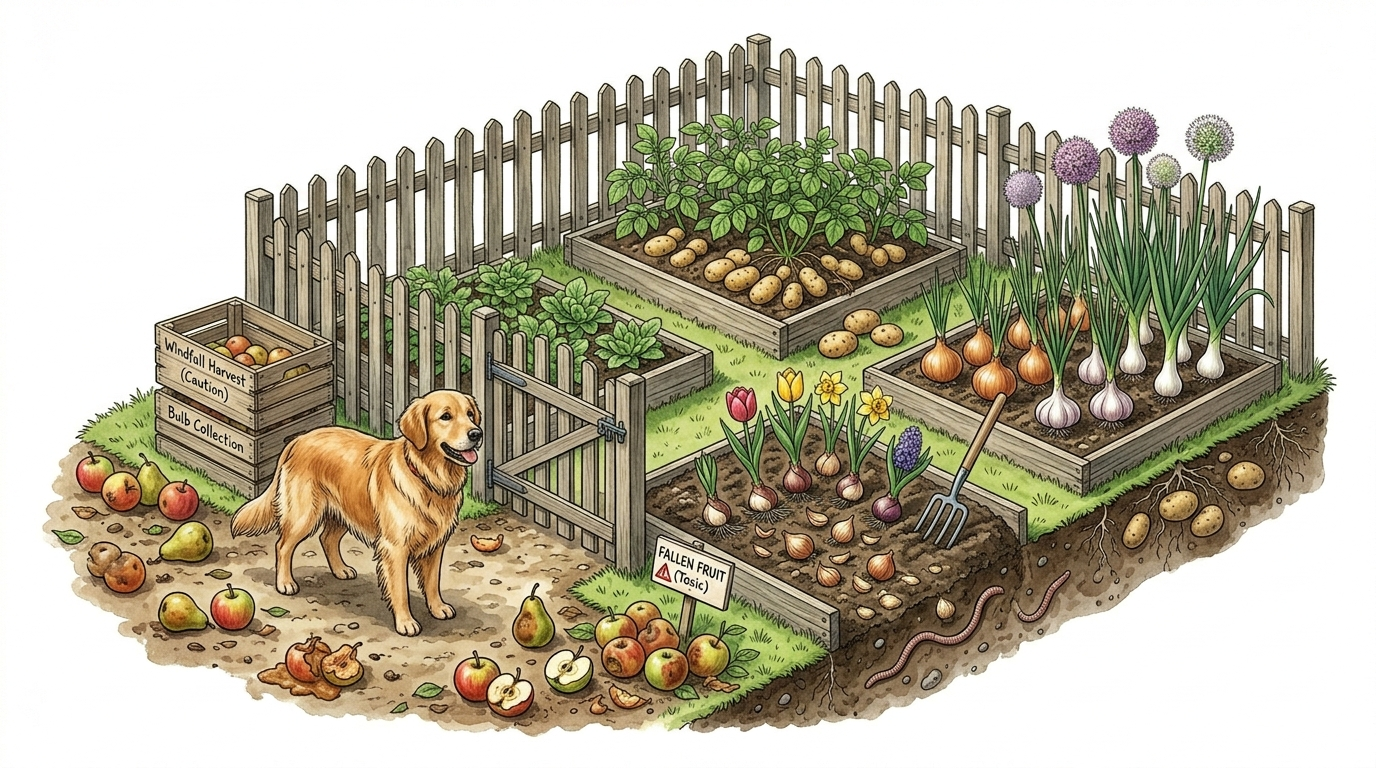
Dogs in the Garden: Windfall Fruit and Risks
Keep your garden dog-safe by managing windfall fruit, seeds, stored crops, and potentially problematic plant parts.
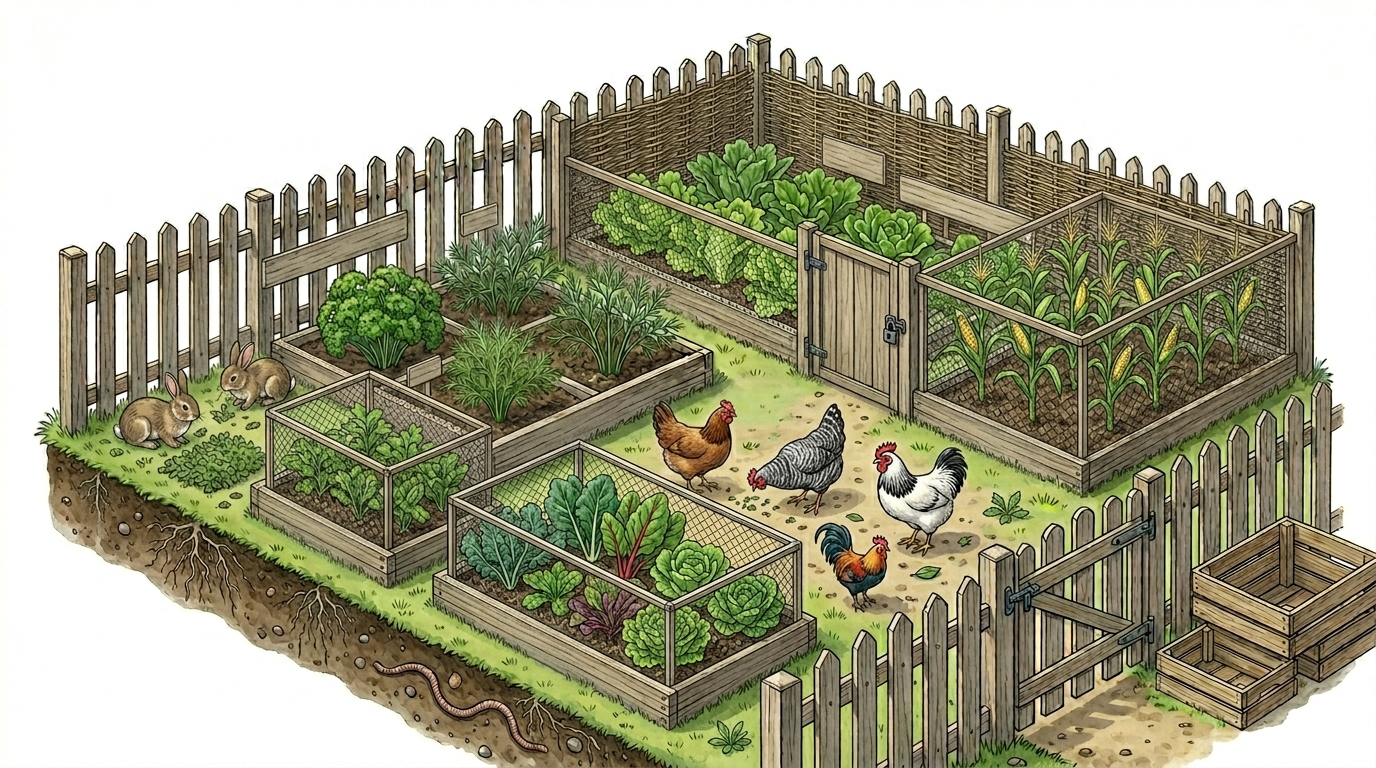
Guide
Chickens in the Garden: Safe Plants and Zones
Learn how to design a chicken-friendly garden with suitable plants, protected beds, and well-planned activity areas.
Internal links
Related plants
Spinach
Similar taste and use, but botanically unrelated.
Lettuce
Orach
Alternative leafy green for summer.
Ice plant
Both belong to the Aizoaceae family.
Swiss Chard
Often processed identically in the kitchen.
Sources
Public sources
- Wikidata entity
Wikidata · 2026-05-14
- GBIF species match
GBIF · 2026-05-14
- Deutschsprachige Wikipedia: Neuseeländer Spinat
Wikipedia · 2026-05-14
- English Wikipedia: Tetragonia tetragonioides
Wikipedia · 2026-05-14