Plant Profile
Sweet cornZea mays Saccharata Group
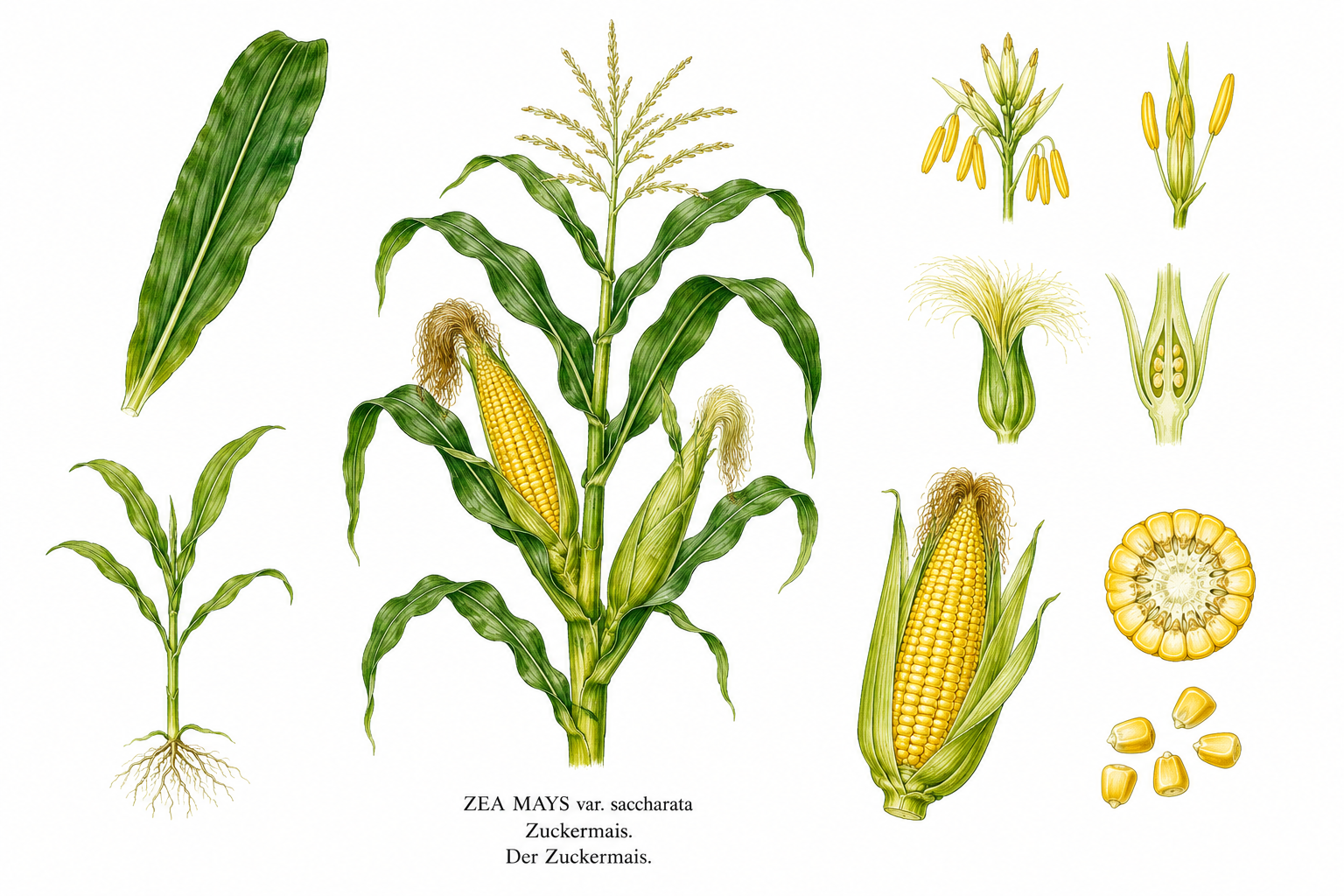
Sweet corn is a rewarding summer crop that delivers an unmatched sweetness when harvested fresh from the garden. Because its sugars rapidly convert to starch after picking, home growing is the definitive way to experience true sweet corn. For successful pollination, always plant corn in block formations.
Quick profile
Key data
Suitable growing locations:
Good neighbors
Climbing beanSquashCucumber
Avoid
PotatoBeetroot
Indoor & direct sowing
Sweet corn: Sowing and germination
Pre-culture in pots from mid-April indoors or in a greenhouse.
Direct outdoor sowing from mid-May after the last frost, once the soil has warmed up.
Planting & site
Sweet corn: Planting and spacing
Planting out pre-cultivated seedlings from mid-May in a block formation.
Site & practical notes
Pro tips: Hill up the soil around the base when plants are 30-40 cm tall. This stimulates stabilizing prop roots and prevents lodging during summer storms., Never plant sweet corn close to field corn; wind cross-pollination will render your sweet corn kernels starchy and flavorless.
Temperature & frost
Sweet corn: Temperature and site
Water & nutrients
Sweet corn: Water, nutrients and care
Container & growth
Sweet corn: Container, support and growth
Year plan
Sweet corn Calendar
When the brown silks flutter in midsummer, the moment of truth for wind pollination has officially arrived.
Recurring tasks
Relevant now
June
- No additional single task
Next up
July
- Additional watering during floweringWater deficiency during flowering and ear formation leads to poorly filled cobs.
Monthly tasks
Single tasks from monthly data; repeated seasonal windows are shown in the overview above.
January
Quiet month
February
Quiet month
March
Quiet month
April
Direct sowing
- Sow sweet corn indoorsSow in sufficiently large pots as corn roots are sensitive to transplant shock.
May
Planting
- Plant out sweet corn seedlingsAlways plant in blocks (e.g., 4x4) rather than single long rows to ensure proper wind pollination.
June
No additional single task
August
No additional single task
September
No additional single task
October
No additional single task
November
Quiet month
December
Quiet month
Flowering & pollination
Sweet corn Flowering & pollination
Flowering period
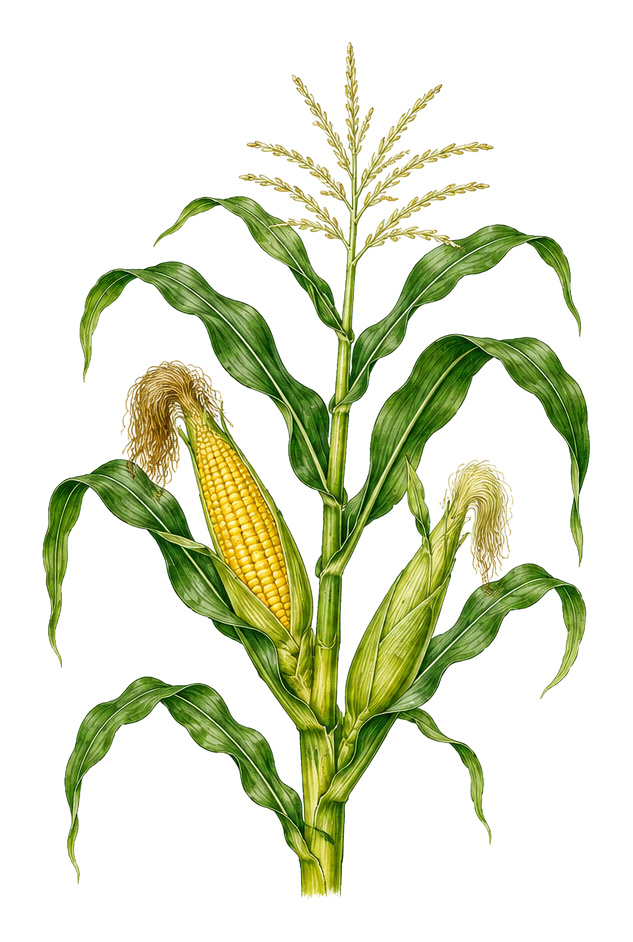
Months: 7, 8, Notes: The main flowering period occurs in July and August. Male flowers are located at the top of the stalk, while female flowers develop in the leaf axils.
Self-fertility
self-fertile, cross-pollination beneficial
Pollinator needed
no
Overview
Sweet corn is a wind-pollinated, cross-pollinating plant. Pollen from the top tassels is carried by the wind to the sticky silks of the lower developing ears.
Notes
Insects are not required. Because wind carries the pollen, block planting (at least 3x3 or 4x4 plants) is essential to ensure full kernel development.
Pruning & care
Sweet corn Pruning & care
Pruning timing
Removal of excessive basal tillers if desired Should be done carefully to avoid mechanical weakening or creating entry points for fungi.
Remove
Side tillers at the base can optionally be removed, though this is generally not strictly necessary for home gardeners.
Preserve
Avoid
Tools and hygiene
If knives or pruners are used to cut away smut galls, they must be thoroughly disinfected immediately afterward.
Companion guide
Sweet corn Companion guide
Good neighbors
Climbing beanSquashCucumber
Avoid
PotatoBeetroot
Use & storage
Sweet corn Use & storage
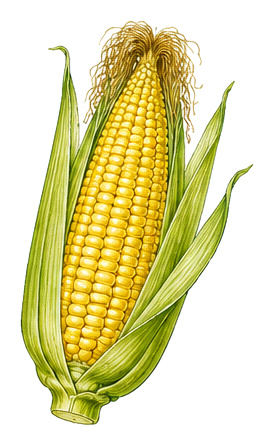
Harvest when the silks turn brown and dry, and the kernels exude a milky liquid when pressed.
Storage
Short-term fresh storage or immediate preservation.
Storage life
Fresh 2-3 days; blanched and frozen or canned up to 12 months.
Harvest
Harvest when the silks turn brown and dry, and the kernels exude a milky liquid when pressed.
Processing
After harvest
After harvest, sugars in the kernels quickly convert to starch. Cool the cobs immediately and ideally consume or process them on the same day.
Edibility & safety
Sweet corn Edibility & safety
For people
In brief: which parts are edible, which parts remain risky, and whether raw consumption makes sense.
Safety notes
Sweet corn is completely non-toxic. Caution with corn smut (Ustilago maydis) infection: the galls are a delicacy in Mexico (huitlacoche), but should be avoided if unfamiliar.
Animal safety
For many animals, this plant is generally low-risk: 14 animal types are rated suitable or mostly suitable. Quantity, plant part, and individual tolerance still matter.
Each row shows which parts are more suitable and which parts are critical.
Companion animals
 Dog
DogKernels (seeds), Young, immature ears (baby corn)
Husks, Stalks, Dried silks
Kernels (seeds), Young, immature ears (baby corn)
Husks, Stalks, Dried silks
Digestive upset from excessive fiber or immature parts consumption, Risk of corn smut (Ustilago maydis) if mishandled
Vomiting, Diarrhea
observe
Sweet corn is non-toxic to dogs, but only the kernels and young ears should be fed in moderation. Other plant parts are difficult to digest and may cause gastrointestinal upset. Corn cobs pose a choking hazard. Moldy corn should be avoided due to potential mycotoxins.
Open animal page Cat
CatKernels (seeds), Young, immature ears (baby corn)
Husks, Stalks, Dried silks
Kernels (seeds), Young, immature ears (baby corn)
Husks, Stalks, Dried silks
Excessive consumption of corn cobs or leaves may cause gastrointestinal upset., Corn cobs can pose a choking hazard., Avoid moldy or spoiled corn.
Vomiting, Diarrhea
observe
Sweet corn is generally non-toxic to cats, but only the kernels and young ears should be given in small amounts as treats. Other plant parts are difficult to digest and may cause gastrointestinal upset. Corn cobs pose a choking hazard. Moldy corn should be avoided due to potential mycotoxins.
Open animal page Rabbit
Kernels (seeds), Young, immature ears (baby corn)
Husks, Stalks, Dried silks
Kernels (seeds), Young, immature ears (baby corn)
Husks, Stalks, Dried silks
Overconsumption can cause bloating and digestive upset due to high starch and sugar content., Non-edible parts like leaves and stalks are difficult to digest and may cause intestinal blockages.
observe
Sweet corn is non-toxic to rabbits but should only be given in small amounts as a treat due to high sugar content. Non-edible parts should be avoided.
Open animal page Guinea pig
Kernels (seeds), Young, immature ears (baby corn)
Husks, Stalks, Dried silks
Kernels (seeds), Young, immature ears (baby corn)
Husks, Stalks, Dried silks
Overfeeding may cause digestive upset due to high starch and sugar content
observe
The edible parts (kernels and young ears) are suitable for guinea pigs in small amounts as a treat. The indigestible plant parts such as leaves, stalks, and dried silks should be avoided as they can cause digestive issues. Corn is not a natural part of the guinea pig diet and should only be fed occasionally. In case of corn smut (Ustilago maydis) infection, the entire plant should be avoided.
Open animal page Hamster
Kernels (seeds), Young, immature ears (baby corn)
Husks, Stalks, Dried silks
Kernels (seeds), Young, immature ears (baby corn)
Husks, Stalks, Dried silks
Overfeeding can cause digestive issues due to high starch and sugar content., Inedible parts like leaves and stalks are difficult to digest and may cause intestinal blockages.
observe
Sweet corn kernels are suitable for hamsters in small amounts as a treat, but not as staple feed. The inedible parts of the corn cob should be avoided.
Open animal page Budgie
Kernels (seeds), Young, immature ears (baby corn)
Husks, Stalks, Dried silks
Kernels (seeds), Young, immature ears (baby corn)
Husks, Stalks, Dried silks
Overconsumption may cause digestive upset due to high fiber and sugar content., Kernels may pose a choking hazard for small birds like budgies if not properly prepared.
observe
Budgies can safely eat the sweet kernels of sweet corn as an occasional treat. Other parts of the plant are not toxic but are difficult to digest and should be avoided. Overconsumption may cause gastrointestinal upset. Kernels should be appropriately sized to prevent choking.
Open animal pageFarm animals
 Horse
HorseKernels (seeds), Young, immature ears (baby corn)
Husks, Stalks, Dried silks
Kernels (seeds), Young, immature ears (baby corn)
Husks, Stalks, Dried silks
Overconsumption may cause digestive upset due to high starch and cellulose content., Kernels should be removed from the cob to prevent choking hazard.
observe
Sweet corn is non-toxic to horses, but only the kernels and young ears should be fed in moderation. Other plant parts are poorly digestible and can cause gastrointestinal issues or obstructions. Suitable as part of a balanced ration.
Open animal page Chicken
Kernels (seeds), Young, immature ears (baby corn)
Husks, Stalks, Dried silks
Kernels (seeds), Young, immature ears (baby corn)
Husks, Stalks, Dried silks
Overconsumption may cause digestive upset due to high fiber and cellulose content in indigestible parts.
observe
Sweet corn kernels are suitable for chickens in moderation as an occasional treat. Other plant parts are difficult to digest and should be avoided. Corn smut (Ustilago maydis) should be avoided.
Open animal page Duck
DuckKernels (seeds), Young, immature ears (baby corn)
Husks, Stalks, Dried silks
Kernels (seeds), Young, immature ears (baby corn)
Husks, Stalks, Dried silks
Overconsumption may cause digestive upset due to high fiber and sugar content., Immature or moldy kernels should be avoided.
usually no action needed
Sweet corn is generally non-toxic for ducks, but only the edible parts (kernels and young ears) should be fed in moderation. Other plant parts are difficult to digest and may cause gastrointestinal upset. Corn smut (Ustilago maydis) should be avoided due to potential intolerance.
Open animal page Goose
GooseKernels (seeds), Young, immature ears (baby corn)
Husks, Stalks, Dried silks
Kernels (seeds), Young, immature ears (baby corn)
Husks, Stalks, Dried silks
Overconsumption may cause digestive upset due to high fiber and sugar content., Immature or moldy kernels should be avoided.
usually no action needed
No direct species-specific source was found for geese. This is a cautious inference from the ducks profile and the known plant-part risks.
Open animal page Sheep
SheepKernels (seeds), Young, immature ears (baby corn)
Husks, Stalks, Dried silks
Kernels (seeds), Young, immature ears (baby corn)
Husks, Stalks, Dried silks
Overconsumption may cause digestive upset due to high fiber and starch content., Indigestible parts like cobs and stalks can cause obstructions.
observe
No direct species-specific source was found for sheep. This is a cautious inference from the cattle profile and the known plant-part risks.
Open animal page Goat
GoatKernels (seeds), Young, immature ears (baby corn)
Husks, Stalks, Dried silks
Kernels (seeds), Young, immature ears (baby corn)
Husks, Stalks, Dried silks
Overconsumption may cause digestive upset due to high fiber and starch content., Indigestible parts like cobs and stalks can cause obstructions.
observe
No direct species-specific source was found for goats. This is a cautious inference from the sheep profile and the known plant-part risks.
Open animal page Cattle
Kernels (seeds), Young, immature ears (baby corn)
Husks, Stalks, Dried silks
Kernels (seeds), Young, immature ears (baby corn)
Husks, Stalks, Dried silks
Overconsumption may cause digestive upset due to high fiber and starch content., Indigestible parts like cobs and stalks can cause obstructions.
observe
Sweet corn is non-toxic to cattle, but only the kernels and young ears should be fed. Other plant parts are poorly digestible and can cause gastrointestinal issues or obstructions. Suitable as part of a balanced ration in moderation.
Open animal page Pig
PigKernels (seeds), Young, immature ears (baby corn)
Husks, Stalks, Dried silks
Kernels (seeds), Young, immature ears (baby corn)
Husks, Stalks, Dried silks
Overfeeding can cause digestive upset, Indigestible fiber in stalks and leaves can cause obstructions
observe
Sweet corn kernels are suitable for pigs in moderation as an occasional treat. Other plant parts are poorly digestible and can cause gastrointestinal issues or obstructions. Corn smut (Ustilago maydis) should be avoided.
Open animal pageThese guidelines are for general information only and do not replace veterinary diagnosis. If critical plant parts were ingested or the animal shows unusual behaviour or symptoms, seek veterinary advice.
Max risk
unknown
Highest status
moderation only
Urgency
observe
Saving seed
Sweet corn Saving seed
Seed viability
2 - 4 years
Notes
Ensure open-pollinated varieties are used. Many modern sweet corns are F1 hybrids which do not breed true. Cross-pollinates extremely easily with field corn or popcorn over long distances.
Practical tips
Sweet corn Practical tips
Common beginner mistakes
Success pattern
Block planting in full sun, heavy compost application in May, and drip irrigation during the midsummer flowering window.
High-impact tips
Mulch heavily around these hungry stalks to lock in moisture and suppress weed competition with minimal effort.
Grower observations
In windy Central European regions, hilling up stalks once they reach knee height is a lifesaver against storm damage.
Plant Profile
Additional plant images
Health
Pests, Diseases
Plant health
Diagnosis help
Sweet corn Diagnosis help
Pest groups
Disease groups
Prevention
Diagnosis
Regularly check leaf axils and stalks for borer holes, and check ear tips for caterpillar feeding.
Cultural prevention
Monitoring
First response
Diagnostic rules
Kernels on the cob are partially missing or the ear is mostly bare.
Possible causes: Poor pollination
- Was the corn planted in a block rather than a single row?
- Was there extreme water stress or heat during the flowering phase?
Leaves show a distinct reddish-purple discoloration during the early growth stage.
Possible causes: Phosphorus deficiency
- Are current temperatures very low (below 10-12°C)?
- Is the soil heavily compacted or too wet?
FAQ
Why does my corn cob have missing or uneven kernels?
This is almost always due to poor pollination. Planting corn in a single long row instead of a block causes wind to blow pollen away from the silks. Severe drought during flowering can also dry out the sticky silks prematurely.
Can you eat sweet corn raw straight from the garden?
Yes, absolutely. At the peak milky stage, fresh sweet corn is crisp, juicy, and wonderfully sweet. Cooking is completely optional.
Is Sweet corn safe for Dog?
Sweet corn is classified as moderation only for Dog. Risk: unknown. Urgency: observe. Sweet corn is non-toxic to dogs, but only the kernels and young ears should be fed in moderation. Other plant parts are difficult to digest and may cause gastrointestinal upset. Corn cobs pose a choking hazard. Moldy corn should be avoided due to potential mycotoxins.
Is Sweet corn safe for Cat?
Sweet corn is classified as moderation only for Cat. Risk: unknown. Urgency: observe. Sweet corn is generally non-toxic to cats, but only the kernels and young ears should be given in small amounts as treats. Other plant parts are difficult to digest and may cause gastrointestinal upset. Corn cobs pose a choking hazard. Moldy corn should be avoided due to potential mycotoxins.
Is Sweet corn safe for Rabbit?
Sweet corn is classified as moderation only for Rabbit. Risk: unknown. Urgency: observe. Sweet corn is non-toxic to rabbits but should only be given in small amounts as a treat due to high sugar content. Non-edible parts should be avoided.
Is Sweet corn safe for Guinea pig?
Sweet corn is classified as moderation only for Guinea pig. Risk: unknown. Urgency: observe. The edible parts (kernels and young ears) are suitable for guinea pigs in small amounts as a treat. The indigestible plant parts such as leaves, stalks, and dried silks should be avoided as they can cause digestive issues. Corn is not a natural part of the guinea pig diet and should only be fed occasionally. In case of corn smut (Ustilago maydis) infection, the entire plant should be avoided.
Guides
Related guides
Guide
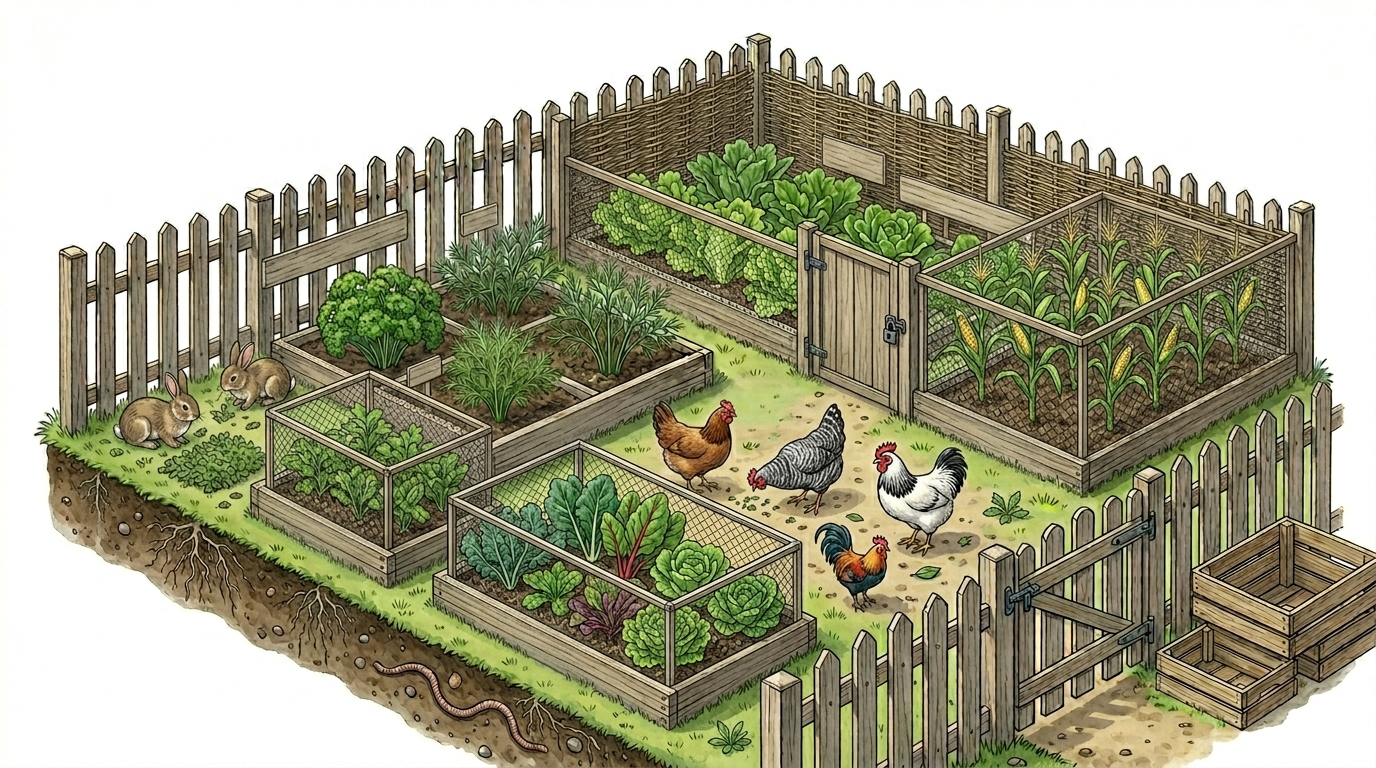
Chickens in the Garden: Safe Plants and Zones
Learn how to design a chicken-friendly garden with suitable plants, protected beds, and well-planned activity areas.
Guide
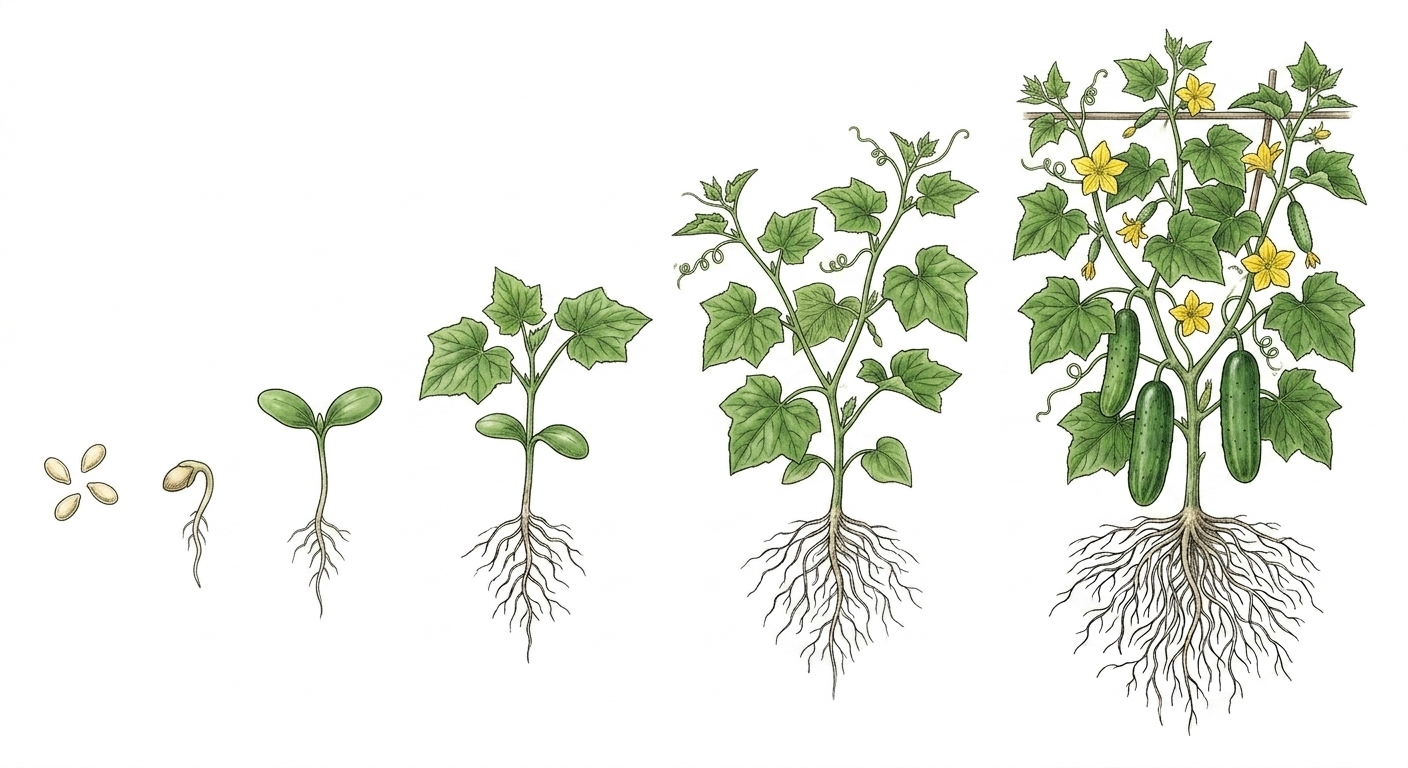
Growing Cucumbers: Starting, Supports and Harvest
Learn how to grow cucumbers successfully with indoor starting, transplanting, trellises, watering, and regular harvesting.
Guide
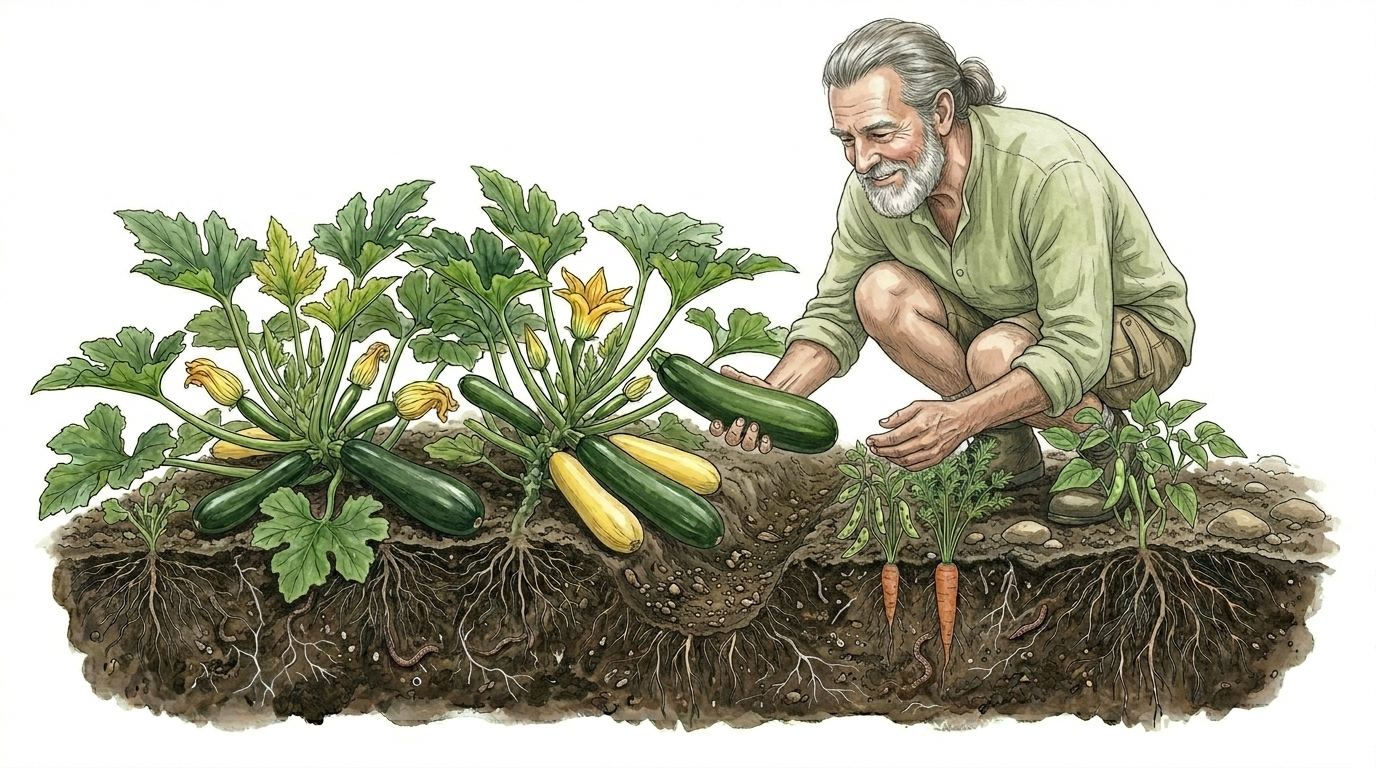
Growing Zucchini: Spacing, Pollination and Mildew
Learn how to grow zucchini with the right site, spacing, pollination support, and practical tips to prevent powdery mildew.
Guide
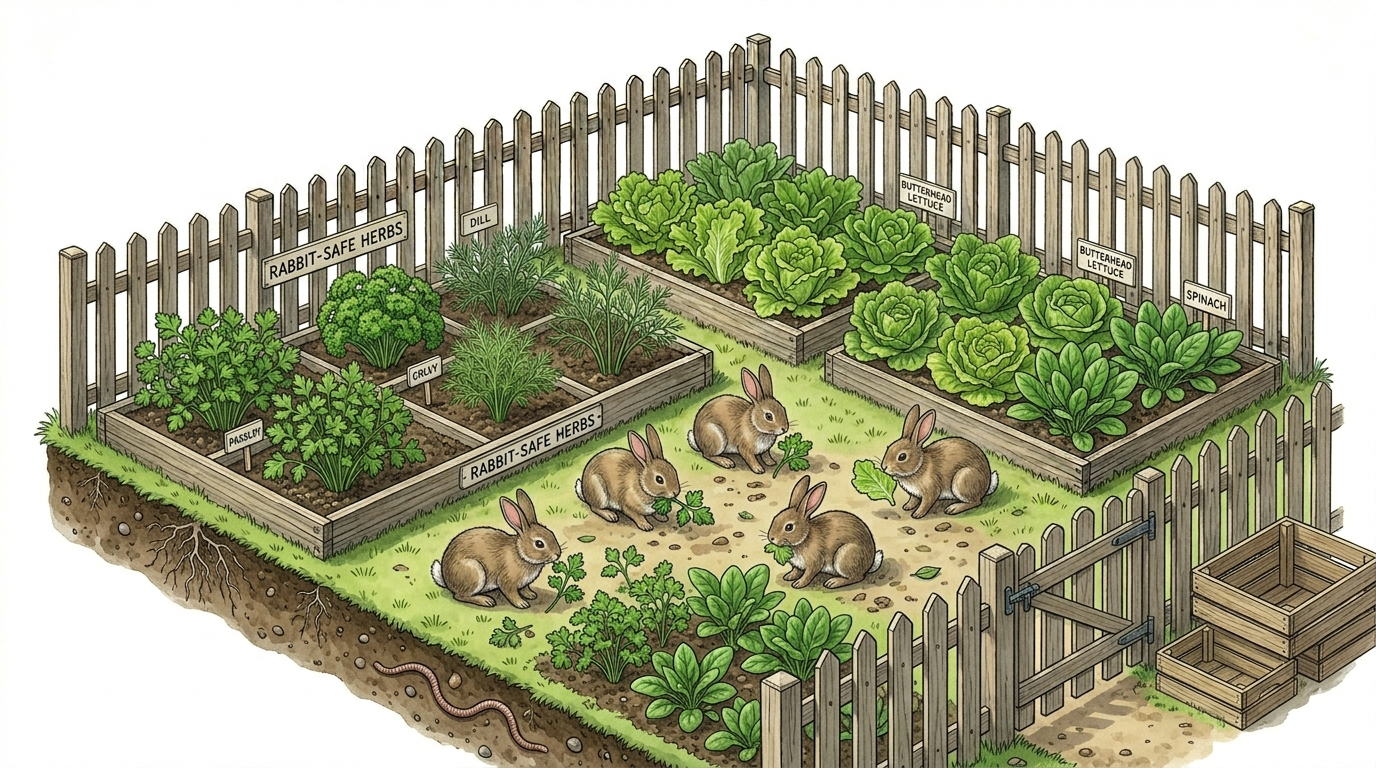
Rabbits in the Garden: Herbs and Vegetables
Learn how to choose suitable herbs and vegetables for rabbits, grow feeding plants, and plan a rabbit-friendly garden.
Internal links
Related plants
Climbing bean
Classic structural partner in the traditional Milpa companion planting system.
Other grasses
Rarely grown as annual vegetables; includes standard cereal crops like wheat, barley, and oats.
Sunflower
Grows to a similar height and can also serve as a sturdy natural trellis for climbing beans.
Field corn / Flint corn
Young plants look identical, but field corn accumulates starch instead of sugars and lacks sweetness.
Popcorn
Belongs to the same species but produces hard, small kernels with a tough hull designed for popping, not fresh consumption.
Sources
Public sources
- Wikidata entity
Wikidata · 2026-05-16
- GBIF species match
GBIF · 2026-05-16
- Deutschsprachige Wikipedia: Zuckermais
Wikipedia · 2026-05-16
- English Wikipedia: Sweet corn
Wikipedia · 2026-05-16