Plant Profile
OkraAbelmoschus esculentus
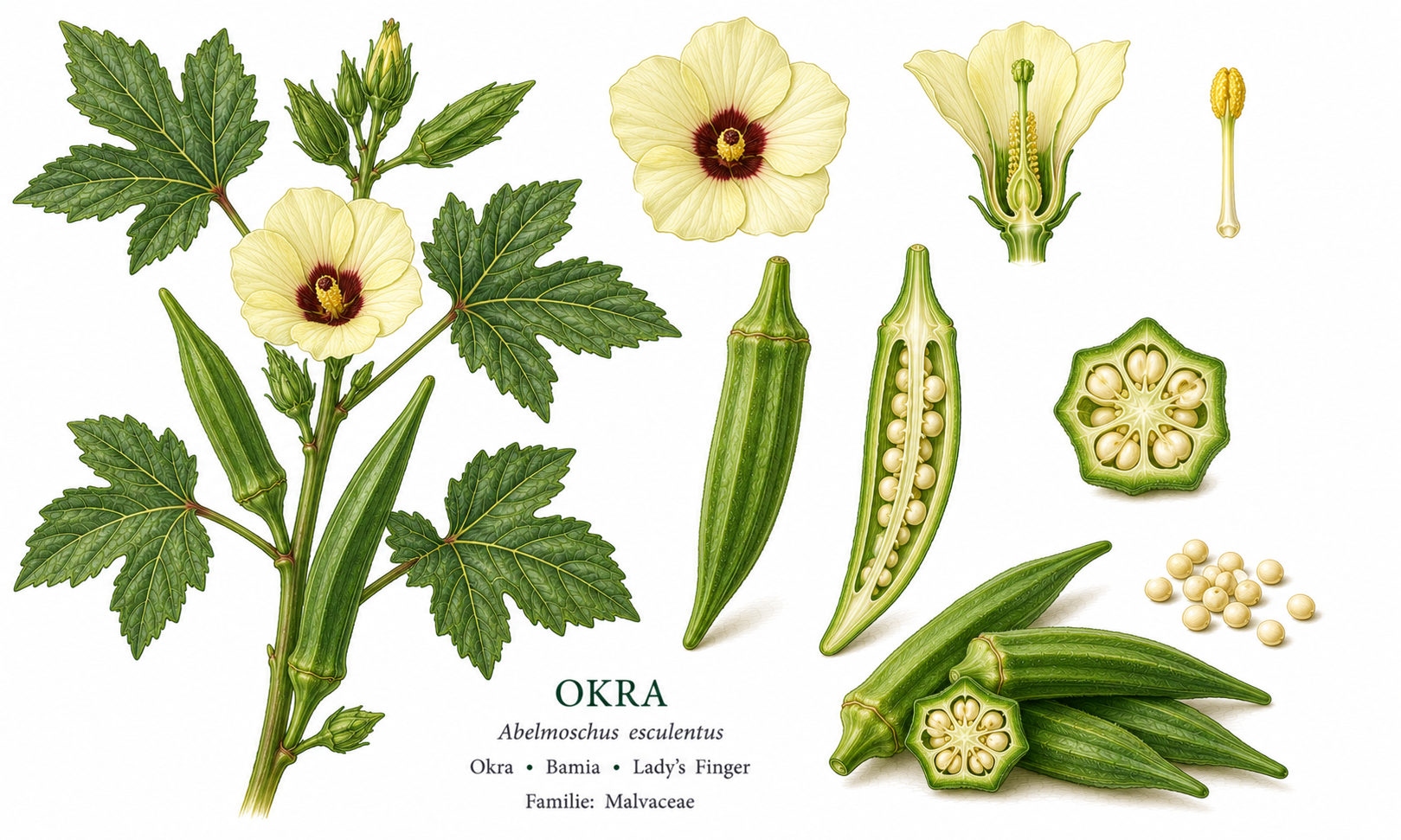
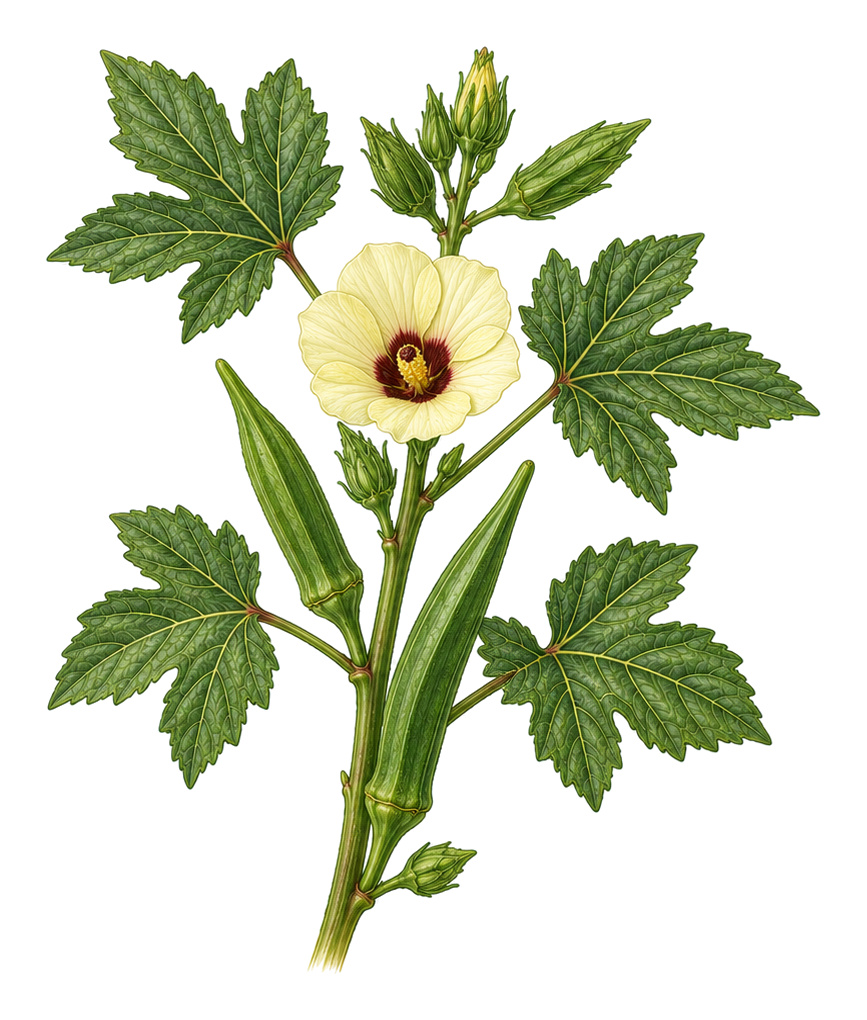
Okra, also known as lady's fingers, is a fascinating fruit vegetable from the mallow family. In Central Europe, it is considered demanding as it requires extreme heat and a long frost-free period. However, its beautiful hibiscus-like flowers also make it an attractive ornamental plant for sunny terraces or greenhouses.
Quick profile
Key data
Suitable growing locations:
Good neighbors
PeppersEggplantBasil
Avoid
No data
Indoor & direct sowing
Okra: Sowing and germination
Pre-culture in pots at minimum 20°C.
Direct sowing only in very warm locations or greenhouses from late May.
Planting & site
Okra: Planting and spacing
Plant out after the last frost when the soil is warm.
Site & practical notes
Harvest tip: Harvest every 2 days to encourage the plant to continue production., Skin safety: Wear long sleeves during harvest to avoid skin irritation from fine hairs.
Temperature & frost
Okra: Temperature and site
Water & nutrients
Okra: Water, nutrients and care
Container & growth
Okra: Container, support and growth
Year plan
Okra Calendar
The magnificent flowers appear in midsummer.
Recurring tasks
Relevant now
June
- No additional single task
Next up
July
- No additional single task
Monthly tasks
Single tasks from monthly data; repeated seasonal windows are shown in the overview above.
January
Quiet month
February
Quiet month
March
No additional single task
April
No additional single task
May
No additional single task
June
No additional single task
August
No additional single task
September
No additional single task
October
No additional single task
November
Quiet month
December
Quiet month
Flowering & pollination
Okra Flowering & pollination
Flowering period
July to September
Flower type
Funnel-shaped, hibiscus-like
Flower color
Yellow with purple center
Self-fertility
highly self-fertile
Pollinator needed
no
Overview
Self-pollinating, though insect visits improve fruit set.
Notes
Bumblebees and honeybees frequently visit the large, nectar-rich flowers.
Pruning & care
Okra Pruning & care
Pruning type
bush_form
Pruning timing
Light management and vitality Remove lower leaves to improve air circulation and prevent fungal diseases.
Remove
Preserve
Avoid
Tools and hygiene
Use sharp shears; disinfect after contact with infested leaves.
Companion guide
Okra Companion guide
Good neighbors
PeppersEggplantBasil
Avoid
No data
Use & storage
Okra Use & storage
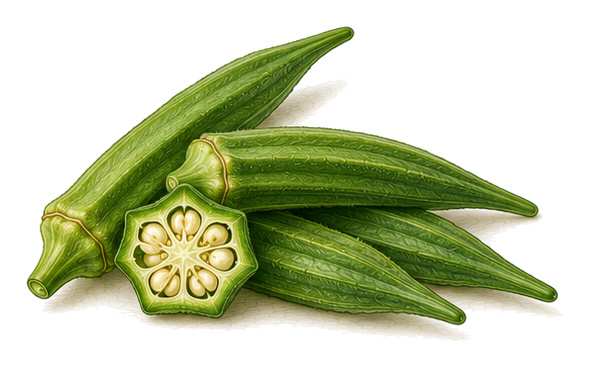
Harvest pods while young (5-10 cm) before they become woody.
Storage
Short-term storage (fresh vegetable)
Storage life
2-3 days in the refrigerator
Harvest
Harvest pods while young (5-10 cm) before they become woody.
Processing
After harvest
Cool quickly after harvest as pods wilt rapidly.
Edibility & safety
Okra Edibility & safety
For people
In brief: which parts are edible, which parts remain risky, and whether raw consumption makes sense.
Safety notes
Non-toxic. The fine hairs can cause irritation on sensitive skin.
Animal safety
This plant is not simply safe or unsafe for animals. 14 animal types have restrictions, so quantity, access, and plant part matter.
Each row shows which parts are more suitable and which parts are critical.
Companion animals
 Dog
DogImmature seed pods, Leaves
Overripe, woody pods
Immature seed pods, Leaves
Overripe, woody pods
Overconsumption, Sensitivity to plant hairs
Gastrointestinal upset, Vomiting, Diarrhea
observe
Okra is generally non-toxic for dogs, particularly the young, immature seed pods, leaves, and flowers. These can be fed occasionally as a treat. Overripe, woody pods may be difficult to digest and can cause gastrointestinal upset. The fine hairs on the surface can cause skin irritation in sensitive dogs. Overfeeding should be avoided to prevent digestive issues. If symptoms such as vomiting or diarrhea occur, a…
Open animal page Cat
CatImmature seed pods, Leaves
Overripe, woody pods
Immature seed pods, Leaves
Overripe, woody pods
Overconsumption may cause gastrointestinal upset due to high fiber content., Young animals or those with sensitive stomachs should receive only very small amounts.
Gastrointestinal upset, Vomiting, Diarrhea
observe
Okra is generally safe for cats when fed in small amounts as an occasional treat. The immature seed pods, leaves, and flowers are edible and may be accepted by some cats. Due to its high fiber content, okra should only be given occasionally and in small amounts to avoid gastrointestinal upset. The fine hairs on the surface may cause mild irritation in sensitive cats but are not toxic.
Open animal page Rabbit
Immature seed pods, Leaves
Overripe, woody pods
Immature seed pods, Leaves
Overripe, woody pods
Overconsumption, Woody pods may cause impaction, Fine hairs may cause irritation
Gastrointestinal upset, Impaction
observe
Okra is safe for rabbits in moderation, especially immature seed pods, leaves, and flowers. Overripe, woody pods should be avoided as they are difficult to digest and may cause gastrointestinal upset or impaction. The fine hairs can cause skin irritation. Suitable as a treat, but not as a main food source.
Open animal page Guinea pig
Immature seed pods, Leaves
Overripe, woody pods
Immature seed pods, Leaves
Overripe, woody pods
Overripe, woody pods may be difficult to digest and cause gastrointestinal discomfort., The fine hairs can cause irritation on sensitive skin.
Gastrointestinal upset
observe
Okra is safe for guinea pigs in moderation, especially immature seed pods, leaves, and flowers. Overripe, woody pods should be avoided as they are difficult to digest. The fine hairs can cause skin irritation. Suitable as a treat, but not as a main food source.
Open animal page Hamster
Immature seed pods, Leaves
Overripe, woody pods, Mature seeds
Immature seed pods, Leaves
Overripe, woody pods, Mature seeds
Overconsumption, Woody pods may cause impaction, Fine hairs may cause irritation
Gastrointestinal upset
observe
Okra is safe for hamsters in moderation, especially immature seed pods, leaves, and flowers. Overripe, woody pods should be avoided as they are difficult to digest. Mature seeds should be fed in very small amounts or avoided due to lectin content and high fiber. The fine hairs can cause skin irritation. Suitable as a treat, but not as a main food source.
Open animal page Budgie
Immature seed pods, Leaves
Overripe, woody pods, Mature seeds
Immature seed pods, Leaves
Overripe, woody pods, Mature seeds
High fiber content from overconsumption, Gossypol in mature seeds, Woody pods pose impaction risk
Gastrointestinal upset from overconsumption, Possible irritation from hairs
observe
Okra pods are suitable for budgies in small amounts as a treat. Mature seeds contain gossypol and should be avoided. Young pods, leaves, and flowers are safe. Overconsumption may cause digestive issues.
Open animal pageFarm animals
 Horse
HorseImmature seed pods, Leaves
Overripe, woody pods
Immature seed pods, Leaves
Overripe, woody pods
Overripe, woody pods may be difficult to digest and cause gastrointestinal upset., The fine hairs can cause irritation on sensitive skin.
Gastrointestinal upset, Colic
observe
Immature okra pods, leaves, and flowers are suitable for horses in moderation as a treat. Overripe, woody pods should be avoided as they may be difficult to digest and cause gastrointestinal upset or colic. The fine hairs can cause irritation on sensitive skin.
Open animal page Chicken
Immature seed pods, Leaves
Overripe, woody pods
Immature seed pods, Leaves
Overripe, woody pods
Overripe, woody pods may cause digestive upset., Overconsumption, Fine hairs may cause irritation
Gastrointestinal upset, Loose droppings
usually no action needed
Immature okra pods, leaves, and flowers are safe for chickens in moderation and can be fed as a treat. Overripe, woody pods should be avoided as they are difficult to digest and may cause gastrointestinal upset. The plant contains no known toxic compounds for chickens. Overconsumption of immature pods may lead to loose droppings. The fine hairs on the pod can cause mild skin irritation in sensitive chickens but are…
Open animal page Duck
DuckImmature seed pods, Leaves
Overripe, woody pods
Immature seed pods, Leaves
Overripe, woody pods
Overripe, woody pods may be difficult to digest and cause gastrointestinal discomfort.
Gastrointestinal upset
usually no action needed
Immature okra pods, leaves, and flowers can be fed to ducks as a treat in moderation. Overripe, woody pods should be avoided as they may be difficult to digest and cause gastrointestinal discomfort. No known toxic compounds in okra for ducks. The fine hairs can cause irritation in sensitive animals.
Open animal page Goose
GooseImmature seed pods, Leaves
Overripe, woody pods
Immature seed pods, Leaves
Overripe, woody pods
Overripe, woody pods may be difficult to digest and cause gastrointestinal discomfort.
Gastrointestinal upset
usually no action needed
Immature okra pods, leaves, and flowers are suitable for geese in moderation as a treat. Overripe, woody pods should be avoided as they may be difficult to digest and cause gastrointestinal discomfort. The fine hairs can cause irritation on sensitive skin, but this is rarely relevant for geese due to their plumage.
Open animal page Sheep
SheepImmature seed pods, Leaves
Overripe, woody pods
Immature seed pods, Leaves
Overripe, woody pods
Overripe, woody pods may cause impaction
Gastrointestinal upset, Impaction
usually no action needed
Immature okra pods, leaves, and flowers are safe and nutritious for sheep in moderation. Overripe, woody pods may pose impaction risk. The fine hairs can cause skin irritation in sensitive individuals but are usually harmless when ingested.
Open animal page Goat
GoatImmature seed pods, Leaves
Overripe, woody pods
Immature seed pods, Leaves
Overripe, woody pods
Overripe, woody pods may cause impaction
Gastrointestinal upset, Impaction
usually no action needed
No direct species-specific source was found for goats. This is a cautious inference from the sheep profile and the known plant-part risks. Immature okra pods, leaves, and flowers are safe and nutritious for goats in moderation. Overripe, woody pods may pose impaction risk. The fine hairs can cause skin irritation in sensitive individuals.
Open animal page Cattle
Immature seed pods, Leaves
Overripe, woody pods
Immature seed pods, Leaves
Overripe, woody pods
Overripe, woody pods may cause mechanical irritation of the digestive tract.
Gastrointestinal upset, Bloating, mild digestive upset
usually no action needed
Okra is generally suitable as feed for cattle, but only specific parts should be fed. Immature fruits, leaves, and flowers are safe and nutritious. Overripe, woody pods should be avoided as they may cause digestive discomfort. The fine hairs can cause irritation on sensitive skin, but are generally not an issue for cattle due to their thick hide and skin. When feeding appropriate parts normally, no poisoning…
Open animal page Pig
PigImmature seed pods, Leaves
Overripe, woody pods
Immature seed pods, Leaves
Overripe, woody pods
Overripe, woody pods may cause digestive upset.
Gastrointestinal upset
observe
Immature okra pods, leaves, and flowers are safe for pigs in moderation and can be used as supplemental feed. Overripe, woody pods should be avoided as they are difficult to digest and may cause gastrointestinal upset. The fine hairs on the pod surface can cause skin irritation in sensitive animals.
Open animal pageThese guidelines are for general information only and do not replace veterinary diagnosis. If critical plant parts were ingested or the animal shows unusual behaviour or symptoms, seek veterinary advice.
Max risk
unknown
Highest status
selected parts only
Urgency
observe
Saving seed
Okra Saving seed
Seed viability
2 - 5 years
Practical tips
Okra Practical tips
Common beginner mistakes
Transplanting too early before the end of May.
Success pattern
A hot summer leads to an explosive harvest starting in August.
High-impact tips
Pre-soak seeds in lukewarm water for 24h before sowing.
Grower observations
In German gardens, dwarf varieties in black pots often achieve the best results.
Plant Profile
Additional plant images
Health
Pests, Diseases
Pests
Aphids
- Distorted shoot tips
- Sticky honeydew
Spider mites
- Fine webs
- Light stippling on leaves
Diseases
Verticillium wilt
- Sudden wilting
- Brown discoloration in stem cross-section
Powdery mildew
White, powdery coating on upper leaf surfaces
Deficiencies
Nitrogen deficiency
- Stunted growth
- Pale green to yellow discoloration of older leaves
Plant health
Diagnosis help
Okra Diagnosis help
Pest groups
Disease groups
Prevention
Diagnosis
If wilting occurs despite moist soil, check for root problems or vascular diseases.
Cultural prevention
Monitoring
Weekly check on leaf undersides (aphids)
First response
Diagnostic rules
Leaves turn yellow and hang limply.
Possible causes: Water stress, Verticillium wilt, Nitrogen deficiency
- Check soil moisture
- Monitor soil temperature
FAQ
Why are my okra pods getting tough?
They were likely harvested too late. Pods should be picked at a length of 5-10 cm.
Is Okra safe for Dog?
Okra is classified as selected parts only for Dog. Risk: unknown. Urgency: observe. Okra is generally non-toxic for dogs, particularly the young, immature seed pods, leaves, and flowers. These can be fed occasionally as a treat. Overripe, woody pods may be difficult to digest and can cause gastrointestinal upset. The fine hairs on the surface can cause skin irritation in sensitive dogs. Overfeeding should be avoided to prevent digestive issues. If symptoms such as vomiting or diarrhea occur, a…
Is Okra safe for Cat?
Okra is classified as selected parts only for Cat. Risk: unknown. Urgency: observe. Okra is generally safe for cats when fed in small amounts as an occasional treat. The immature seed pods, leaves, and flowers are edible and may be accepted by some cats. Due to its high fiber content, okra should only be given occasionally and in small amounts to avoid gastrointestinal upset. The fine hairs on the surface may cause mild irritation in sensitive cats but are not toxic.
Is Okra safe for Rabbit?
Okra is classified as selected parts only for Rabbit. Risk: unknown. Urgency: observe. Okra is safe for rabbits in moderation, especially immature seed pods, leaves, and flowers. Overripe, woody pods should be avoided as they are difficult to digest and may cause gastrointestinal upset or impaction. The fine hairs can cause skin irritation. Suitable as a treat, but not as a main food source.
Is Okra safe for Guinea pig?
Okra is classified as selected parts only for Guinea pig. Risk: unknown. Urgency: observe. Okra is safe for guinea pigs in moderation, especially immature seed pods, leaves, and flowers. Overripe, woody pods should be avoided as they are difficult to digest. The fine hairs can cause skin irritation. Suitable as a treat, but not as a main food source.
Guides
Related guides
Guide
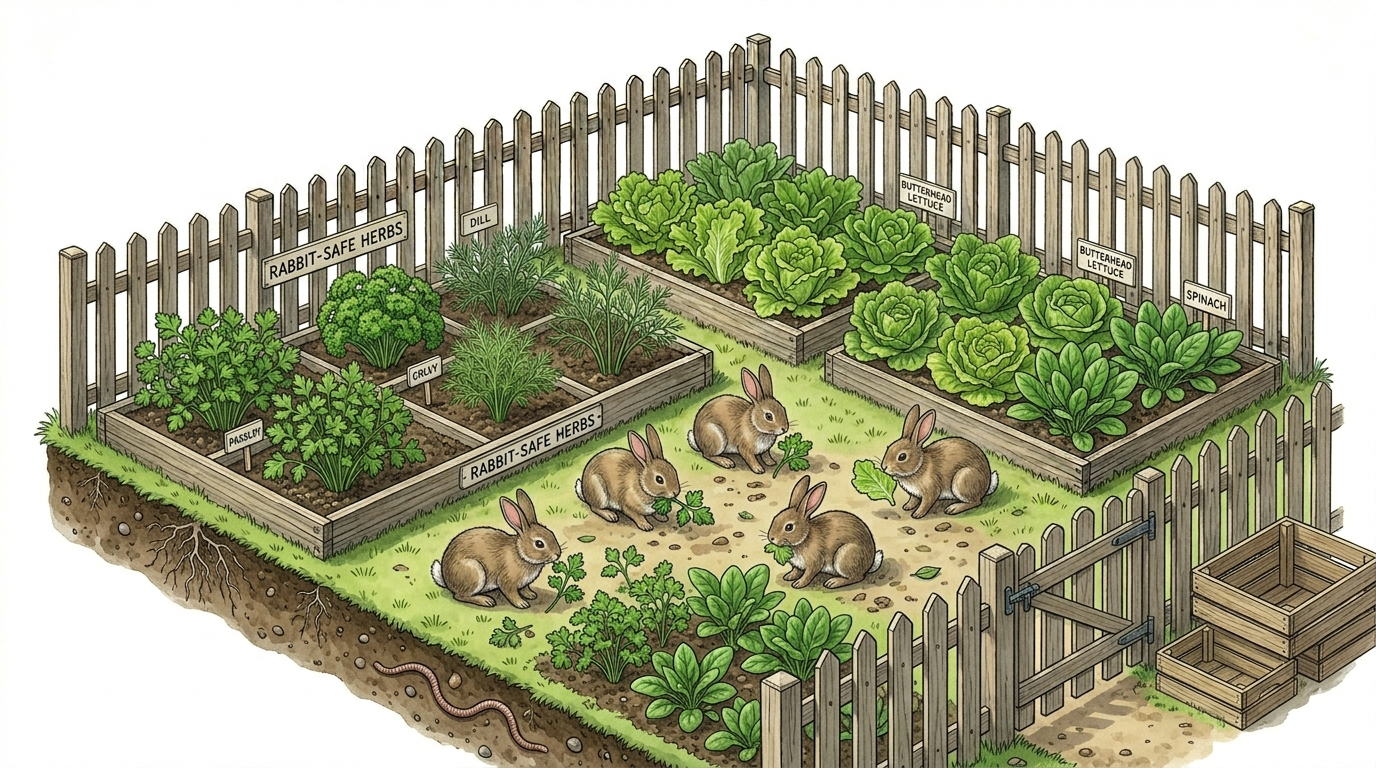
Rabbits in the Garden: Herbs and Vegetables
Learn how to choose suitable herbs and vegetables for rabbits, grow feeding plants, and plan a rabbit-friendly garden.
Guide
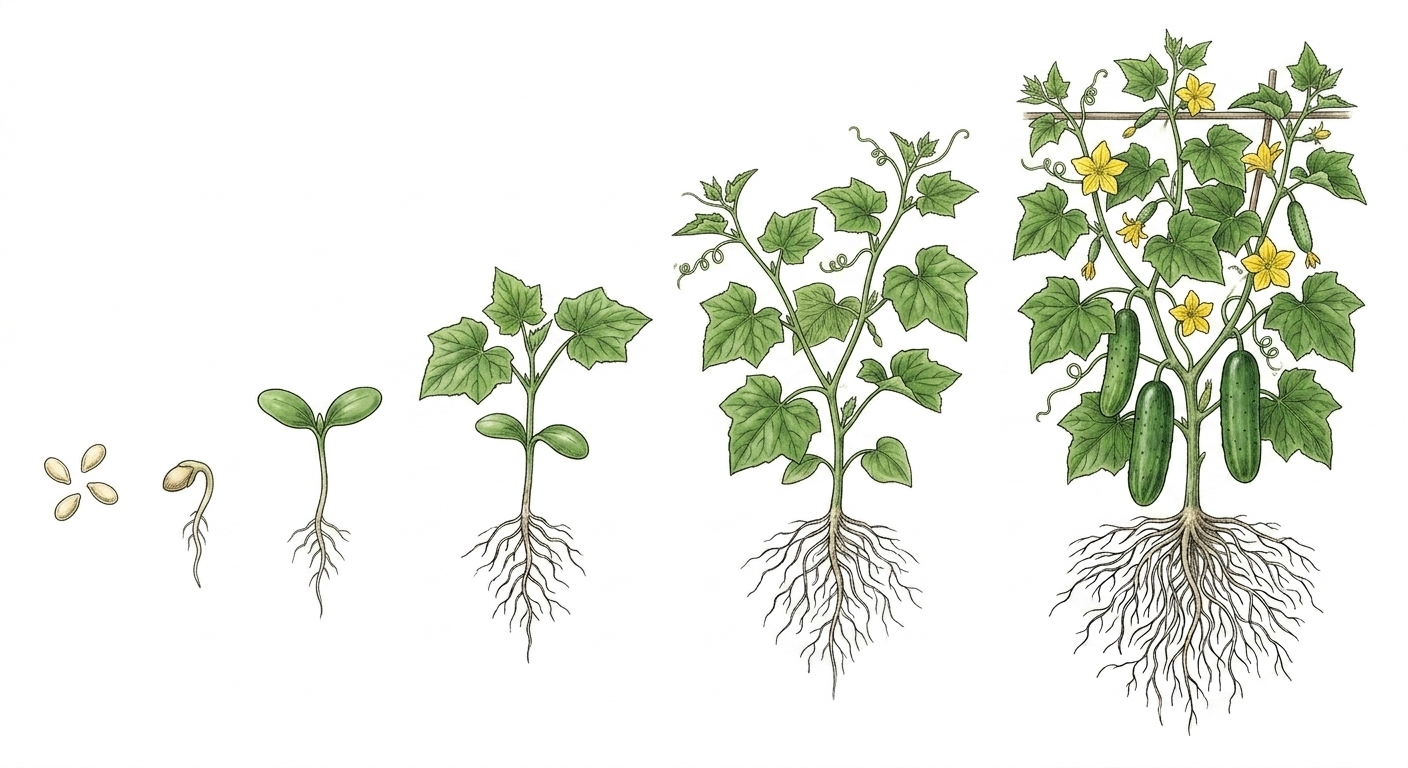
Growing Cucumbers: Starting, Supports and Harvest
Learn how to grow cucumbers successfully with indoor starting, transplanting, trellises, watering, and regular harvesting.
Guide
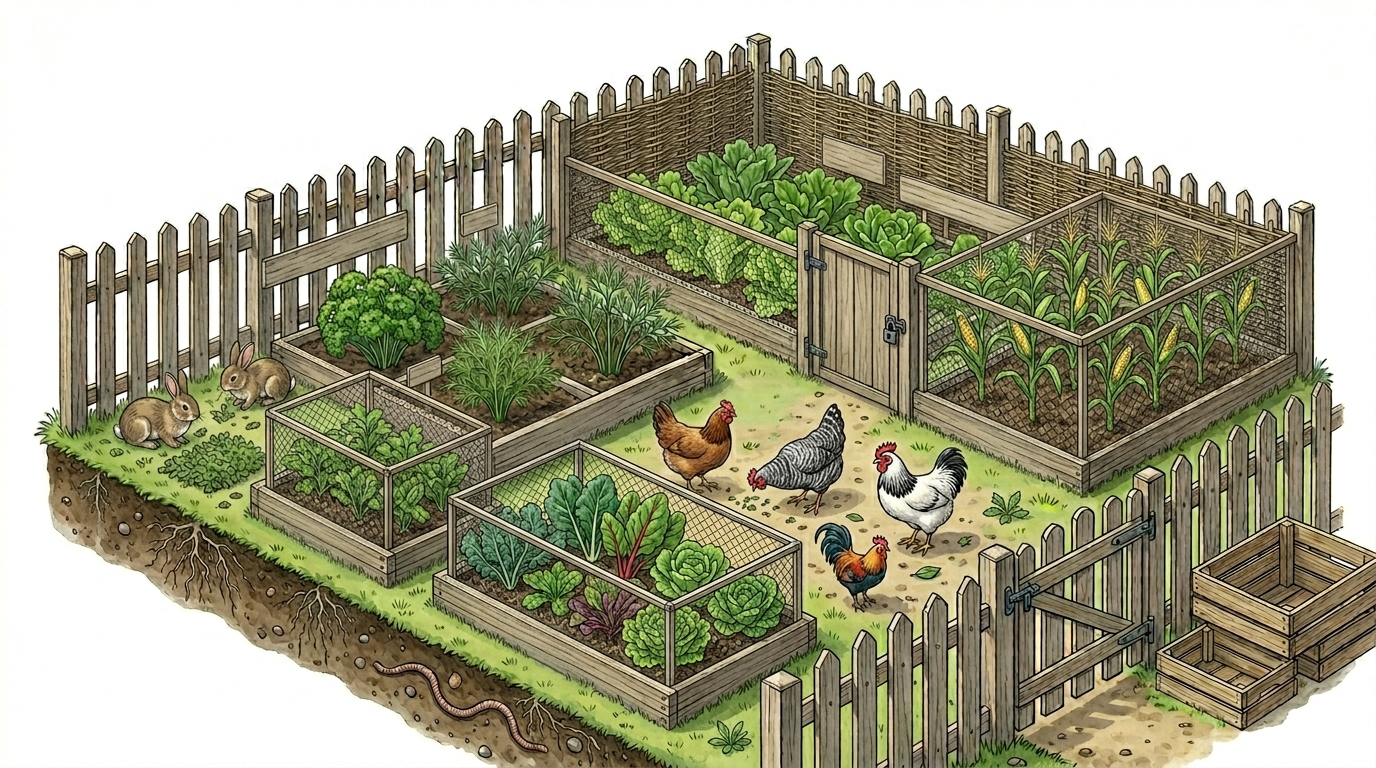
Chickens in the Garden: Safe Plants and Zones
Learn how to design a chicken-friendly garden with suitable plants, protected beds, and well-planned activity areas.
Guide
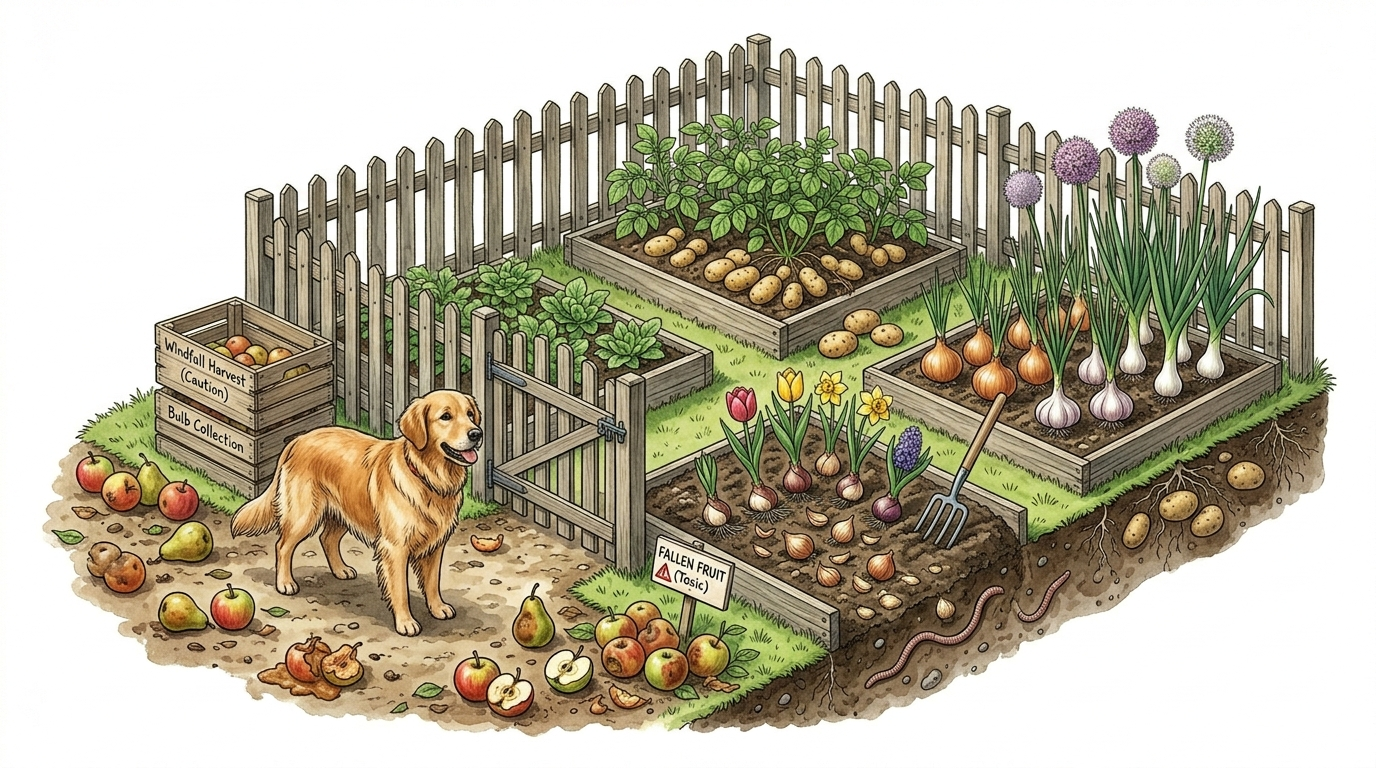
Dogs in the Garden: Windfall Fruit and Risks
Keep your garden dog-safe by managing windfall fruit, seeds, stored crops, and potentially problematic plant parts.
Internal links
Related plants
Hibiscus
Verticillium wilt
Cabbage
Cucumber
Eggplant
Similar heat requirements and cultivation period.
Marshmallow
Both belong to the Malvaceae family.
Jute mallow
Also rich in natural mucilage for sauces.
Rose of Sharon
Similar flower shape, but purely ornamental use.
Sources
Public sources
- Wikidata entity
Wikidata · 2026-05-14
- GBIF species match
GBIF · 2026-05-14
- Deutschsprachige Wikipedia: Okra
Wikipedia · 2026-05-14
- English Wikipedia: Okra
Wikipedia · 2026-05-14