Plant Profile
AlmondPrunus dulcis
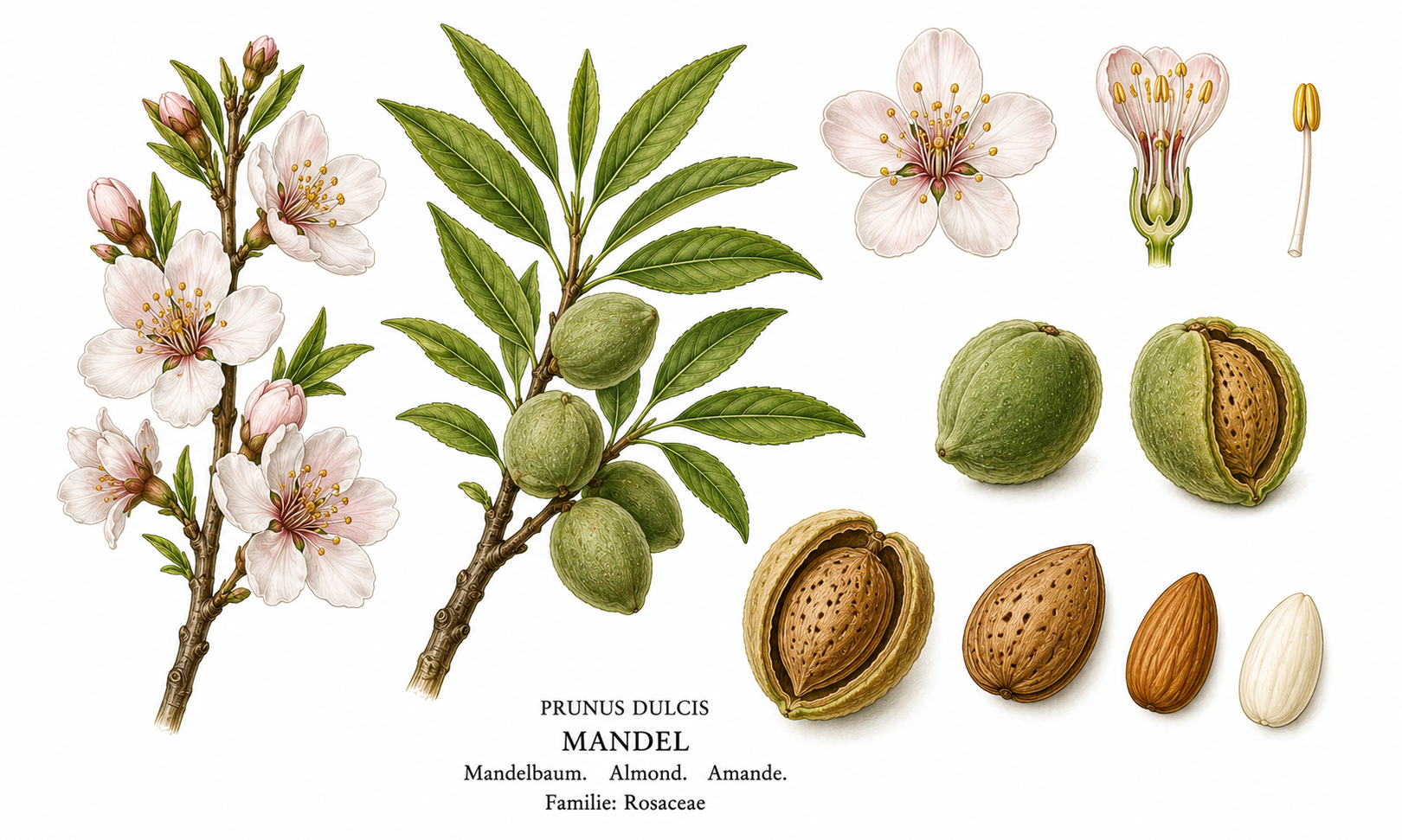
The almond (Prunus dulcis) is a symbol of spring and one of the most valuable nut-bearing trees for mild climates. Its pale pink blossoms in late winter are not only a visual delight but also a vital early food source for pollinators. Successful cultivation in Central Europe requires sheltered locations and the selection of late-blooming or frost-resistant varieties.
Quick profile
Key data
Suitable growing locations:
Good neighbors
LavenderGarlic
Avoid
Walnut
Indoor & direct sowing
Almond: Sowing and germination
Sowing of seeds in pots under glass after stratification.
Direct sowing in autumn for natural stratification in the soil.
Planting & site
Almond: Planting and spacing
Planting preferred in late autumn or early spring before bud break.
Site & practical notes
Avoid nitrogen over-fertilization in late summer to ensure the wood's frost hardiness.
Temperature & frost
Almond: Temperature and site
Water & nutrients
Almond: Water, nutrients and care
Container & growth
Almond: Container, support and growth
Year plan
Almond Calendar
Recurring tasks
Relevant now
June
- No additional single task
Next up
July
- No additional single task
Monthly tasks
Single tasks from monthly data; repeated seasonal windows are shown in the overview above.
January
No additional single task
February
No additional single task
March
No additional single task
April
No additional single task
May
Quiet month
June
Quiet month
August
No additional single task
September
No additional single task
October
No additional single task
November
No additional single task
December
Quiet month
Flowering & pollination
Almond Flowering & pollination
Flowering period
Months: 2, 3, 4, Peak month: 3
Flower type
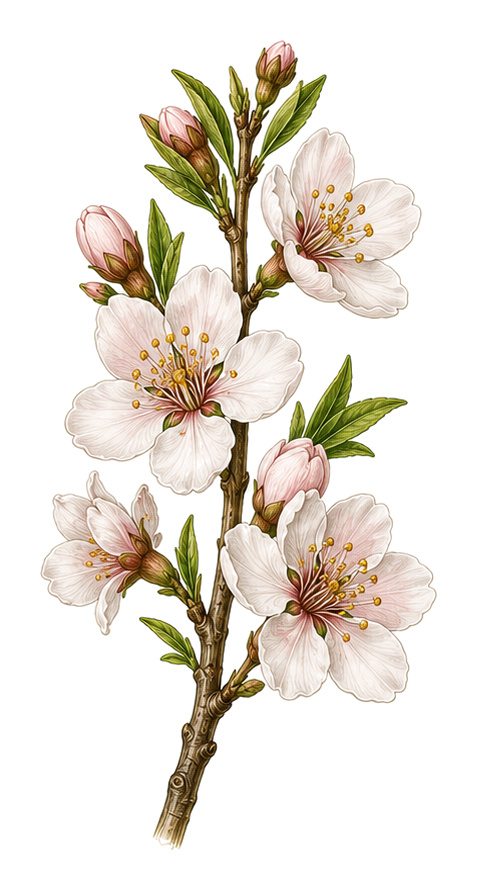
Single, five-petaled
Flower color
White to pale pink
Self-fertility
variety_dependent
Pollinator needed
yes
Overview
Primarily by insects (bees); many older varieties are self-sterile, while modern varieties are often self-fertile.
Notes
Due to very early blooming, bumblebees are important pollinators as they fly at lower temperatures than honeybees.
Pruning & care
Almond Pruning & care
Pruning type
Open Vase (Bowl) or Modified Central Leader
Pruning timing
Structural pruning, removal of dead/diseased wood, thinning of overcrowded branches. Perform on frost-free days before bud break. This is the main pruning time.
Light thinning, removal of vigorous upright shoots, maintaining an open canopy. A light summer prune can improve light penetration and fruit ripening, but avoid heavy cuts.
Remove
Preserve
Avoid
Tools and hygiene
Always use sharp, clean pruning tools to prevent disease transmission and ensure clean cuts.
Companion guide
Almond Companion guide
Good neighbors
LavenderGarlic
Avoid
Walnut
Use & storage
Almond Use & storage
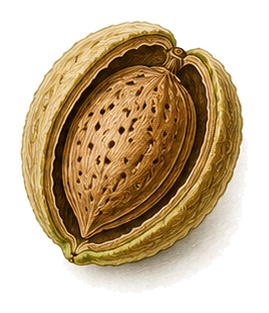
Harvest when the green hulls split open and dry out.
Storage
Dry storage (nuts)
Storage life
In-shell up to 12 months; shelled approx. 3–6 months.
Primary use
Direct consumption and baking ingredient.
Harvest
Harvest when the green hulls split open and dry out.
Processing
After harvest
Remove hulls immediately; allow almonds to cure and dry in a well-ventilated area to prevent mold.
Edibility & safety
Almond Edibility & safety
For people
In brief: which parts are edible, which parts remain risky, and whether raw consumption makes sense.
Safety notes
Sweet almonds are safe. Bitter almonds (often on wild forms) contain amygdalin, which releases cyanide and is toxic when raw.
Animal safety
For animals, the specific plant part matters here: some parts may be suitable, while others should be avoided. At least one critical rating is listed for 10 animal types.
Each row shows which parts are more suitable and which parts are critical.
Companion animals
 Dog
DogSweet almond kernels (shelled, unsalted)
Bitter almond kernels, Fruit hull, Hard inner shell (endocarp)
Sweet almond kernels (shelled, unsalted)
Bitter almond kernels, Fruit hull, Hard inner shell (endocarp)
Ingestion of bitter almonds, Ingestion of shells or hulls (choking hazard, gastrointestinal obstruction), Overconsumption of sweet almonds (high fat content can lead to pancreatitis)
Vomiting, Gastrointestinal upset, Diarrhea
emergency vet immediately
Sweet almond kernels (shelled, unsalted) are generally considered safe for dogs in moderation. Bitter almonds, often found in wild varieties, contain amygdalin, which releases hydrogen cyanide and is highly toxic. The fruit hull, hard inner shell, leaves, and stems are also hazardous due to amygdalin content or the risk of gastrointestinal obstruction. Distinguishing between sweet and bitter almonds can be…
Open animal page Cat
CatNo suitable parts listed
Bitter almond kernels, Fruit hull, Hard inner shell (endocarp)
No suitable parts listed
Bitter almond kernels, Fruit hull, Hard inner shell (endocarp)
Ingestion of bitter almonds, Ingestion of shells or hulls (gastrointestinal obstruction), Ingestion of leaves, stems, or flowers
Vomiting, Gastrointestinal upset, Diarrhea
emergency vet immediately
No specific data is available for cats. Due to the amygdalin content in bitter almonds and other plant parts, which can release hydrogen cyanide, the plant is classified as potentially toxic. Immediate veterinary attention is required if ingestion is suspected.
Open animal page Rabbit
Sweet almond kernels (shelled, in very small amounts as an occasional treat)
Bitter almonds, Leaves, Stems
Sweet almond kernels (shelled, in very small amounts as an occasional treat)
Bitter almonds, Leaves, Stems
Ingestion of bitter almonds or other plant parts, Excessive consumption of sweet almonds, Young, sick, or pregnant animals are more susceptible
Difficulty breathing, Tremors, Weakness
emergency vet immediately
Bitter almonds and other plant parts contain cyanogenic glycosides, which release hydrocyanic acid and are highly toxic. Sweet almond kernels may be tolerated in very small amounts as a rare treat, but are not suitable as regular feed and can cause digestive issues if overfed. Due to the high fat content and potential toxicity of other plant parts, almonds are generally not recommended for rabbits.
Open animal page Guinea pig
Sweet almond kernels (shelled, in very small amounts as a treat)
Bitter almonds, Leaves, Stems
Sweet almond kernels (shelled, in very small amounts as a treat)
Bitter almonds, Leaves, Stems
Confusion with bitter almonds, Ingestion of leaves, stems, or unripe fruits, Ingestion of hard shell
Difficulty breathing, Tremors, Weakness
emergency vet immediately
Sweet almond kernels can be offered in very small amounts as an occasional treat. Bitter almonds and all other plant parts contain amygdalin, which releases hydrogen cyanide and is toxic. Confusion between sweet and bitter almonds is dangerous.
Open animal page Hamster
Sweet almond kernels (shelled, unsalted, raw)
Bitter almonds, Fruit hull, Hard inner shell
Sweet almond kernels (shelled, unsalted, raw)
Bitter almonds, Fruit hull, Hard inner shell
Ingestion of bitter almonds, Ingestion of shells, Overconsumption of sweet almond kernels
Difficulty breathing, Tremors, Weakness
emergency vet immediately
Sweet almond kernels can be offered in very small quantities as an occasional treat. Bitter almonds and all other plant parts are toxic and must be strictly avoided. High fat content of kernels can lead to obesity and digestive issues if overfed.
Open animal page Budgie
Sweet almond kernels (shelled, in very small amounts as a rare treat, only under strict supervision)
Bitter almonds, Almond shells, Leaves
Sweet almond kernels (shelled, in very small amounts as a rare treat, only under strict supervision)
Bitter almonds, Almond shells, Leaves
Ingestion of bitter almonds, Ingestion of almond shells, Ingestion of leaves or stems
Difficulty breathing, Tremors, Weakness
emergency vet immediately
Shelled sweet almonds may be offered in very small amounts as a rare treat, but still carry a risk, especially if not fully shelled or mistaken for bitter almonds. Bitter almonds, shells, leaves, and stems contain amygdalin, which releases hydrogen cyanide and is highly toxic. Due to the high risk of mistaken identity or ingestion of toxic parts, feeding almonds to budgies is generally not recommended.
Open animal pageFarm animals
 Horse
HorseSweet almond kernels (shelled)
Bitter almonds, Leaves, Stems
Sweet almond kernels (shelled)
Bitter almonds, Leaves, Stems
Ingestion of bitter almonds, leaves, or stems, Ingestion of large quantities of unripe fruit or pits, Plant material damaged by frost or wilting (can increase cyanide release)
Respiratory distress, Tremors, Weakness
emergency vet immediately
Sweet almond kernels are safe in small quantities as a treat. Other parts of the plant, especially bitter almonds, leaves, and stems, contain amygdalin, which releases hydrocyanic acid (cyanide) upon digestion and is highly toxic to horses. Symptoms of cyanide poisoning can appear rapidly and be fatal. Horses should not have access to almond trees or their fallen parts.
Open animal page Chicken
Sweet almond kernels
Bitter almonds (raw), Leaves, Stems
Sweet almond kernels
Bitter almonds (raw), Leaves, Stems
Access to bitter almond trees, Consumption of raw bitter almonds, Consumption of leaves or stems
Respiratory distress, Weakness, Incoordination
emergency vet immediately
Sweet almond kernels can be offered in very small quantities as an occasional treat. Bitter almonds, leaves, stems, and other plant parts contain amygdalin, which releases hydrocyanic acid (cyanide) and is toxic to chickens. Confusion between sweet and bitter almonds must be strictly avoided.
Open animal page Duck
DuckSweet almond kernels (shelled, processed, in very small amounts as a treat)
Bitter almond kernels (raw), Leaves, Stems
Sweet almond kernels (shelled, processed, in very small amounts as a treat)
Bitter almond kernels (raw), Leaves, Stems
Ingestion of bitter almonds, Ingestion of leaves, stems, or bark, Ingestion of large quantities
Difficulty breathing, Weakness, Tremors
emergency vet immediately
No direct species-specific source was found for ducks. This is a cautious inference from the geese profile and the known plant-part risks.
Open animal page Goose
GooseSweet almond kernels (shelled, processed, in very small amounts as a treat)
Bitter almond kernels (raw), Leaves, Stems
Sweet almond kernels (shelled, processed, in very small amounts as a treat)
Bitter almond kernels (raw), Leaves, Stems
Ingestion of bitter almonds, Ingestion of leaves, stems, or bark, Ingestion of large quantities
Difficulty breathing, Weakness, Tremors
emergency vet immediately
Sweet almond kernels are safe in very small amounts as a treat, provided they are shelled and processed. Bitter almonds and all other plant parts (leaves, stems, bark, fruit hulls) contain amygdalin, which releases hydrogen cyanide upon digestion and is highly toxic. No specific data for geese is available, but the general toxicity of cyanogenic glycosides is relevant across many animal species.
Open animal page Sheep
SheepSweet almond kernels (shelled, in moderation)
Leaves, Stems, Bark
Sweet almond kernels (shelled, in moderation)
Leaves, Stems, Bark
Consumption of large quantities, Consumption of bitter almonds or other plant parts (leaves, stems), Consumption of wilted material (can promote cyanide release)
Difficulty breathing, Tremors, Weakness
emergency vet immediately
No direct species-specific source was found for sheep. This is a cautious inference from the goats profile and the known plant-part risks.
Open animal page Goat
GoatSweet almond kernels (shelled, in moderation)
Leaves, Stems, Bark
Sweet almond kernels (shelled, in moderation)
Leaves, Stems, Bark
Consumption of large quantities, Consumption of bitter almonds or other plant parts (leaves, stems), Consumption of wilted material (can promote cyanide release)
Difficulty breathing, Tremors, Weakness
emergency vet immediately
The plant contains cyanogenic glycosides, especially amygdalin, which releases hydrocyanic acid upon digestion. Sweet almond kernels are safe in small quantities, but leaves, stems, bark, and bitter almonds are toxic. Ruminants like goats are particularly susceptible to cyanide poisoning.
Open animal page Cattle
Sweet almond kernels (after hull and shell removal)
Bitter almonds, Leaves, Stems
Sweet almond kernels (after hull and shell removal)
Bitter almonds, Leaves, Stems
Access to wild or bitter almond trees, Consumption of leaves, stems, or unprocessed nuts, Consumption of large quantities
Difficulty breathing, Tremors, Weakness
emergency vet immediately
While sweet almond kernels in small quantities might be safe as a treat for some animals, bitter almonds, as well as leaves, stems, and fruit hulls, contain amygdalin, a cyanogenic glycoside that releases hydrogen cyanide upon digestion. This is highly toxic to cattle. Given that cattle are grazing animals and may consume leaves and other plant parts, the plant as a whole is not recommended.
Open animal page Pig
PigSweet almonds (shelled seed kernels)
Bitter almonds, Leaves, stems
Sweet almonds (shelled seed kernels)
Bitter almonds, Leaves, stems
Access to bitter almond trees, Consumption of leaves, stems, or unprocessed/unshelled nuts
Respiratory distress, Weakness, Tremors
emergency vet immediately
Sweet almonds (shelled seed kernels) can be offered in moderation as a treat. Bitter almonds, as well as leaves, stems, and other plant parts, contain amygdalin, which releases hydrocyanic acid (cyanide) upon digestion and is toxic to pigs. Distinguishing between sweet and bitter almonds is often difficult for laypersons.
Open animal pageThese guidelines are for general information only and do not replace veterinary diagnosis. If critical plant parts were ingested or the animal shows unusual behaviour or symptoms, seek veterinary advice.
Max risk
unknown
Highest status
do not feed
Urgency
emergency vet immediately
Saving seed
Almond Saving seed
Seed viability
1 - 2 years
Practical tips
Almond Practical tips
Common beginner mistakes
Planting in heavy, wet soil.
Success pattern
Rich harvest following a dry, warm summer.
High-impact tips
Apply white trunk paint in November.
Grower observations
In harsher areas, fleece protection during the March bloom helps tremendously.
Plant Profile
Additional plant images
Health
Pests, Diseases
Pests
Aphids
Distorted leaves, sticky honeydew.
Black peach aphid
Curling of new growth.
Diseases
Monilia blossom wilt
Shoot tips wilt suddenly after flowering and die back.
Peach leaf curl
Leaves show red, blistery swellings and curl up.
Deficiencies
Iron deficiency (Chlorosis)
Yellow leaves with green veins, often caused by excessively high pH.
Plant health
Diagnosis help
Almond Diagnosis help
Pest groups
Disease groups
Prevention
Diagnosis
When leaf changes occur, check the underside of the leaves for pests before assuming a fungal disease.
Cultural prevention
Monitoring
Weekly inspection starting from the onset of bloom
First response
Remove and dispose of infested plant parts (not in compost)
Diagnostic rules
Dieback after flowering
Possible causes: Monilinia laxa
- Are there gumosis spots on the wood?
- Was it wet and cold during flowering?
FAQ
Is the almond tree winter hardy?
The wood tolerates down to -20°C, but the early blossoms are very sensitive to frost.
Is Almond safe for Dog?
Almond is classified as selected parts only for Dog. Risk: unknown. Urgency: emergency vet immediately. Sweet almond kernels (shelled, unsalted) are generally considered safe for dogs in moderation. Bitter almonds, often found in wild varieties, contain amygdalin, which releases hydrogen cyanide and is highly toxic. The fruit hull, hard inner shell, leaves, and stems are also hazardous due to amygdalin content or the risk of gastrointestinal obstruction. Distinguishing between sweet and bitter almonds can be…
Is Almond safe for Cat?
Almond is classified as do not feed for Cat. Risk: unknown. Urgency: emergency vet immediately. No specific data is available for cats. Due to the amygdalin content in bitter almonds and other plant parts, which can release hydrogen cyanide, the plant is classified as potentially toxic. Immediate veterinary attention is required if ingestion is suspected.
Is Almond safe for Rabbit?
Almond is classified as do not feed for Rabbit. Risk: unknown. Urgency: emergency vet immediately. Bitter almonds and other plant parts contain cyanogenic glycosides, which release hydrocyanic acid and are highly toxic. Sweet almond kernels may be tolerated in very small amounts as a rare treat, but are not suitable as regular feed and can cause digestive issues if overfed. Due to the high fat content and potential toxicity of other plant parts, almonds are generally not recommended for rabbits.
Is Almond safe for Guinea pig?
Almond is classified as do not feed for Guinea pig. Risk: unknown. Urgency: emergency vet immediately. Sweet almond kernels can be offered in very small amounts as an occasional treat. Bitter almonds and all other plant parts contain amygdalin, which releases hydrogen cyanide and is toxic. Confusion between sweet and bitter almonds is dangerous.
Guides
Related guides
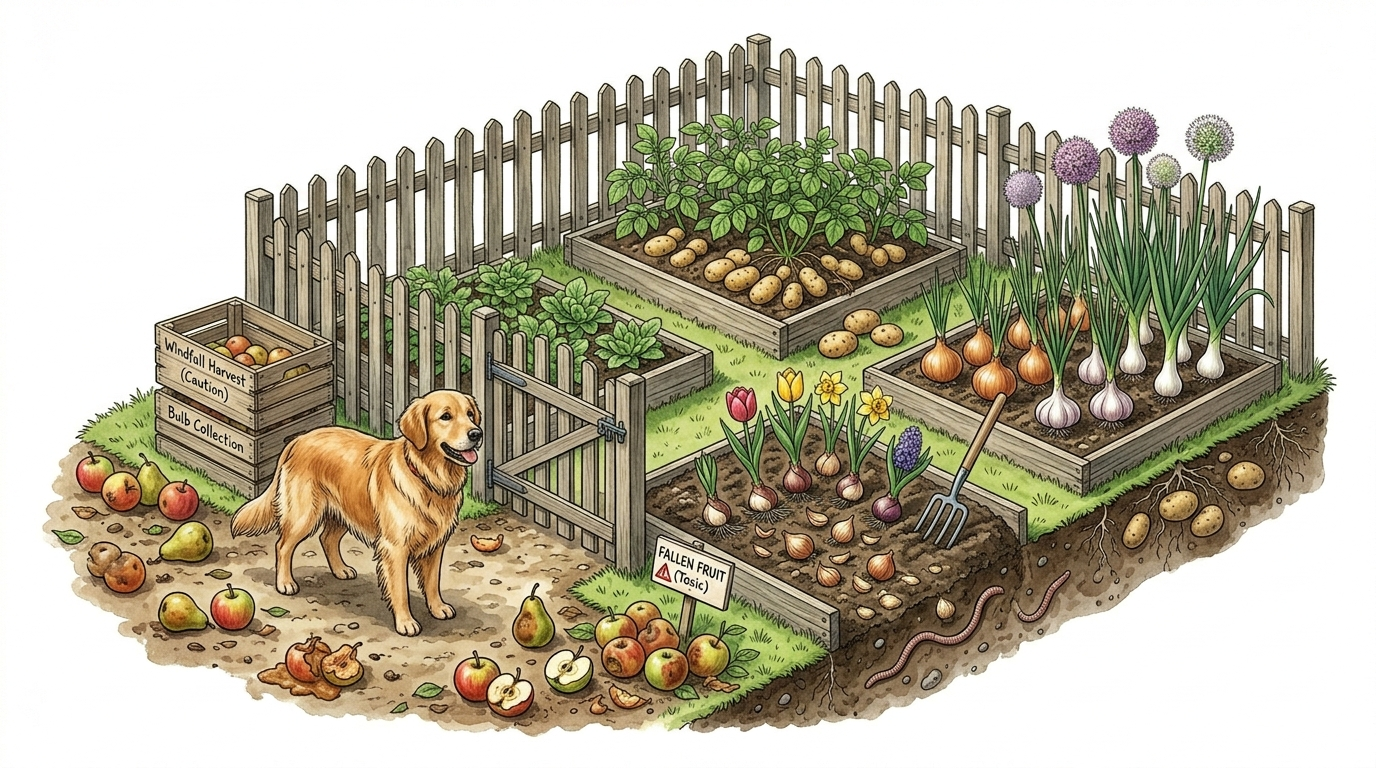
Guide
Dogs in the Garden: Windfall Fruit and Risks
Keep your garden dog-safe by managing windfall fruit, seeds, stored crops, and potentially problematic plant parts.
Guide
Horse Pastures and Garden Plants: Safety Checks
Learn how to identify risks near horse pastures, fences, turnout areas, fruit trees, and garden planting zones.
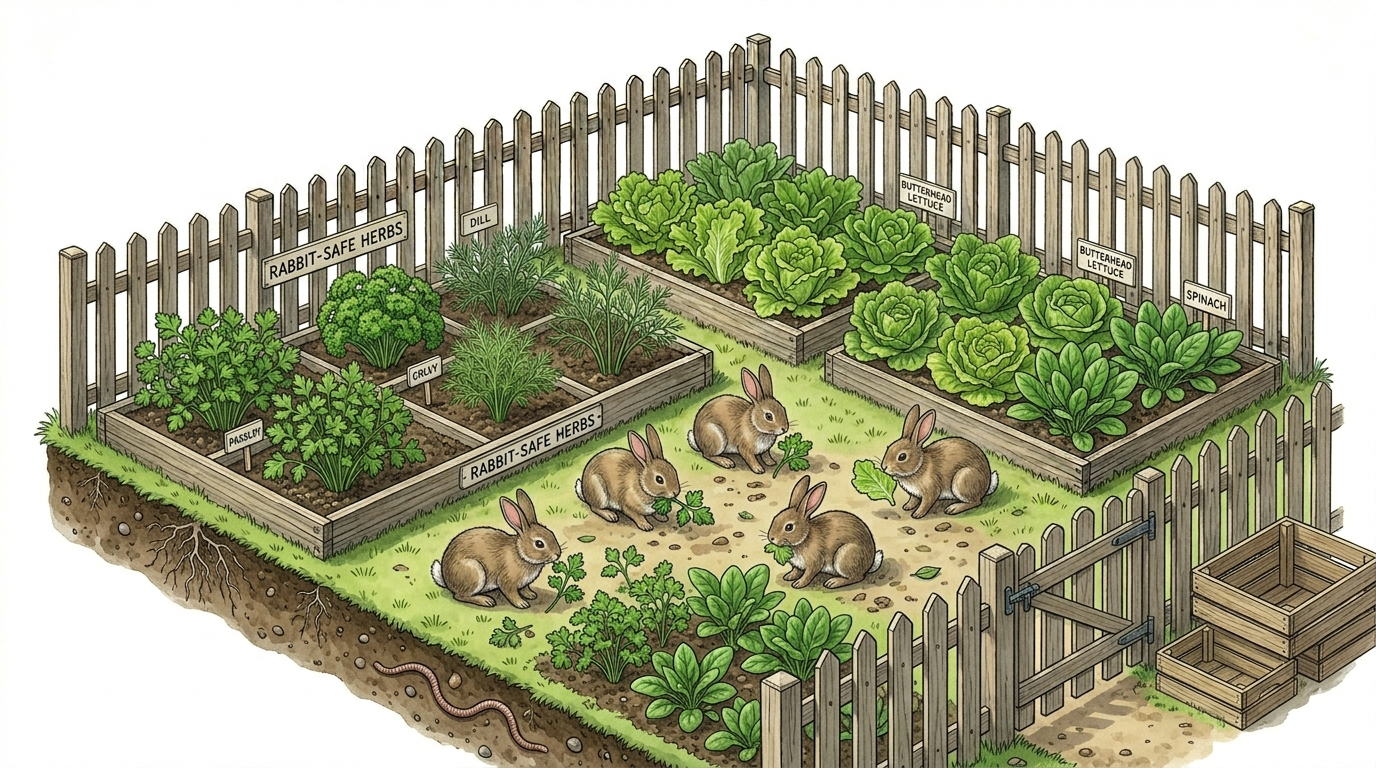
Guide
Rabbits in the Garden: Herbs and Vegetables
Learn how to choose suitable herbs and vegetables for rabbits, grow feeding plants, and plan a rabbit-friendly garden.
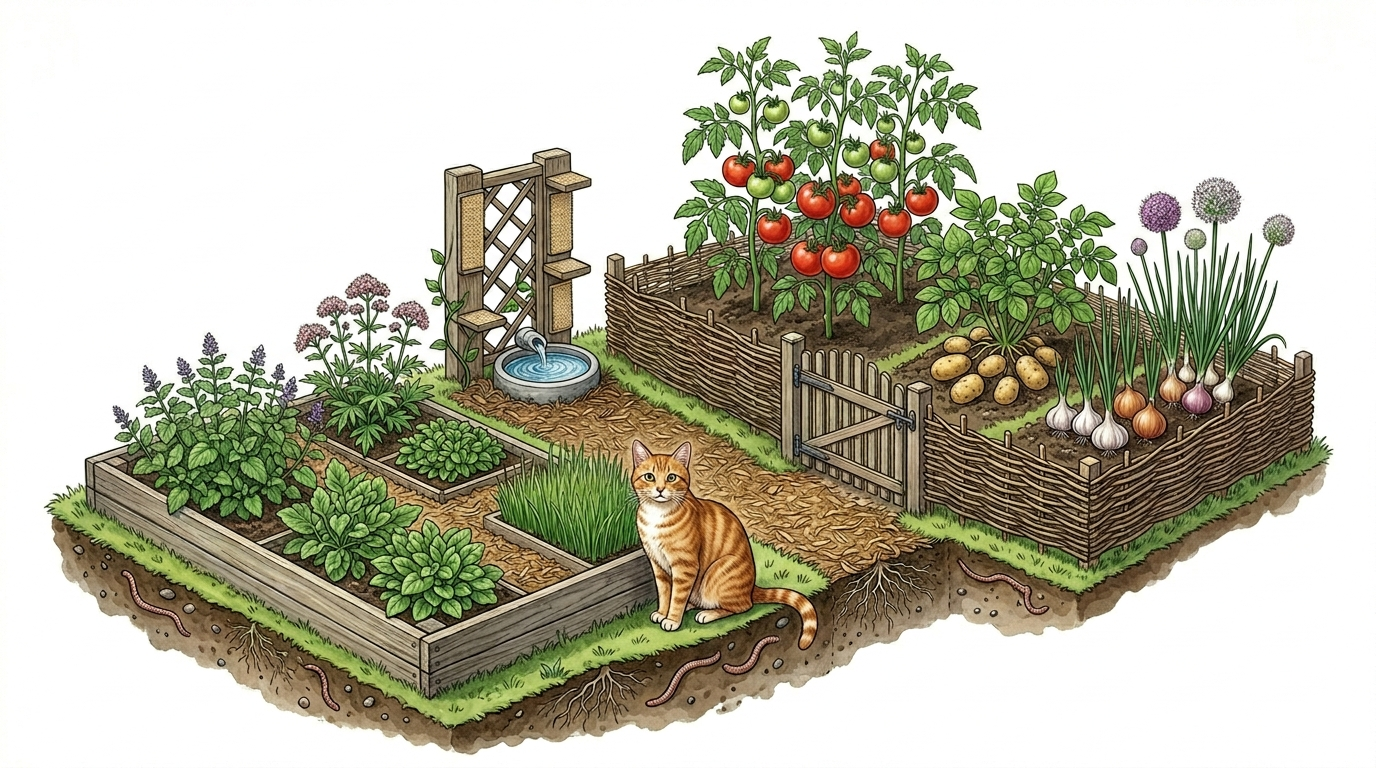
Guide
Toxic Garden Plants for Cats: Safer Planning
Learn which garden plants can be risky for cats, how to plan safer beds, and what to do if a cat eats a toxic plant.
Internal links
Related plants
Plum
Peach
Very similar foliage and blossoms; the almond is closely related to the peach.
Peach leaf curl
Apricot
Similar requirements regarding warmth and location.
Sweet Cherry
Both belong to the Rose family (Rosaceae).
Hazelnut
Used as a nut crop and baking ingredient.
Sources
Public sources
- Wikidata entity
Wikidata · 2026-05-14
- GBIF species match
GBIF · 2026-05-14
- English Wikipedia: Prunus dulcis
Wikipedia · 2026-05-14