Guide
Replanting Raised Beds in Late Summer
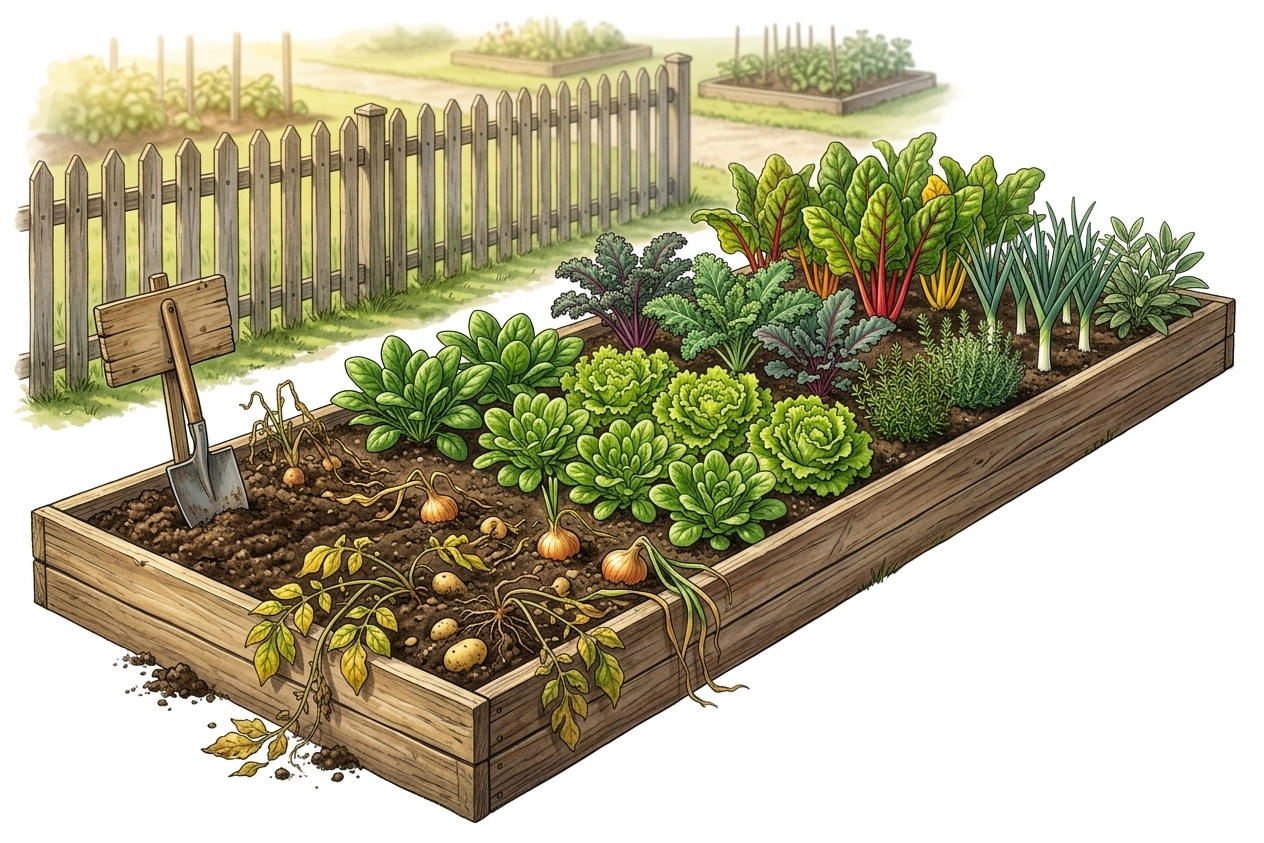
When early potatoes or onions are harvested, raised beds often develop large empty areas by July or August. Instead of leaving them unused until spring, you can sow follow-up crops and keep harvesting for months.
Why follow-up crops are worthwhile
Raised beds often have several productive months remaining after early crops are harvested. Warm soil and favorable growing conditions help many vegetables establish quickly.
- Better use of available growing space
- Fresh harvests through autumn and winter
- Less bare soil
- Continuous supply of salads and leafy greens
Follow-up crops after potatoes
Early potatoes are often harvested in July, leaving enough time for many autumn and winter crops.
- Lamb's lettuce
- Spinach
- Radishes
- Asian greens
- Cut-and-come-again lettuce
- Rocket
- Miner's lettuce
Potatoes are heavy feeders. Adding a thin layer of mature compost before sowing can help maintain soil structure.
Follow-up crops after onions
After onions are harvested, the soil is usually loose and easy to work. Many leafy crops establish successfully in these conditions.
- Lamb's lettuce
- Spinach
- Asian greens
- Radishes
- Leaf lettuce
- Endive
- Hardy herbs
Best crops from July to September
Not every crop is suitable for a late-season start. Fast-growing leafy vegetables and hardy autumn crops are usually the most reliable.
- Lamb's lettuce for autumn and winter harvests
- Spinach for autumn harvests and overwintering
- Asian greens with short growing periods
- Radishes for quick harvests
- Rocket for repeated leaf harvests
- Leaf lettuces for continuous picking
- Miner's lettuce for cold-season production
Preparing the raised bed
- 1
Remove the previous crop
Clear potatoes, onions, and all crop residues from the bed.
- 2
Loosen the soil
Gently loosen the surface layer without disturbing the overall structure.
- 3
Add compost
Incorporate a thin layer of mature compost if needed.
- 4
Choose suitable crops
Select follow-up crops based on the remaining growing season.
- 5
Sow and keep moist
Fresh sowings require consistent moisture during warm late-summer weather.
Late-summer care
Raised beds can dry out quickly in summer. Regular watering is often more important than additional fertilization.
- Water regularly during dry periods
- Monitor young seedlings during heat waves
- Use mulch to retain moisture
- Thin crowded seedlings when necessary
Common mistakes to avoid
- Sowing too late and overestimating the remaining season
- Leaving open areas unused
- Allowing seeds to dry out during hot weather
- Following heavy feeders with another demanding crop immediately
- Leaving crop residues in the bed
Frequently asked questions
What can I grow after potatoes in a raised bed?
Lamb's lettuce, spinach, radishes, Asian greens, rocket, and other fast-growing leafy crops are excellent options.
Can I sow directly after harvesting onions?
Yes. Once residues are removed and the soil is lightly loosened, many autumn crops can be sown immediately.
Which follow-up crop is easiest to grow?
Lamb's lettuce is one of the easiest and most reliable crops for late-summer and autumn sowing.
Internal links
Related plants
Guides
Related guides
Guide
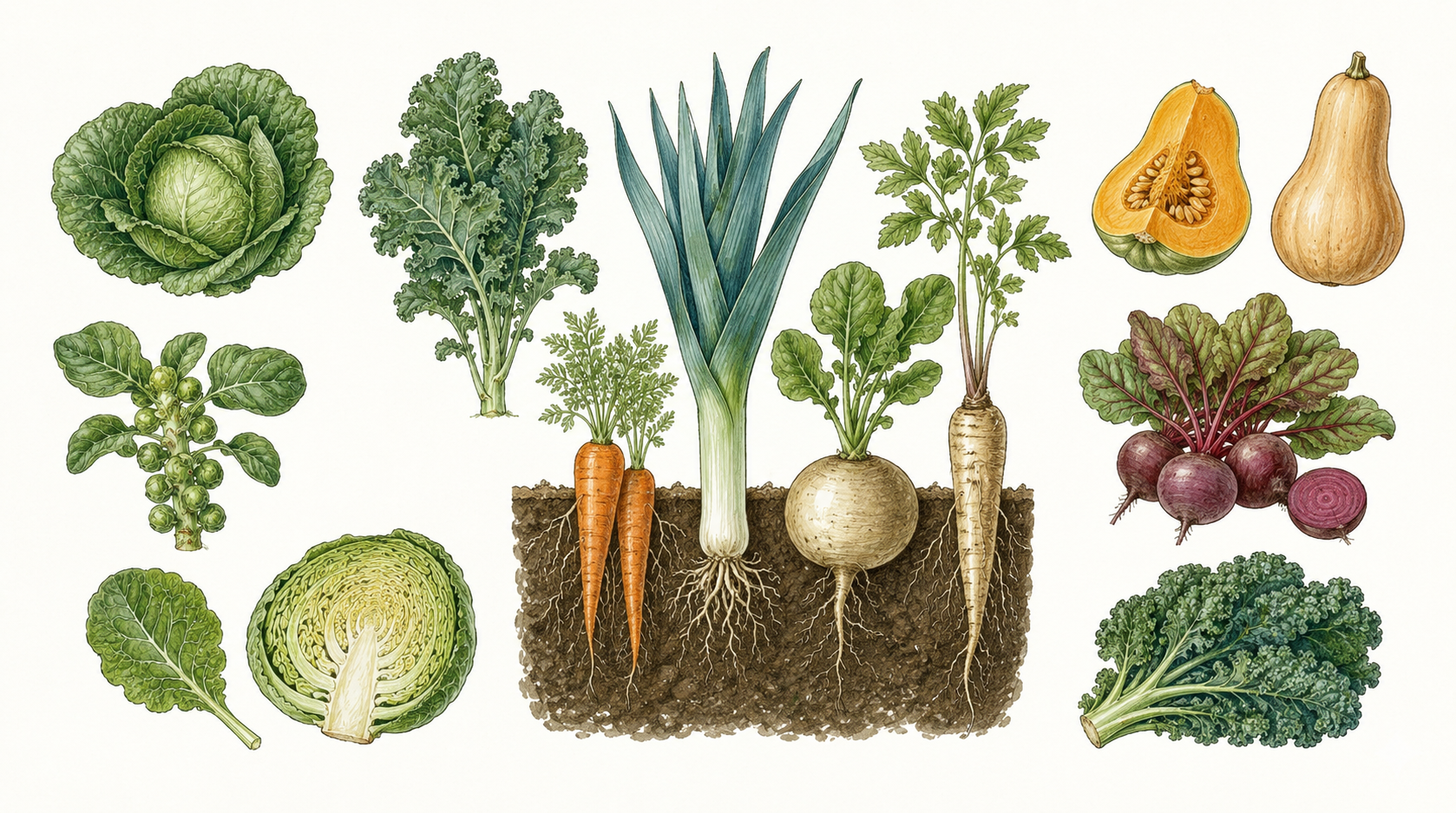
Growing Autumn Vegetables for Winter Harvests
Learn how to grow autumn vegetables such as kale, spinach, lamb's lettuce, and leeks for harvests into winter.
Guide
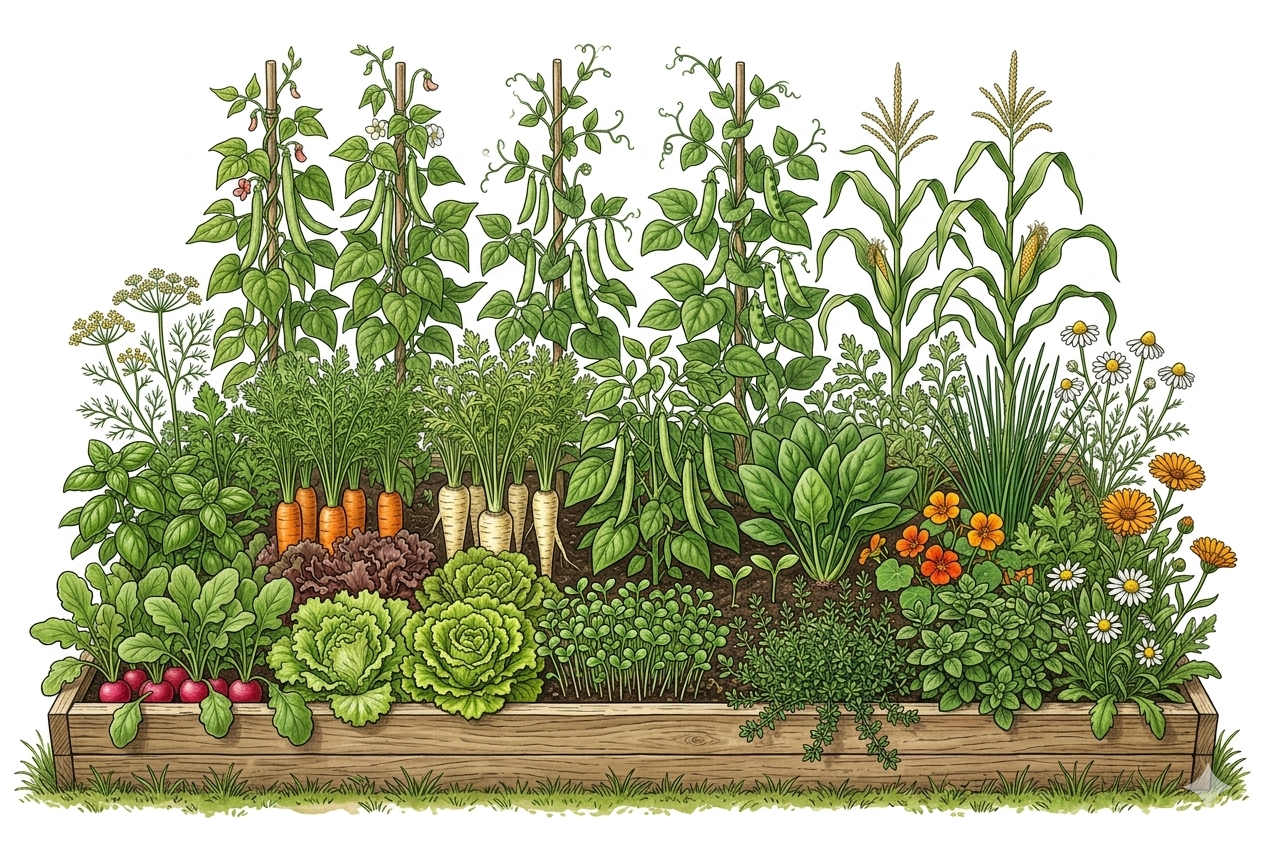
Small Garden Bed Planning: Combine 20 Crops Well
Use small beds efficiently by combining 20 vegetables and herbs, planning successions, and avoiding wasted gaps.
Guide
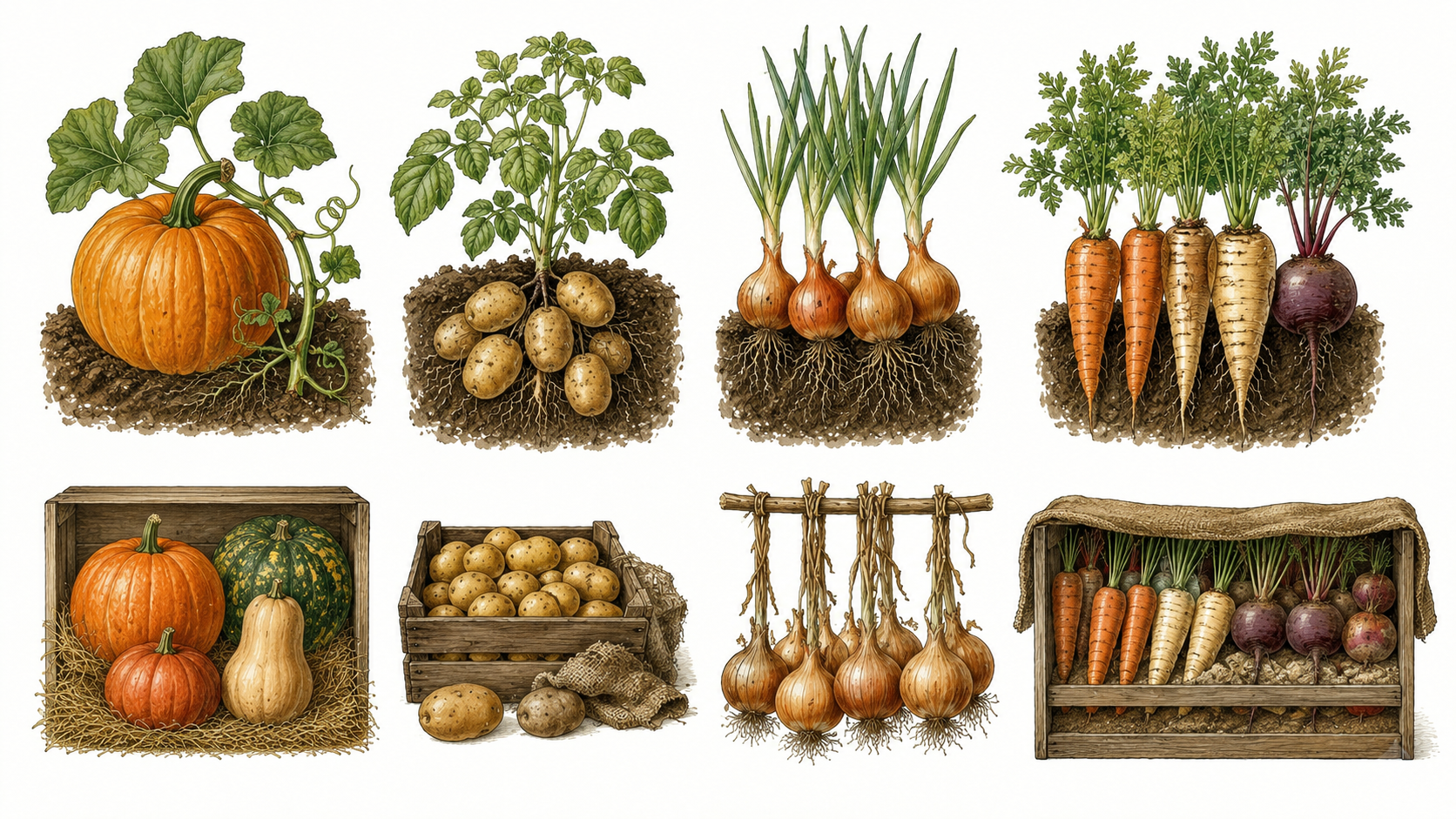
Autumn Harvest and Storage for Squash and Root Crops
Learn how to harvest and store squash, potatoes, onions, and root vegetables for longer freshness through autumn and winter.
Guide
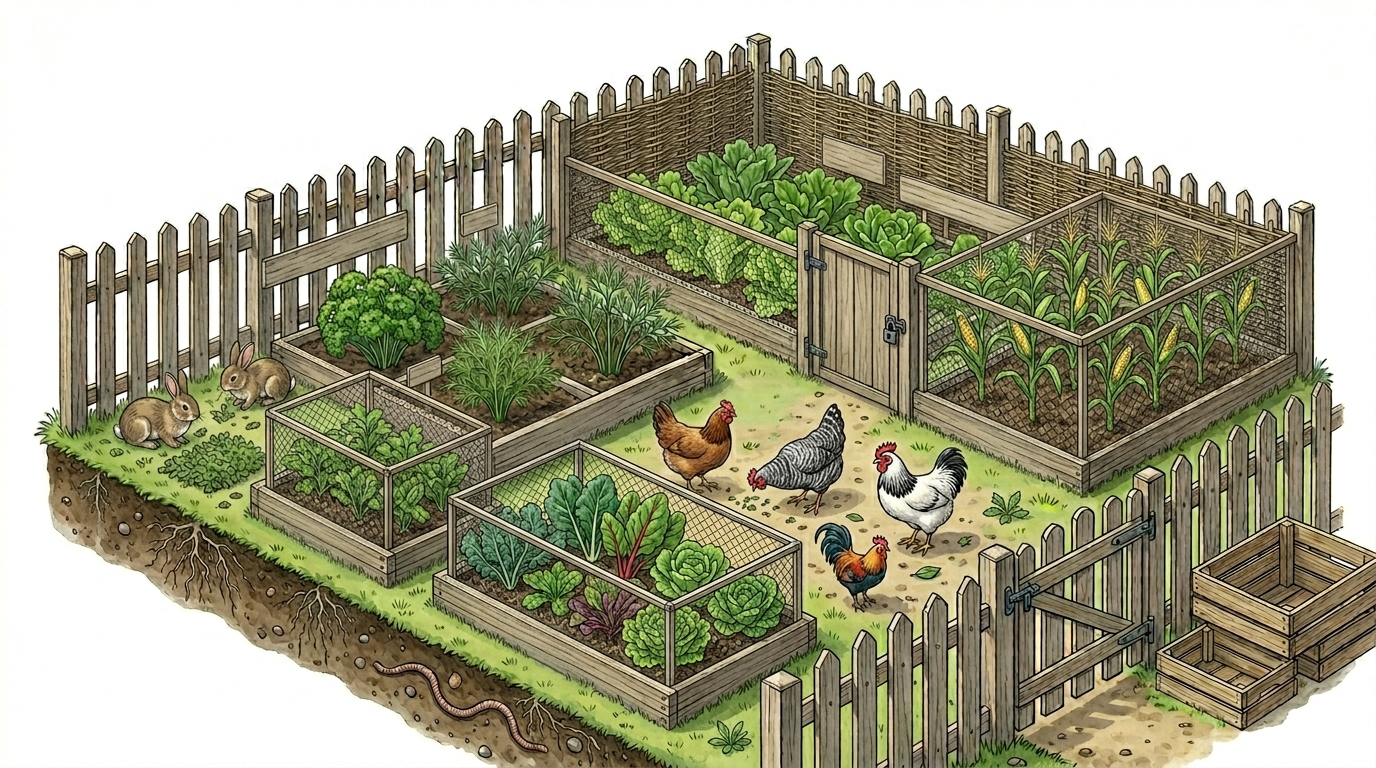
Chickens in the Garden: Safe Plants and Zones
Learn how to design a chicken-friendly garden with suitable plants, protected beds, and well-planned activity areas.