Guide
Watering Vegetable Gardens: Mulch, Water and Mistakes
Water is essential for healthy vegetables and reliable harvests. With the right watering routine, even soil moisture, and mulch, garden plants cope better with summer heat and dry periods.
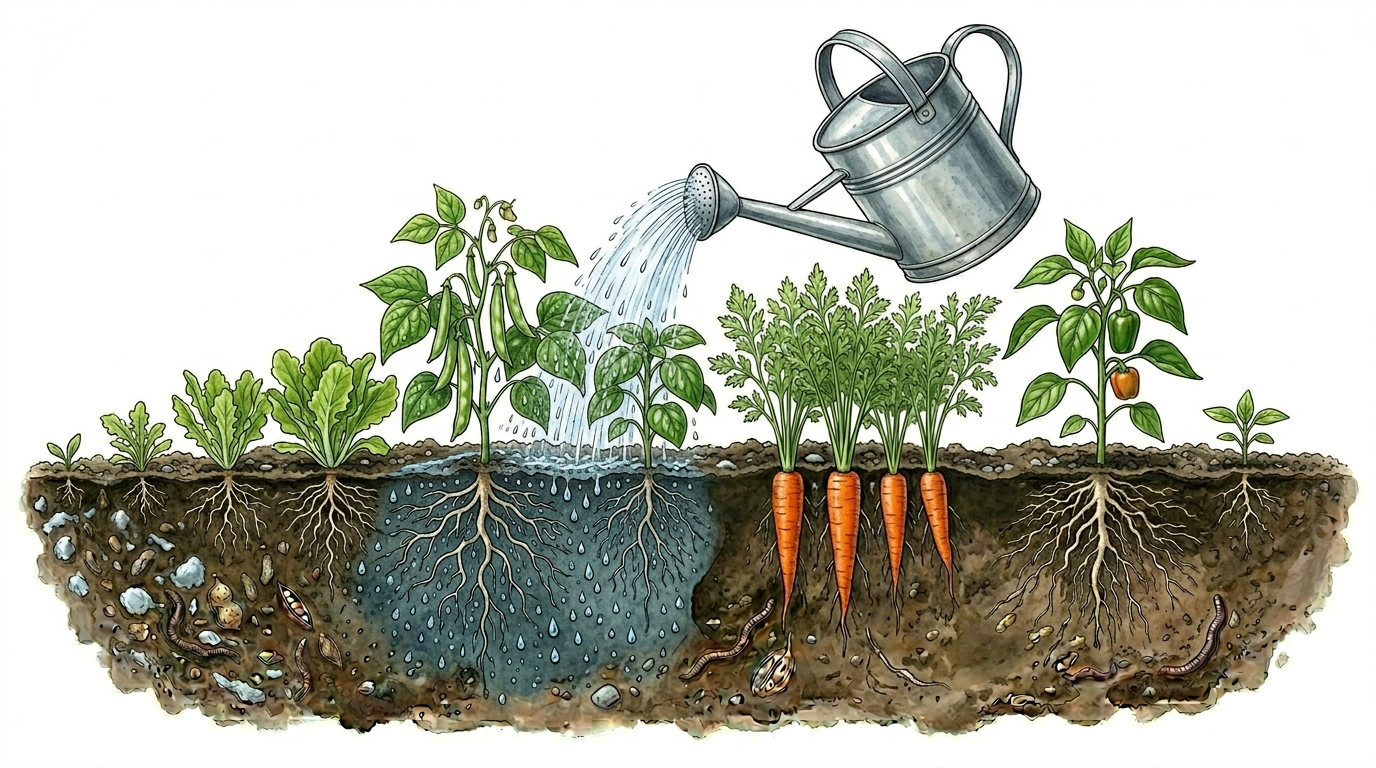
How much water do vegetables need?
Water requirements depend on weather, soil, and plant type. Large leafy vegetables and fast-growing summer crops usually need much more water than slower-growing plants.
- Tomatoes, cucumbers, and zucchini need regular watering
- Lettuce reacts quickly to drought stress
- Potatoes prefer evenly moist soil
- Basil grows best in warm and consistently moist conditions
Why morning watering works best
Early morning is often the best time to water. Plants begin the day well supplied, while extra moisture can dry off more quickly.
- Less evaporation than during midday heat
- Leaves dry faster during the day
- Roots absorb water more efficiently
- Lower risk of wet leaves overnight
Mulch helps conserve water
Mulch protects the soil from drying out too quickly and helps keep moisture in the root zone.
- Soil stays moist for longer
- Less temperature fluctuation
- Reduced weed growth
- Less water splashing onto leaves
How to water vegetables properly
Most vegetables benefit from watering at soil level instead of wetting the leaves.
- Water close to the soil surface
- Water slowly and thoroughly
- Allow moisture to reach deeper soil layers
- Avoid waterlogging
Watering during hot summer weather
During hot summer weeks, many vegetables need significantly more water. Shallow-rooted crops dry out especially quickly.
- Check newly planted vegetables more often
- Raised beds dry out faster
- Large leafy crops lose more moisture
- Mulch and shade help during extreme heat
Common watering mistakes to avoid
- Light daily watering only at the surface
- Watering during intense midday heat
- Keeping soil constantly wet
- Watering leaves instead of roots
- Alternating severe drought with overwatering
Creating a good watering routine
- 1
Check the soil
Use your finger to see whether deeper soil layers are still moist.
- 2
Water in the morning
Try to water early in the day whenever possible.
- 3
Water at soil level
Apply water slowly around the plant roots.
- 4
Use mulch
Cover exposed soil to reduce evaporation.
- 5
Monitor regularly
Adjust watering depending on weather, soil, and plant growth.
Frequently asked questions
Should vegetables be watered in the morning or evening?
Morning is usually best because plants are supplied for the day and leaves dry more quickly.
Why does mulch help save water?
Mulch reduces evaporation and helps maintain more even soil moisture.
Why is shallow watering a problem?
Surface watering often leaves deeper roots too dry while encouraging shallow root growth.
Internal links
Related plants
Guides
Related guides
Guide
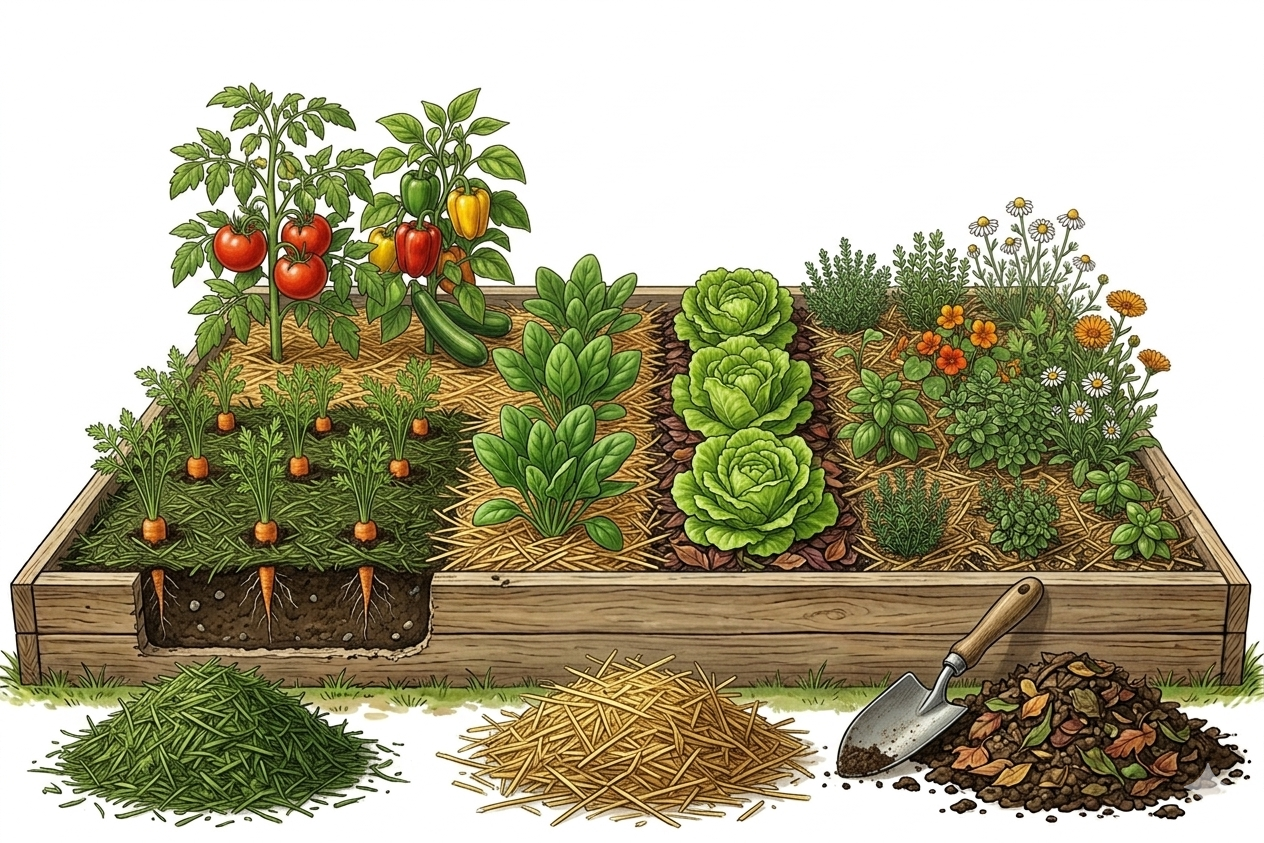
Mulching Vegetable Gardens: Materials and Mistakes
Learn how grass clippings, straw, and leaves can improve soil, reduce watering, and support healthy vegetable crops.
Guide
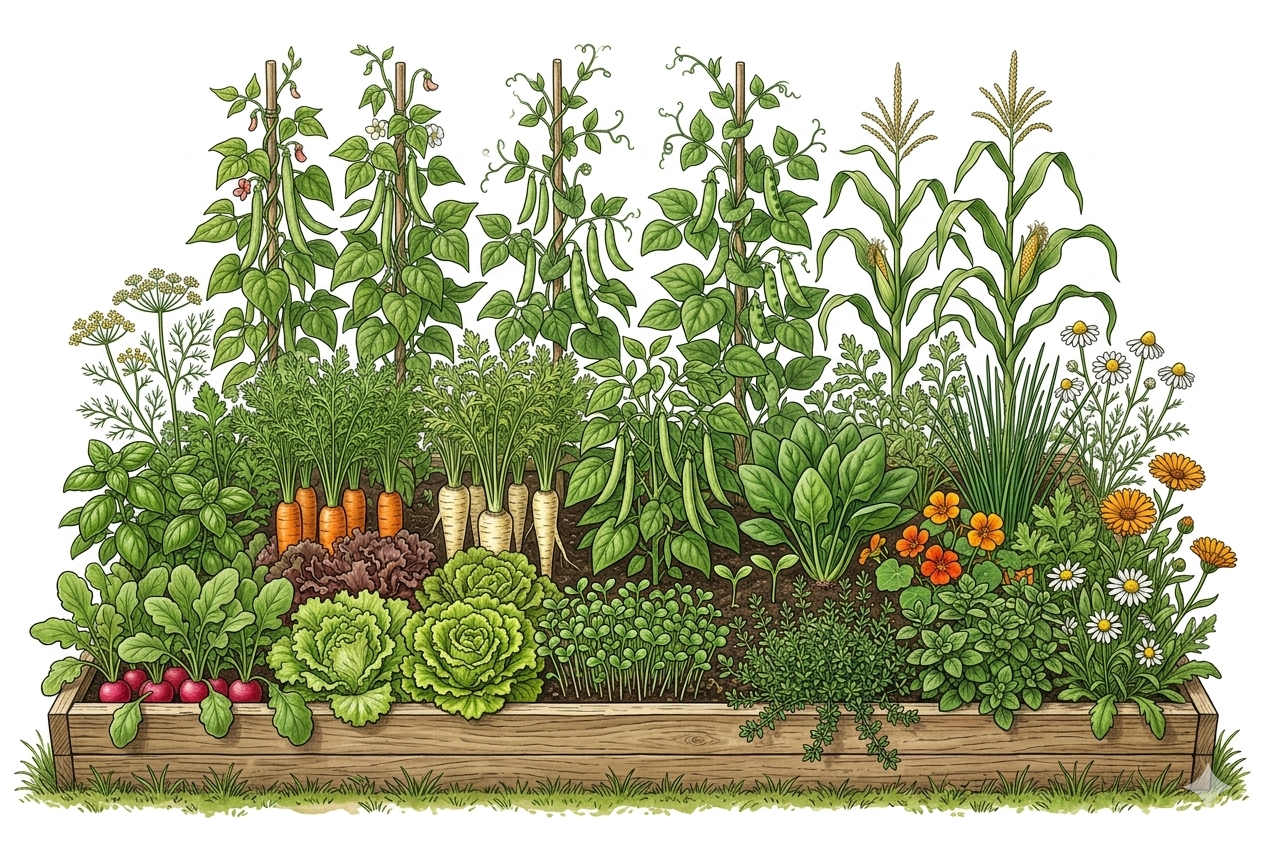
Small Garden Bed Planning: Combine 20 Crops Well
Use small beds efficiently by combining 20 vegetables and herbs, planning successions, and avoiding wasted gaps.
Guide
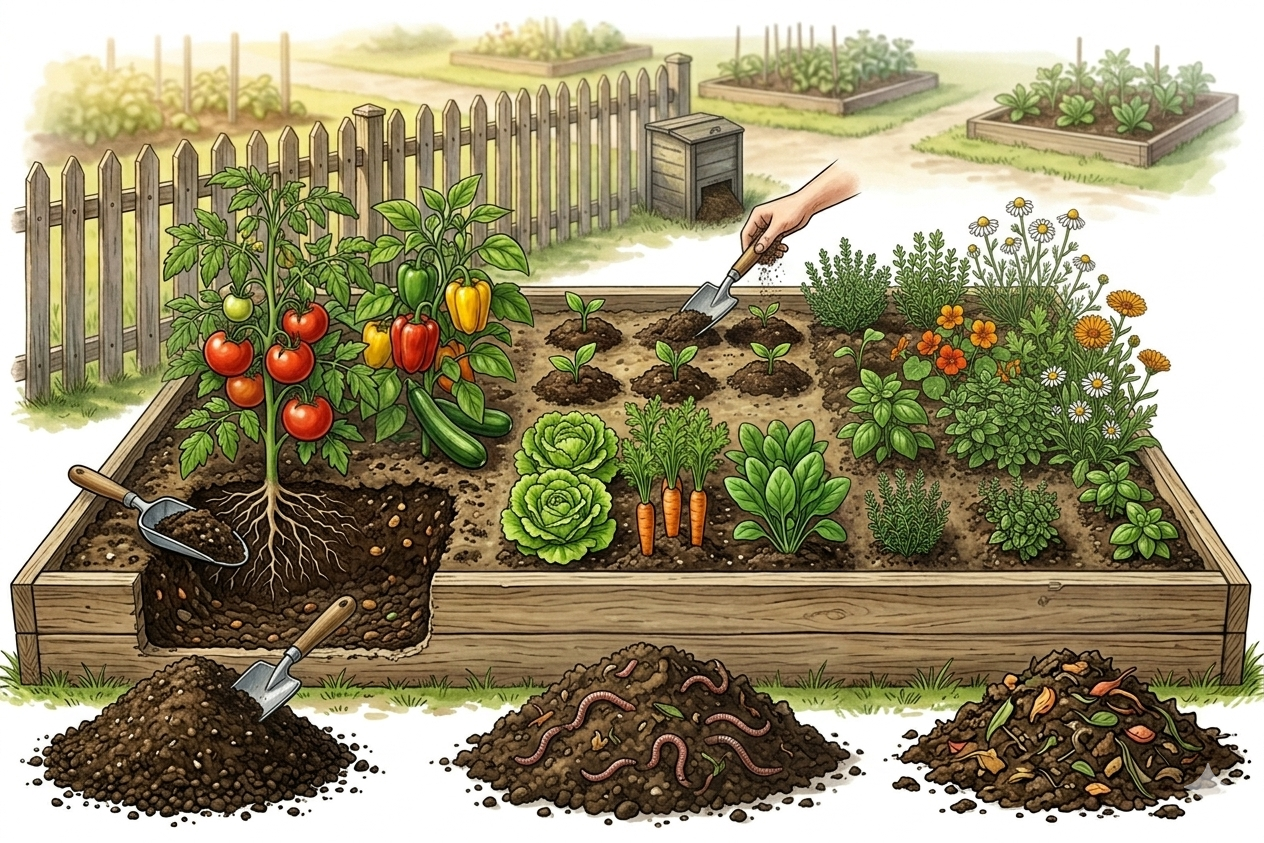
Using Compost in Food Gardens: Dosage and Timing
Learn how to use compost in vegetable beds, which crops need the most, how seedlings benefit, and when compost is best applied.
Guide
May Planting Calendar: Transplanting and Succession Sowing
What to plant and sow in May: transplant tender vegetables, continue succession sowing, and make the most of garden beds.