Guide
Using Compost in Food Gardens: Dosage and Timing
Compost is one of the most useful materials in a food garden. It improves soil structure, supports earthworms and other soil organisms, and supplies many vegetable crops with nutrients over time. Humus-rich soil also holds water more effectively and stays crumbly for longer during dry summer periods. For the best results, compost should be matched to the crop and used in sensible amounts.
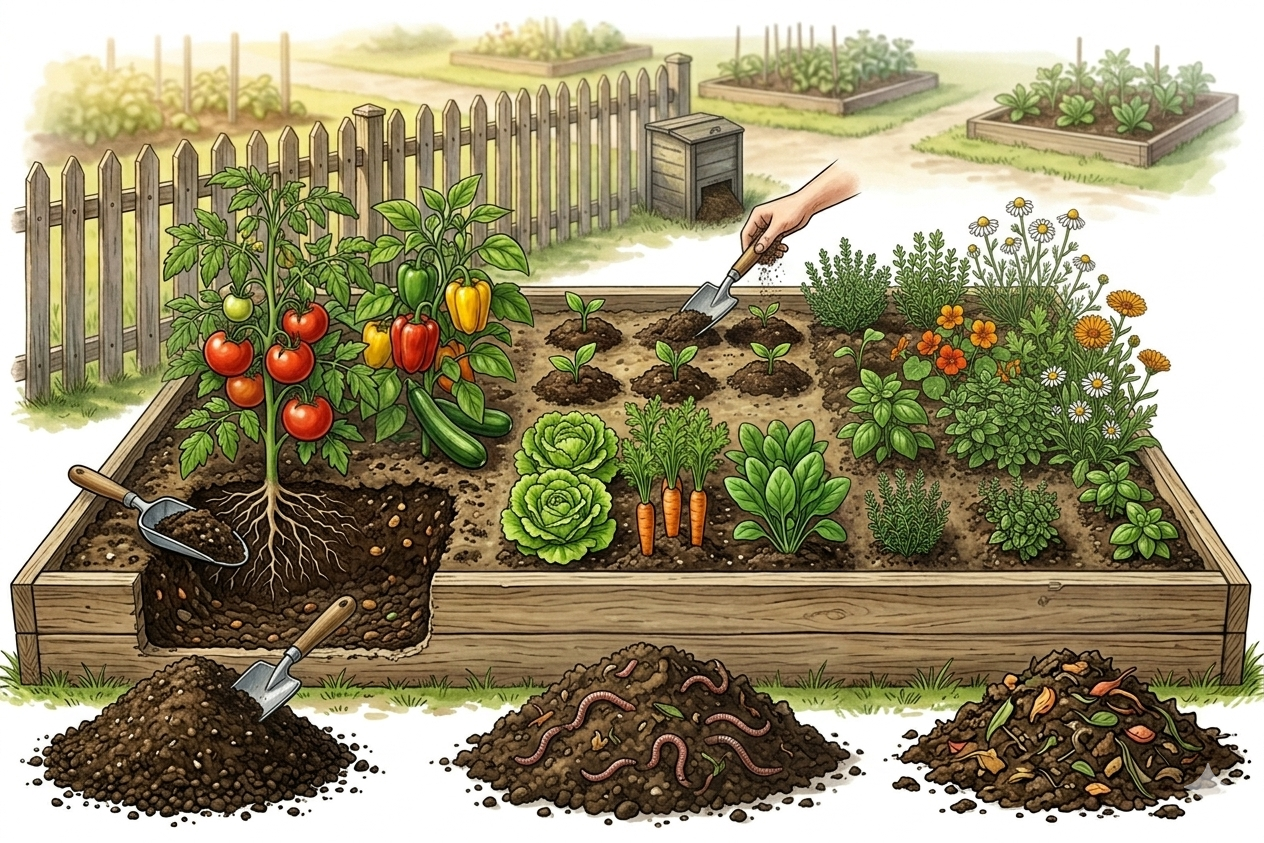
Why compost is so valuable
Mature compost does much more than feed plants. It helps loosen heavy soils, improves water retention in sandy soils, and creates a better habitat for soil organisms. With regular compost additions, garden soil becomes more fertile, stable, and resilient over time.
- Improves the crumb structure of many garden soils
- Supports earthworms and active soil life
- Helps the soil retain moisture for longer
- Releases nutrients slowly and steadily
- Builds humus over many seasons
Crops that need the most compost
Tomatoes, pumpkins, cucumbers, and many brassicas grow especially strongly when the bed is prepared with mature compost before planting. These crops produce large leaves, heavy fruits, or high yields and therefore remove a lot of nutrients from the soil.
- Tomatoes
- Cucumbers
- Zucchini
- Broccoli
- Kohlrabi
- Other brassicas
- Pumpkins and squash
Medium and light feeders
Not every vegetable needs large amounts of compost. Many root crops, herbs, and legumes grow well with much lower nutrient levels. Too much compost can sometimes lead to excessive leaf growth or lower harvest quality.
- Medium feeders: lettuce, chard, beetroot, carrots
- Light feeders: herbs, radishes, lamb's lettuce, peas
- Light feeders often benefit from residual fertility left by earlier compost applications
Compost and seedlings
Seedlings and freshly pricked-out young plants have different needs from mature vegetable crops. At this stage, they first need to develop a healthy root system. Very nutrient-rich soil or high compost content is usually not necessary.
- Use low-nutrient seed-starting mixes for sowing
- Add compost after pricking out or transplanting
- Allow young plants to adapt gradually to richer soil
Applying the right amount
The right amount of compost depends on the crop, the soil, and how mature the compost is. In most home gardens, moderate applications are enough. The goal is not to replace the soil with compost, but to enrich it regularly with organic matter.
- Heavy feeders receive the largest compost applications
- Medium feeders benefit from moderate amounts
- Light feeders often need only small quantities
- Use compost more sparingly in already humus-rich soils
- Regular smaller applications are usually better than rare heavy doses
How to apply compost step by step
- 1
Choose mature compost
Use only well-rotted, crumbly compost.
- 2
Prepare the area
Remove weeds and loosen the soil surface.
- 3
Spread evenly
Distribute compost uniformly across the bed.
- 4
Work in lightly
Mix it gently into the top layer of soil.
- 5
Plant or sow
Proceed with planting or sowing the selected crop.
Best times to use compost
Most gardeners apply compost in spring before planting. It can also be useful after harvest in autumn, giving soil organisms time to continue breaking down and incorporating the material.
- Spring before planting
- During bed preparation from March to May
- Autumn after harvest
- When establishing new garden beds
Common mistakes to avoid
- Using immature compost
- Applying too much compost at once
- Digging compost too deeply into the soil
- Planting seedlings directly into very compost-rich soil
- Ignoring the different needs of crop groups
Frequently asked questions
Can compost be used directly for tomatoes?
Yes. Tomatoes are heavy feeders and benefit clearly from mature compost before transplanting. It improves soil structure and supplies important nutrients for the first weeks of growth.
Is compost suitable for seedlings?
In small amounts, yes. For sowing and germination, however, low-nutrient seed-starting mix is usually more suitable. Compost is often added after pricking out or transplanting.
When should compost be applied?
Spring before planting and autumn after harvest are especially useful times. Both give soil organisms time to incorporate the compost into the bed.
Internal links
Related plants
Guides
Related guides
Guide
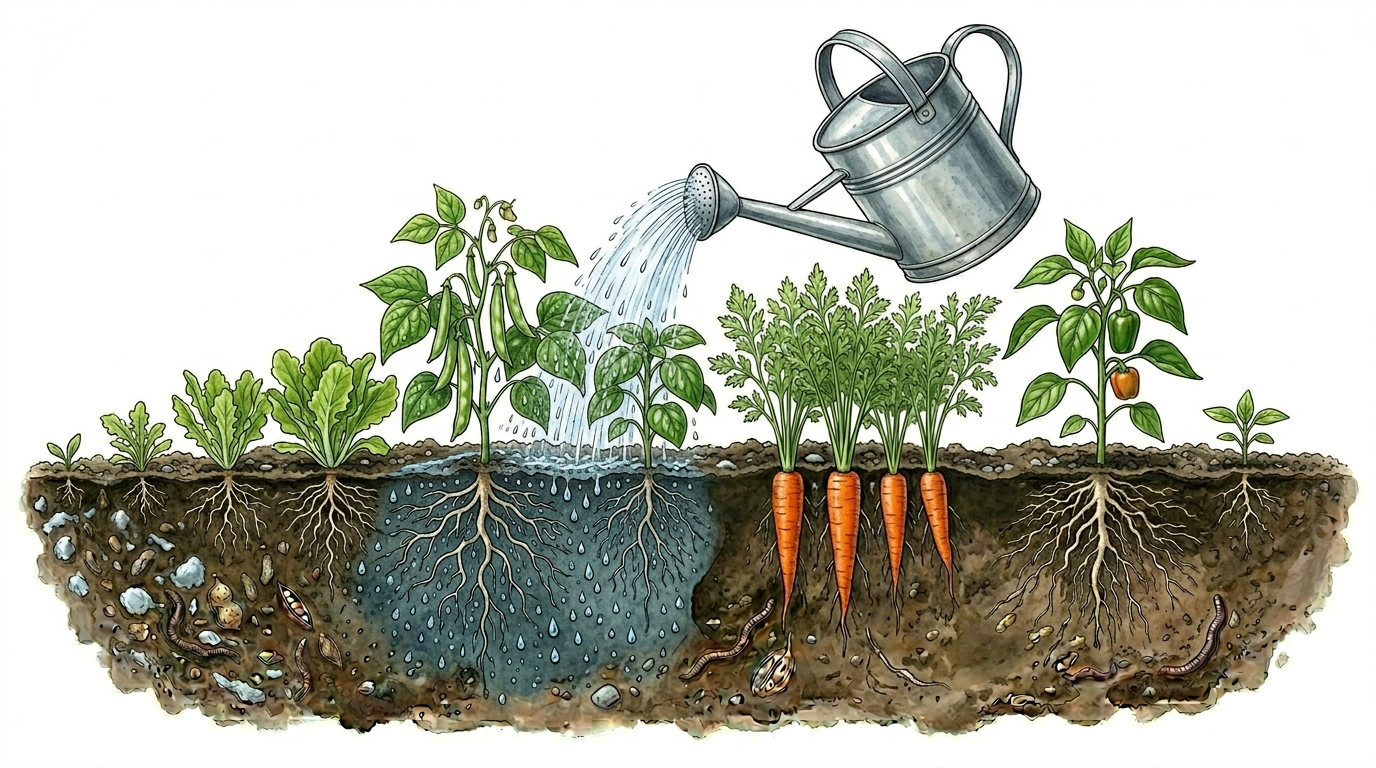
Watering Vegetable Gardens: Mulch, Water and Mistakes
Learn how to water vegetable gardens properly with mulch, morning routines, balanced moisture, and fewer watering mistakes.
Guide
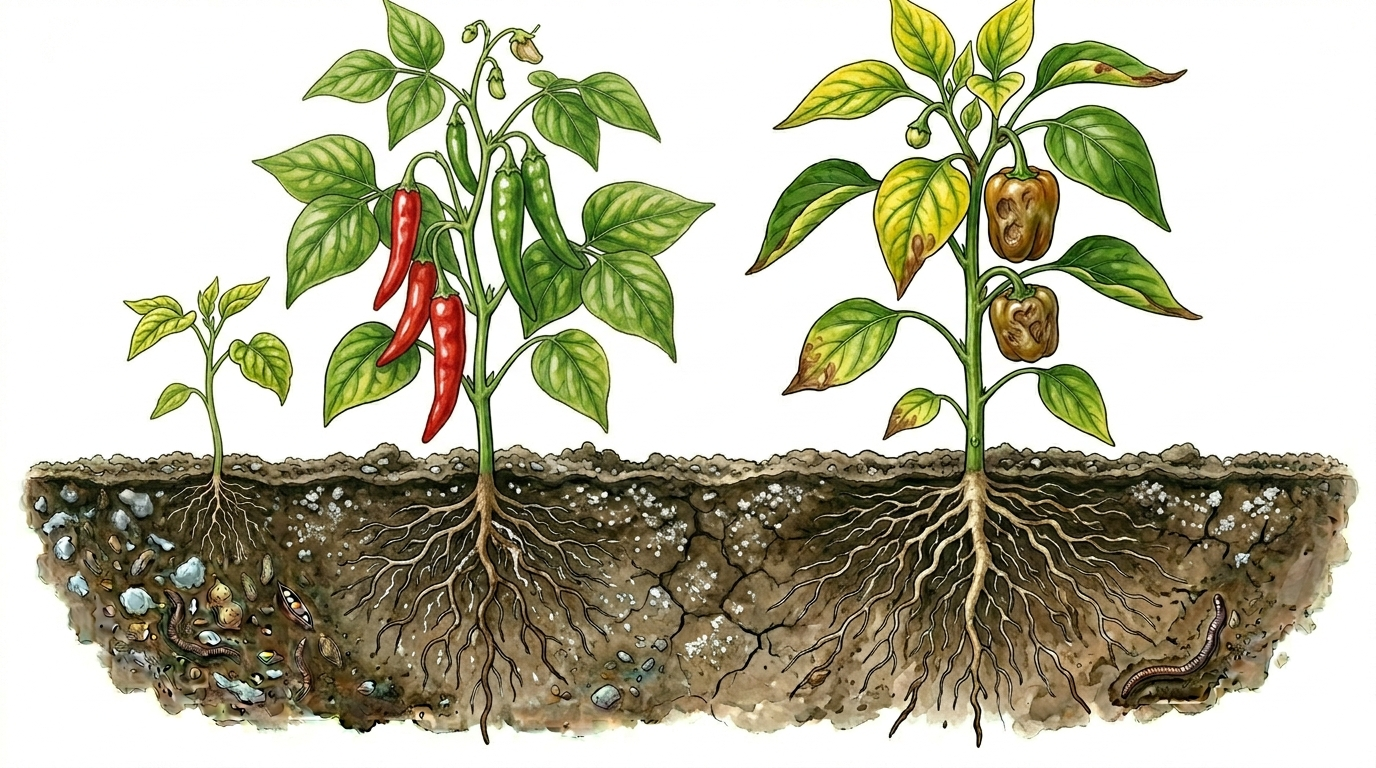
Recognizing Nutrient Deficiencies in Vegetables
Learn how to identify yellow leaves, weak growth, and common nutrient deficiencies while improving long-term plant care.
Guide
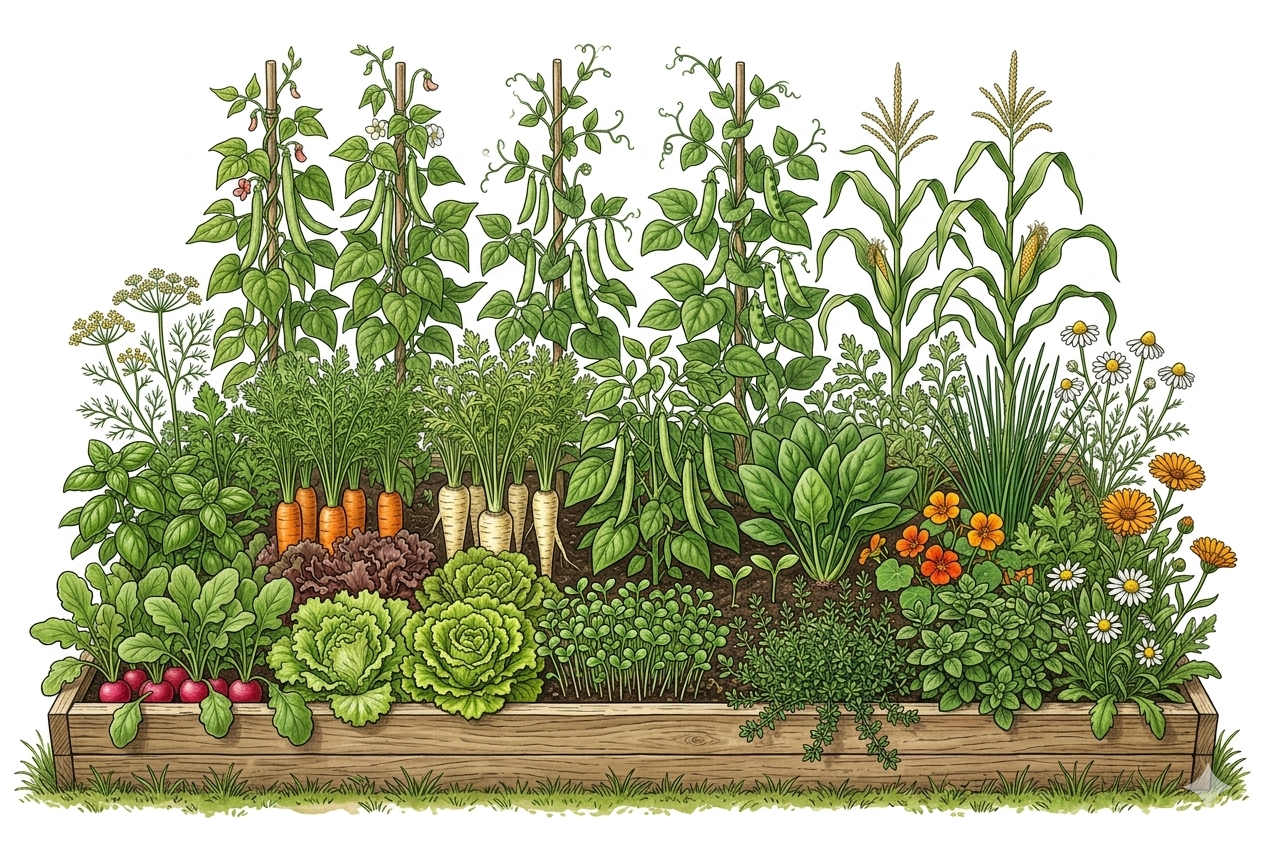
Small Garden Bed Planning: Combine 20 Crops Well
Use small beds efficiently by combining 20 vegetables and herbs, planning successions, and avoiding wasted gaps.
Guide
Mulching Vegetable Gardens: Materials and Mistakes
Learn how grass clippings, straw, and leaves can improve soil, reduce watering, and support healthy vegetable crops.