Guide
Mulching Vegetable Gardens: Materials and Mistakes
Mulch helps conserve moisture, suppress weeds, and improve soil quality over time. Vegetable gardens can benefit from a variety of mulch materials, including grass clippings, straw, and leaves. Choosing the right material for each crop and season is the key to success.
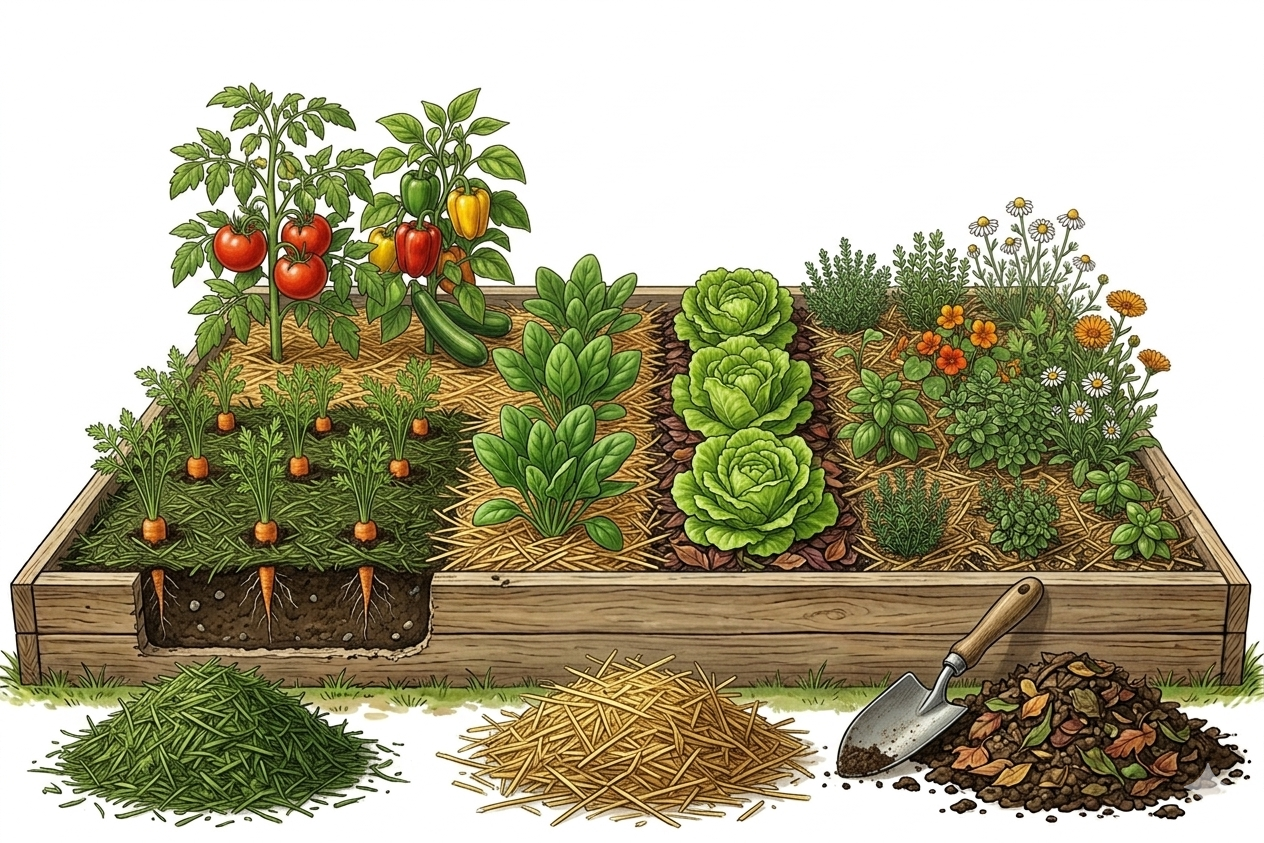
Why mulching is beneficial
A mulch layer covers the soil between plants and protects it from direct sunlight, wind, and heavy rain. This helps retain moisture and supports soil life.
- Reduces evaporation and watering needs
- Suppresses many weeds
- Protects against soil erosion
- Supports earthworms and soil organisms
- Improves soil structure over time
Using grass clippings as mulch
Grass clippings are one of the most common mulch materials in food gardens. They are usually readily available and gradually release nutrients as they decompose.
- Suitable for tomatoes, cucumbers, zucchini, and potatoes
- Apply only in thin layers
- Use slightly dried clippings
- Add small amounts regularly rather than large piles
Using straw as mulch
Straw lasts longer than grass clippings and is especially useful for crops whose fruits should stay off wet soil.
- Excellent for strawberries
- Useful around tomatoes and potatoes
- Remains loose and airy
- Provides reliable weed suppression
Because straw contains few nutrients, its main benefit is soil protection rather than fertilization.
Using leaves as mulch
Leaves are especially abundant in autumn and can be used as mulch or soil-building material. Shredded leaves decompose more quickly and evenly.
- Suitable for open bed areas
- Useful for autumn and winter protection
- Supports humus formation
- Can be combined with compost
Crops that benefit most
Many warm-season vegetables perform particularly well with mulch during the growing season.
- Tomatoes
- Cucumbers
- Zucchini
- Potatoes
- Strawberries
- Pumpkins and squash
- Peppers and chilies
How to apply mulch correctly
- 1
Prepare the soil
Remove weeds and loosen the soil if necessary.
- 2
Water thoroughly
Moisten the soil well before mulching.
- 3
Spread the mulch
Apply the chosen material evenly between plants.
- 4
Keep stems clear
Avoid direct contact between mulch and plant stems.
- 5
Monitor and replenish
Top up or loosen the mulch layer during the season if needed.
Mulch and watering
Mulch does not eliminate the need for watering, but it can significantly reduce water loss. During hot weather, moisture remains available for longer periods.
- Less evaporation
- More consistent soil moisture
- Reduced heat stress on roots
- Better use of natural rainfall
Common mistakes to avoid
- Applying thick layers of fresh grass clippings
- Placing mulch directly against stems
- Mulching dry soil without watering first
- Leaving weeds beneath the mulch
- Using mulch contaminated with seeds or diseases
Frequently asked questions
Can fresh grass clippings be used directly as mulch?
Yes, but they should be slightly dried and applied in thin layers to prevent rotting.
What is the best mulch for strawberries?
Straw is especially popular because it keeps the fruit clean and reduces contact with wet soil.
Does mulch reduce watering needs?
In most cases, yes. Mulch significantly reduces evaporation and helps the soil stay moist longer.
Internal links
Related plants
Guides
Related guides
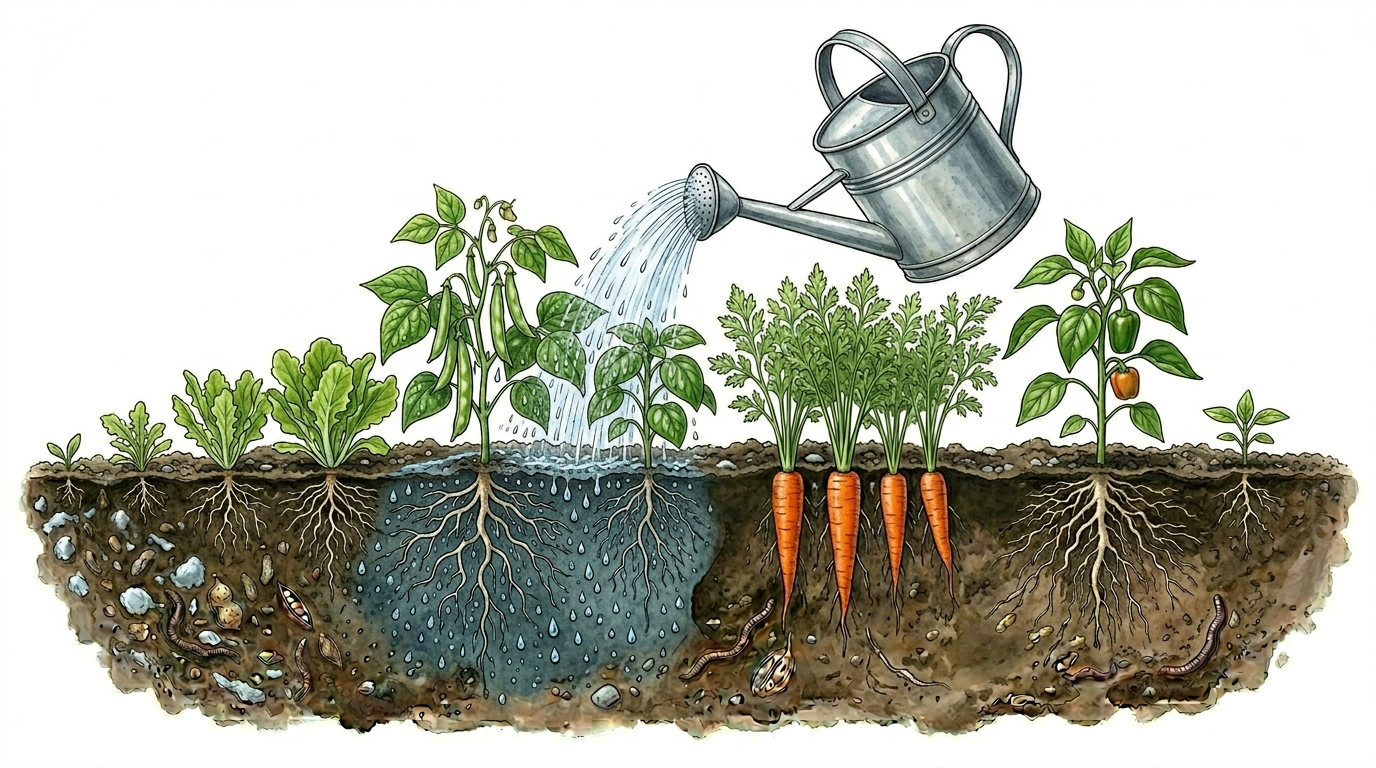
Guide
Watering Vegetable Gardens: Mulch, Water and Mistakes
Learn how to water vegetable gardens properly with mulch, morning routines, balanced moisture, and fewer watering mistakes.
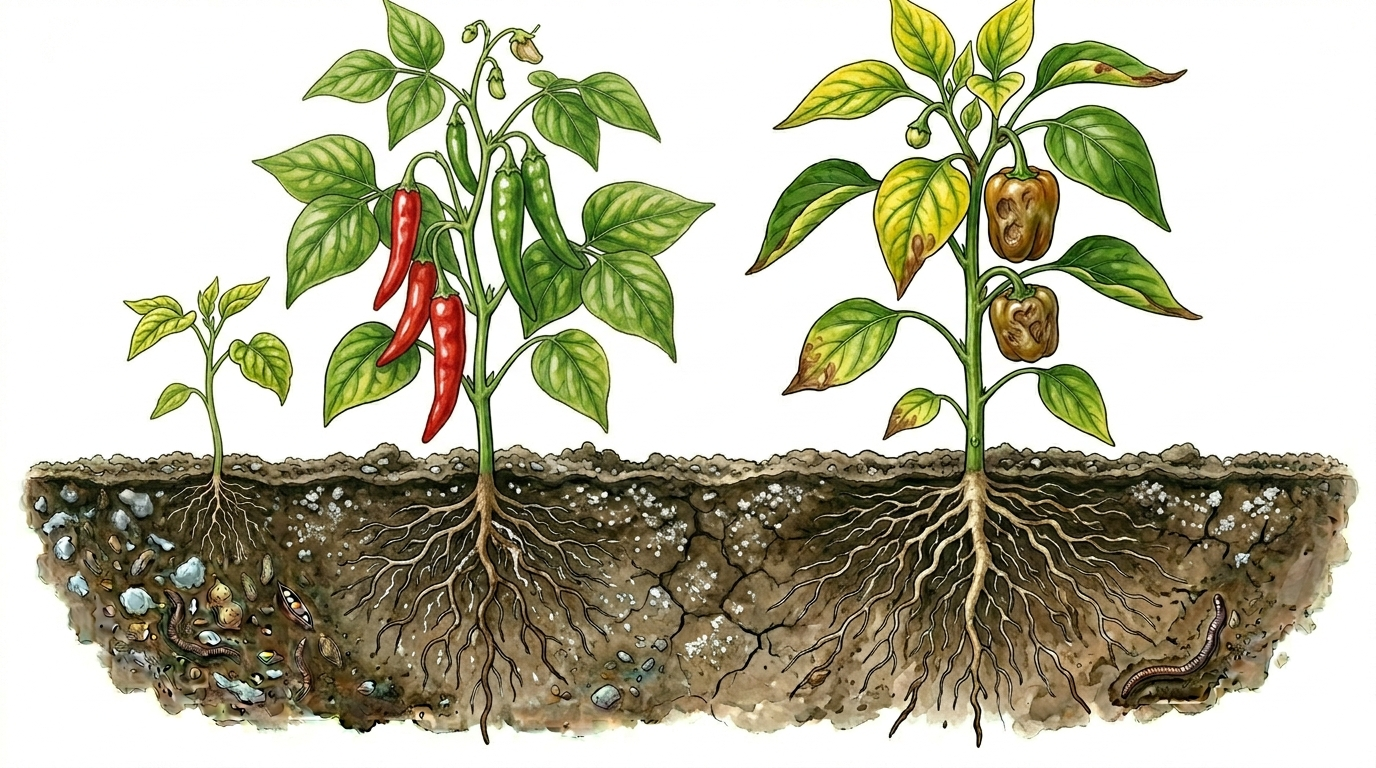
Guide
Recognizing Nutrient Deficiencies in Vegetables
Learn how to identify yellow leaves, weak growth, and common nutrient deficiencies while improving long-term plant care.
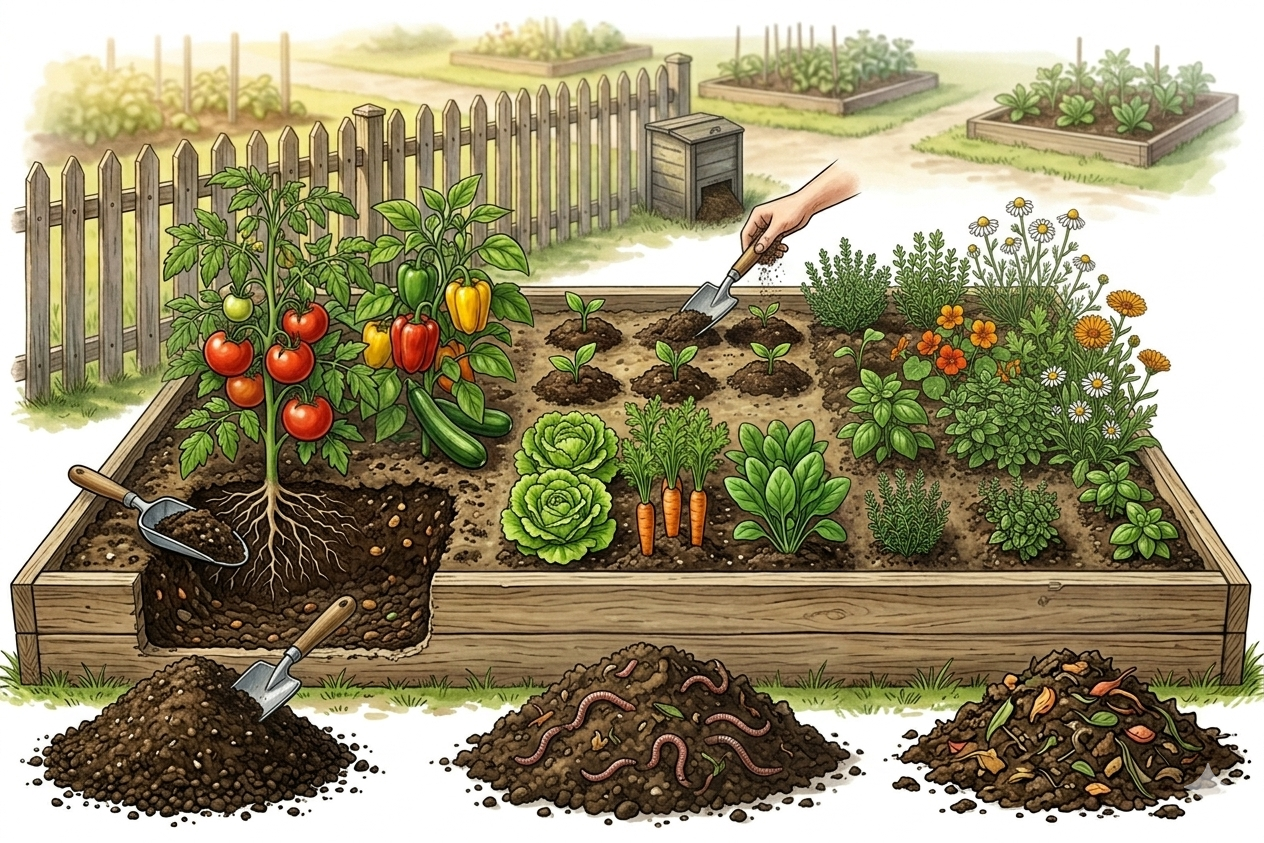
Guide
Using Compost in Food Gardens: Dosage and Timing
Learn how to use compost in vegetable beds, which crops need the most, how seedlings benefit, and when compost is best applied.
Guide
May Planting Calendar: Transplanting and Succession Sowing
What to plant and sow in May: transplant tender vegetables, continue succession sowing, and make the most of garden beds.