Guide
Pruning Raspberries: Summer and Autumn Types
Proper pruning keeps raspberries healthy, improves harvests, and makes plants easier to manage. The most important step is knowing whether you grow summer-bearing or autumn-bearing raspberries, because they are pruned differently.
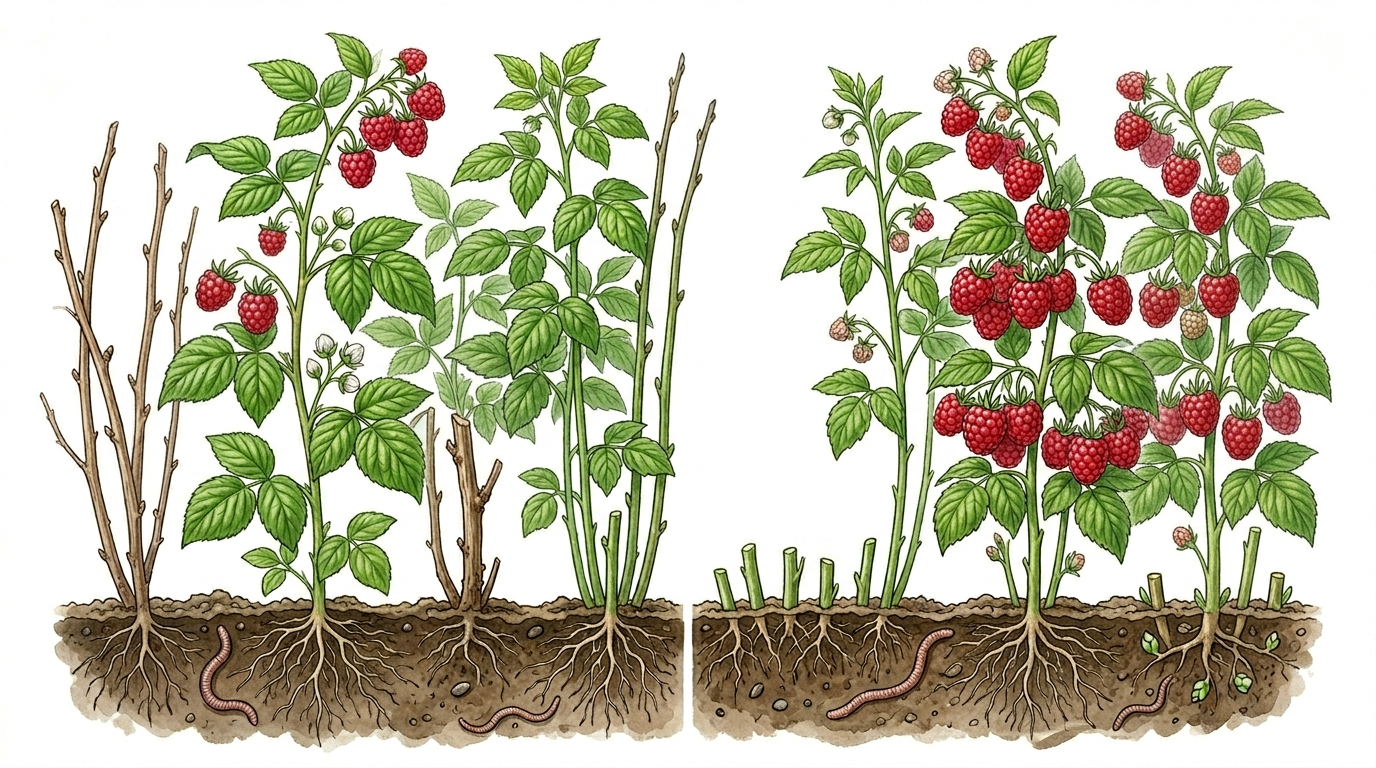
Understanding the two raspberry types
Summer-bearing raspberries fruit on canes grown the previous year. Autumn-bearing raspberries produce fruit on new canes from the same season. Because of this, pruning methods are very different.
- summer raspberries fruit on second-year canes
- autumn raspberries fruit on first-year canes
- incorrect pruning can greatly reduce harvests
- identify the raspberry type before pruning
How to prune summer raspberries
For summer raspberries, remove the old fruiting canes immediately after harvest. The young new canes stay in place because they will carry fruit the following year.
- 1
Identify old canes
Old fruiting canes are usually darker and more branched than young shoots.
- 2
Cut old canes at ground level
Remove all harvested canes close to the soil.
- 3
Select strong young canes
Keep only vigorous new shoots and remove weak or damaged ones.
- 4
Organize supports
Tie remaining canes loosely to wires or supports.
- prune directly after summer harvest
- thin overcrowded growth
- maintain good airflow
How to prune autumn raspberries
Autumn raspberries are especially easy to prune. After harvest or in late winter, all canes are cut back close to the ground. New shoots will emerge in spring and fruit later the same year.
- 1
Choose the timing
Cut autumn raspberries back after harvest or in late winter.
- 2
Remove all canes
Cut every shoot back just above ground level.
- 3
Clean the planting area
Remove cut plant material from the bed.
- 4
Encourage new growth
Fresh canes will emerge in spring and produce fruit later in the season.
Care after pruning
After pruning, raspberries benefit from loose soil, steady moisture, and enough spacing. Dense, unmanaged growth dries slowly and is more likely to cause problems.
- mulch helps keep soil evenly moist
- remove weeds regularly
- avoid waterlogging
- keep only strong canes
Supports and cane management
Many raspberry varieties grow better with simple wire supports or frames. Well-spaced canes dry faster and are easier to harvest.
- tie canes loosely to supports
- avoid overcrowding shoots
- leave enough space between rows
- remove damaged canes regularly
Common mistakes to avoid
- mixing up summer and autumn raspberries
- accidentally removing young fruiting canes
- allowing plants to become overcrowded
- leaving cut canes in the bed
- failing to thin weak or unhealthy shoots
Frequently asked questions
When should summer raspberries be pruned?
Immediately after harvest, remove the old fruiting canes while leaving the young canes for next year.
When should autumn raspberries be pruned?
Autumn raspberries are cut completely back to ground level after harvest or in late winter.
Why are my raspberries producing very little fruit?
Common reasons are removing the wrong canes or allowing the planting to become too dense and weak.
Do raspberries need pruning every year?
Yes. Regular pruning improves harvests, plant health, and overall structure.
Internal links
Related plants
Guides
Related guides
Guide
Growing Basil: Site, Watering and Harvesting
Learn how to grow basil successfully with the right site, steady watering, regular harvesting, and tips to delay flowering.
Guide
Growing Cucumbers: Starting, Supports and Harvest
Learn how to grow cucumbers successfully with indoor starting, transplanting, trellises, watering, and regular harvesting.
Guide
Pruning Apple Trees: Timing, Techniques, and Common Mistakes
Learn when and how to prune apple trees properly, including winter pruning, summer pruning, training cuts, and maintenance tips for healthy, productive…
Guide
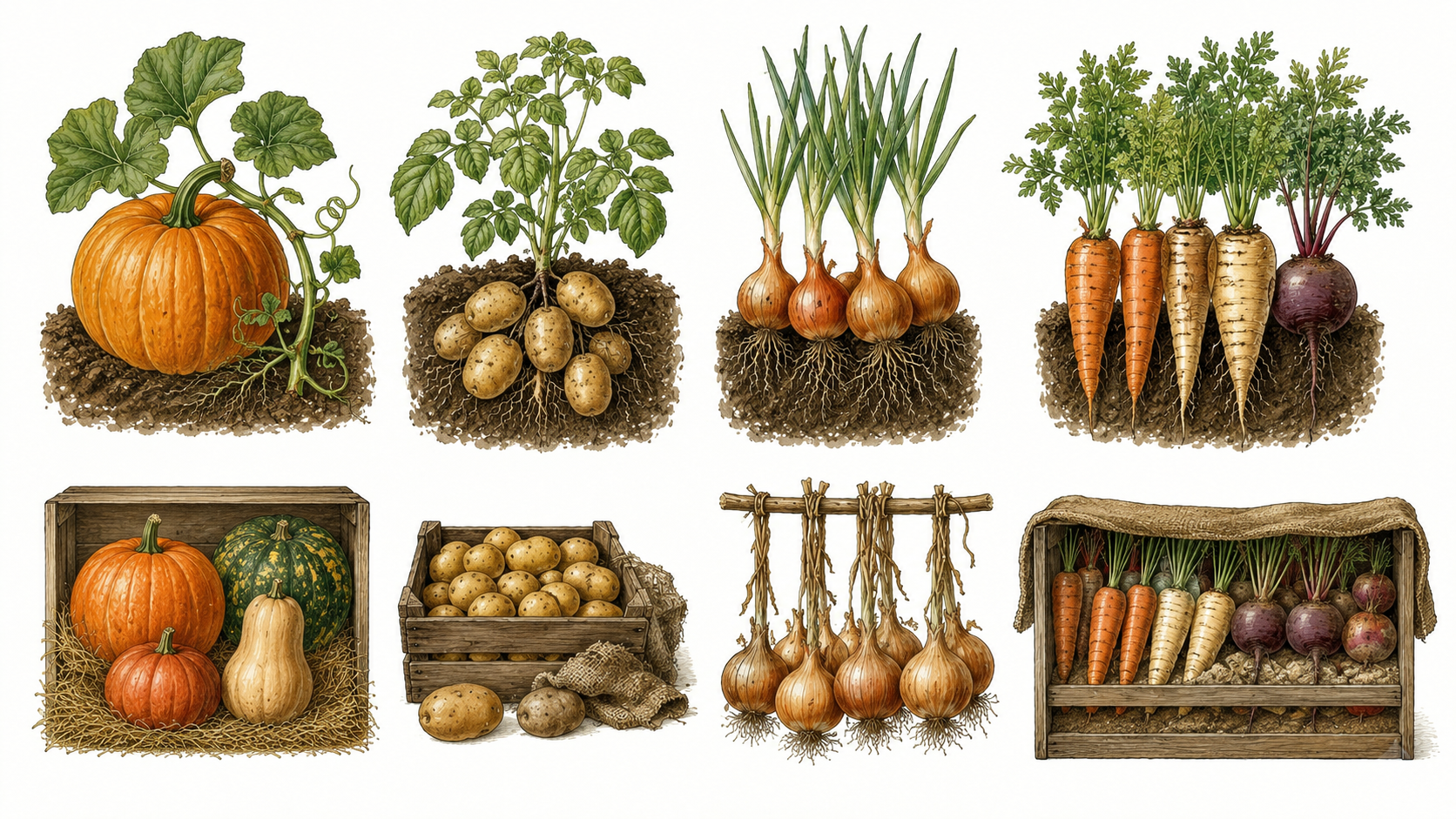
Autumn Harvest and Storage for Squash and Root Crops
Learn how to harvest and store squash, potatoes, onions, and root vegetables for longer freshness through autumn and winter.