Profile
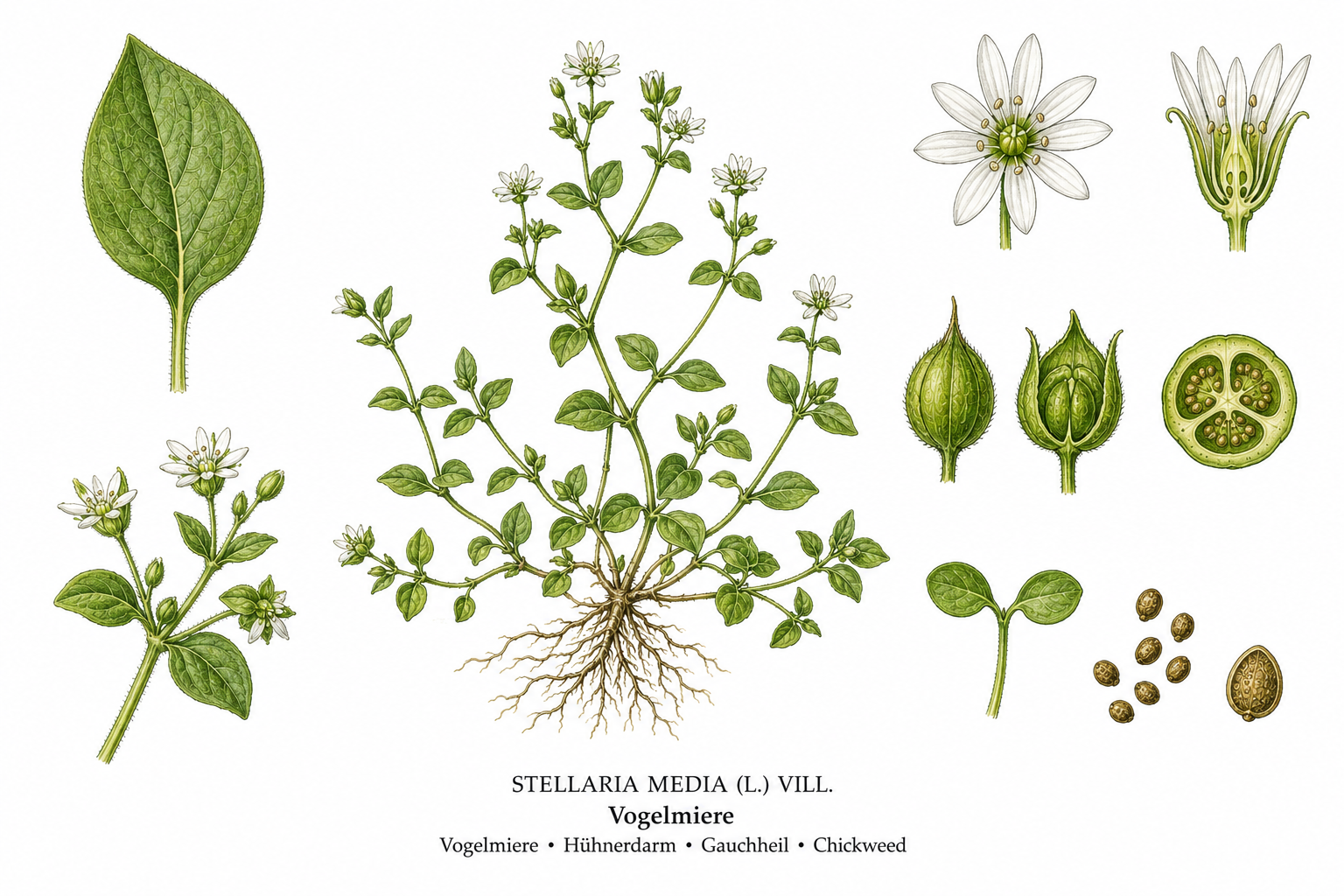
Common chickweedStellaria media
Chickweed is a widespread, fast-growing wild herb, valued both as an edible plant and as a ground cover in the garden. Its young shoots and leaves are rich in vitamins and minerals.
Quick profile
Key data
Harvest
March - November
Water
medium
Good neighbors
StrawberryLettuceCarrot
Avoid
TomatoCabbage (head cabbage)
Growing data
Common chickweed Growing data
Seed depth
0.5 - 1 cm
Plant spacing
5 - 10 cm
Row spacing
10 - 15 cm
Germination temp
5 - 20 °C
Sowing and germination
Planting and spacing
Temperature and site
Water, nutrients and care
Container, support and growth
Year plan
Common chickweed Calendar
Indoor sowing
No indoor sowing recommended.
Direct sowing
Sowing is possible almost year-round as long as the soil is not frozen. For continuous harvest, sow every 2-3 weeks.
Planting
No transplanting needed as it is direct-sown.
Harvest
Harvest as needed while plants are growing and not damaged by frost. Young shoots and leaves are most tender.
Year plan
- Prepare soil and make first outdoor sowing
- Regular sowing for continuous harvest
- Last sowings for autumn harvest
- Harvest until the first hard frost
Growing
Common chickweed Site, soil and care
Soil pH
5.5 - 7.5
Spacing
5 - 10 cm
Storage
Notes: Fresh consumption is recommended. Longer storage is difficult.
Pruning
Common chickweed Pruning
Goal
not_applicable
Tools and hygiene
Not applicable, as no woody pruning is performed.
Companion guide
Common chickweed Companion guide
Good neighbors
StrawberryLettuceCarrot
Avoid
TomatoCabbage (head cabbage)
Health
Pests, Diseases
Plant health
FAQ
Is chickweed edible?
Yes, young shoots and leaves of chickweed are edible raw and are excellent for salads, smoothies, or as an herb addition.
How can I control chickweed in the garden?
Regular weeding, especially before seed set, and mulching garden beds are effective methods to curb the spread of chickweed.
What are the benefits of chickweed in the garden?
Chickweed loosens the soil, retains moisture, and protects against erosion. It is a pioneer plant and serves as a food source for insects and birds.
When is the best time to harvest chickweed?
Chickweed can be harvested almost year-round, as long as the plants are young and tender and not affected by hard frost. It's best to harvest continuously.
Related plants
Greater Stitchwort
Belongs to the same genus (Stellaria).
Bladder Campion
Belongs to the same family (Pink family).
Shepherd's Purse
Another fast-growing wild herb often considered a weed.
Dandelion
Another edible wild herb with similar uses.
Radish
Both are light feeders and require few nutrients.
Spinach
Both are light feeders and require few nutrients.
Lettuce
Requires consistent moisture, avoid waterlogging.
Spinach
Requires consistent moisture, avoid waterlogging.
Guides
Related guides
Guide
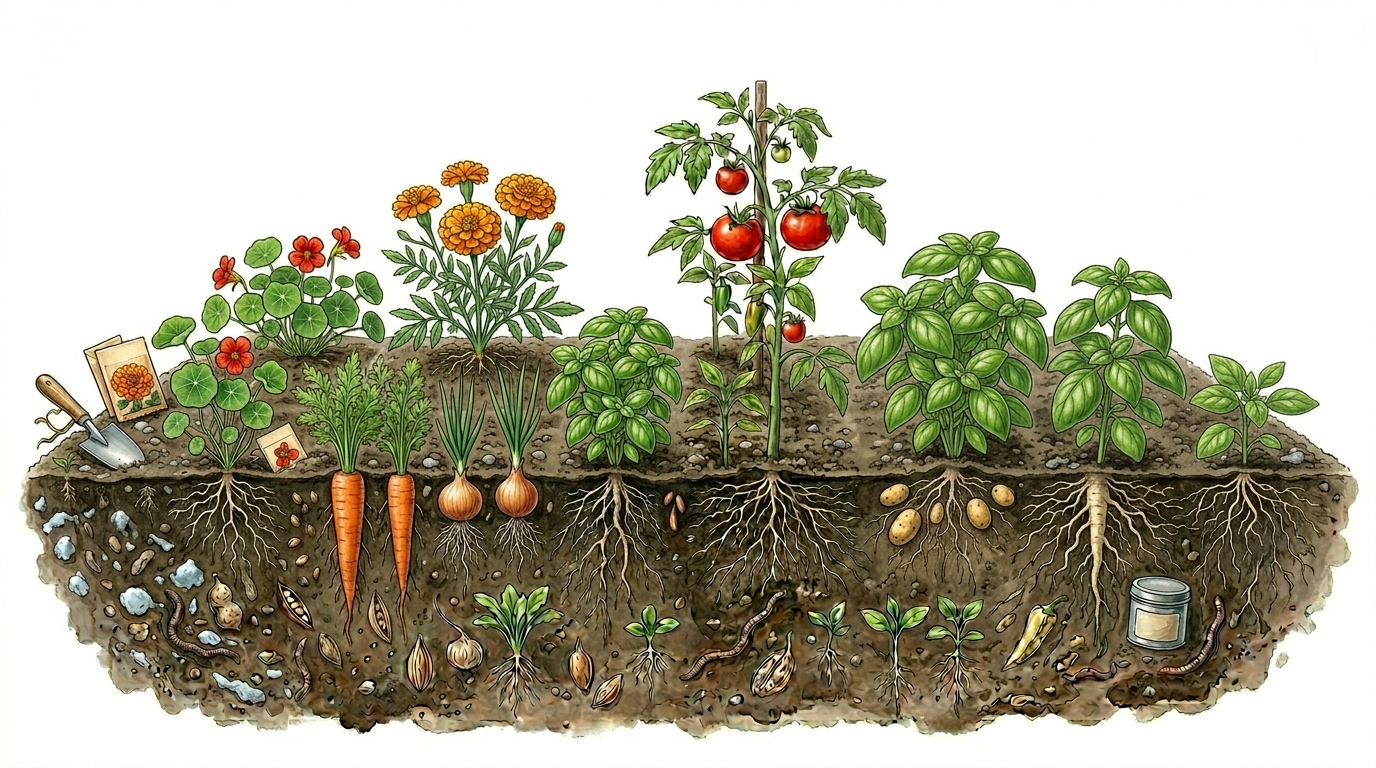
Companion Planting for Tomatoes: Good and Bad Neighbors
Learn which plants grow well with tomatoes, which neighbors to avoid, and how to plan productive mixed tomato beds.
Guide
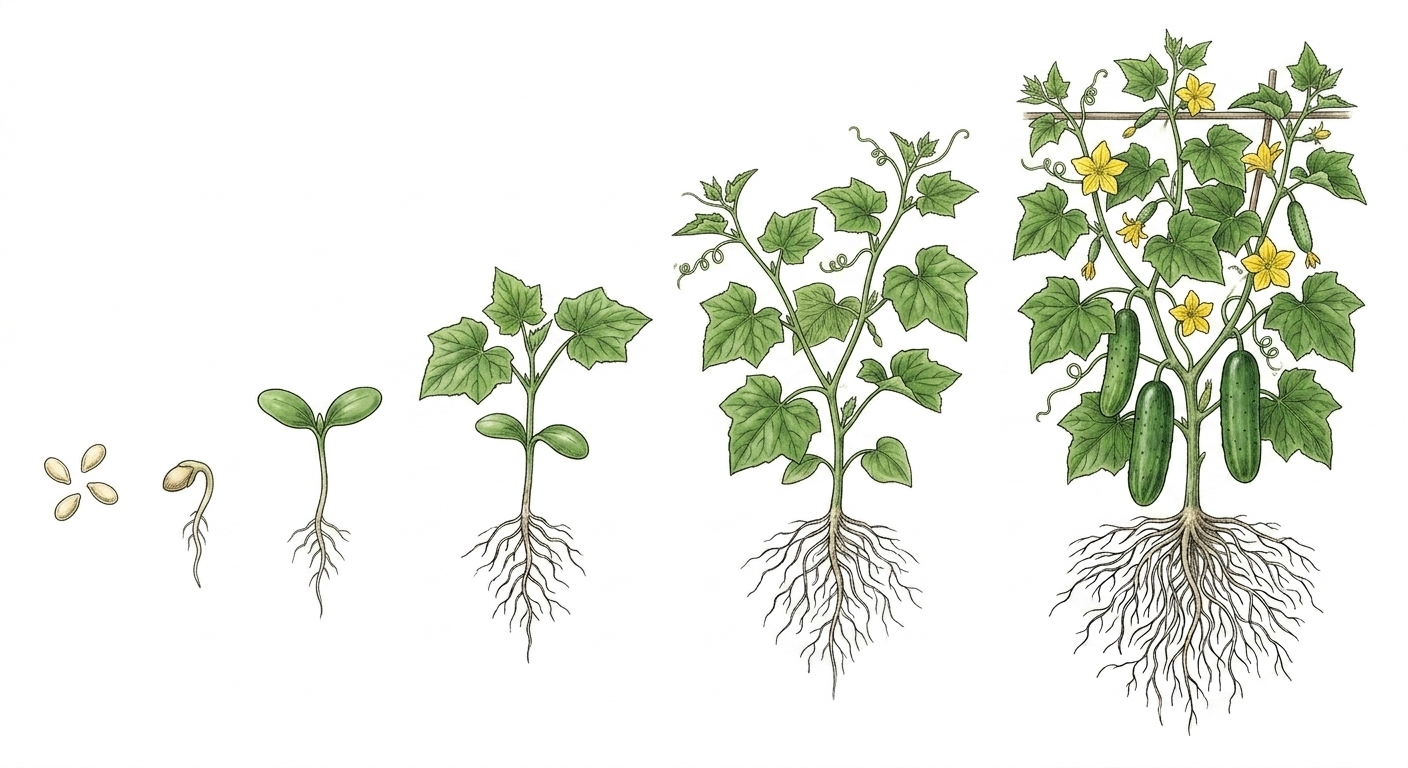
Growing Cucumbers: Starting, Supports and Harvest
Learn how to grow cucumbers successfully with indoor starting, transplanting, trellises, watering, and regular harvesting.
Guide
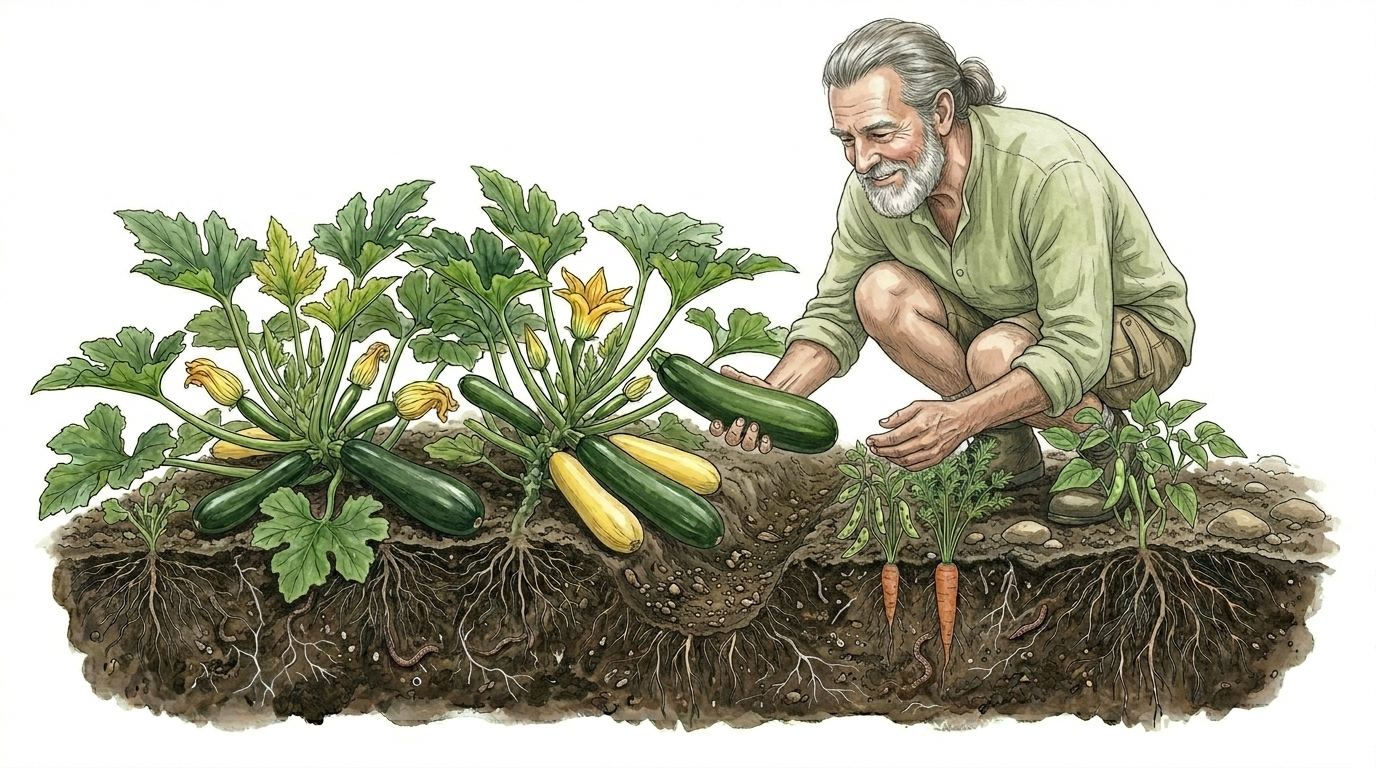
Growing Zucchini: Spacing, Pollination and Mildew
Learn how to grow zucchini with the right site, spacing, pollination support, and practical tips to prevent powdery mildew.
Guide
May Planting Calendar: Transplanting and Succession Sowing
What to plant and sow in May: transplant tender vegetables, continue succession sowing, and make the most of garden beds.
Internal links
Related plants
Sources
Public sources
- Wikidata entity
Wikidata · 2026-05-15
- GBIF species match
GBIF · 2026-05-15
- Deutschsprachige Wikipedia: Gewöhnliche Vogelmiere
Wikipedia · 2026-05-15
- English Wikipedia: Stellaria media
Wikipedia · 2026-05-15
Details
More public plant data
Names
Common
Common chickweed
Plural
Common chickweeds
Synonyms
- little mouse-ear chickweed
Common synonyms
- little mouse-ear chickweed
Regional names
Historical names
- Morsus gallinae
Market names
Misspellings
Search terms
- Stellaria media
- common chickweed
- chickweed
Taxonomy
Clades
- Tracheophytes
- Angiosperms
- Eudicots
- Core Eudicots
Family
Pink family
Classification
Edible parts
- Young shoots
- Leaves
Calendar
Sowing indoor
Notes
No indoor sowing recommended.
Sowing outdoor
Months
- 3
- 4
- 5
- 6
- 7
- 8
- 9
- 10
Notes
Sowing is possible almost year-round as long as the soil is not frozen. For continuous harvest, sow every 2-3 weeks.
Planting out
Notes
No transplanting needed as it is direct-sown.
Harvest
Months
- 3
- 4
- 5
- 6
- 7
- 8
- 9
- 10
- 11
Notes
Harvest as needed while plants are growing and not damaged by frost. Young shoots and leaves are most tender.
Month tasks
3
Prepare soil and make first outdoor sowing
4
Regular sowing for continuous harvest
5
Sow regularly for a continuous harvest.
6
Sow regularly for a continuous harvest.
7
Sow regularly for a continuous harvest.
8
Sow regularly for a continuous harvest.
9
Sow regularly for a continuous harvest.
10
Last sowings for autumn harvest
11
Harvest until the first hard frost
Month tasks structured
3
- TaskBoden vorbereiten und erste Aussaat im Freiland.
Label
Prepare soil and make first outdoor sowing
PriorityhighMonths
- 3
ConditionBoden ist bearbeitbarEstimated effortlowNotes
Chickweed germinates quickly and grows even in cooler temperatures.
4
- TaskRegelmäßige Aussaat für kontinuierliche Ernte.
Label
Regular sowing for continuous harvest
PrioritymediumMonths
- 4
- 5
- 6
- 7
- 8
- 9
ConditionBoden ist warm genugEstimated effortlowNotes
Sow every 2-3 weeks to have fresh plants available at all times.
10
- TaskLetzte Aussaaten für Herbsternte.
Label
Last sowings for autumn harvest
PrioritymediumMonths
- 10
ConditionBoden ist nicht gefrorenEstimated effortlowNotes
Allows for harvest into late autumn.
11
- TaskErnte bis zum ersten starken Frost.
Label
Harvest until the first hard frost
PriorityhighMonths
- 11
ConditionPflanzen sind nicht gefrorenEstimated effortlowNotes
Young shoots and leaves can also be harvested in mild winters.
Structured month tasks
3
- TaskBoden vorbereiten und erste Aussaat im Freiland.
Label
Prepare soil and make first outdoor sowing
PriorityhighMonths
- 3
ConditionBoden ist bearbeitbarEstimated effortlowNotes
Chickweed germinates quickly and grows even in cooler temperatures.
4
- TaskRegelmäßige Aussaat für kontinuierliche Ernte.
Label
Regular sowing for continuous harvest
PrioritymediumMonths
- 4
- 5
- 6
- 7
- 8
- 9
ConditionBoden ist warm genugEstimated effortlowNotes
Sow every 2-3 weeks to have fresh plants available at all times.
10
- TaskLetzte Aussaaten für Herbsternte.
Label
Last sowings for autumn harvest
PrioritymediumMonths
- 10
ConditionBoden ist nicht gefrorenEstimated effortlowNotes
Allows for harvest into late autumn.
11
- TaskErnte bis zum ersten starken Frost.
Label
Harvest until the first hard frost
PriorityhighMonths
- 11
ConditionPflanzen sind nicht gefrorenEstimated effortlowNotes
Young shoots and leaves can also be harvested in mild winters.
Cultivation specs
Seed
Spacing
Spacing notes
Can be sown densely as plants remain small.
Growth dimensions
Final size notes
Forms flat, carpet-like cushions.
Temperature
Temperature notes
Very cold-tolerant, can continue to grow with light frosts.
Water
Critical water phases
- Germination
- Growth phase
Water notes
Consistent moisture is important, avoid waterlogging.
Nutrition
Nutrition notes
Requires only small amounts of nutrients. Too much fertilizer can impair growth.
Container
Container notes
Suitable for balcony boxes and smaller pots.
Support
Support notes
Does not require support.
Cultivation modes
Yield density
Yield notes
Yields can vary depending on location and care. Continuous harvesting maximizes total yield.
Site
Location
Sunny to partial shade
Exposure
Sheltered from wind is advantageous, but not strictly necessary.
Soil type
- lehmig
- sandig-lehmig
- humos
Soil notes
Prefers loose, well-draining soils. Tolerates a variety of soil types.
Soil
Soil texture
- lehmig
- sandig-lehmig
- humos
Soil notes
Chickweed is adaptable but thrives best in slightly moist, well-aerated soils. Avoid heavy, compacted soils.
Watering
Frequency
As needed, keep soil lightly moist
Method
Water directly at the base to keep foliage dry.
Water notes
Regular but moderate watering is important, especially during dry periods. Absolutely avoid waterlogging.
Nutrition
Fertilizer recommendation
Little fertilization needed. A light application of compost before sowing is sufficient.
Nutrition notes
Over-fertilization can lead to weak growth. Chickweed often draws nutrients from the soil it grows in.
Cultivation planning
Succession sowing
Bed planning notes
Well-suited for gap filling or as border planting. Can also be grown in mixed cultures.
Cultivation planning notes
Due to its rapid growth and short life cycle, continuous sowing is recommended for year-round harvesting. As a pioneer plant, it is well-suited for companion planting.
Crop rotation
Notes
Chickweed is a pioneer plant and grows quickly. It should not be placed in crop rotations with other fast-growing or very nutrient-demanding plants to avoid competition. Leafy vegetables or root vegetables can be grown well after it.
Deficiencies
Notes
As a pioneer plant, chickweed is good at drawing nutrients from the soil. Specific nutrient deficiency symptoms are rare in this plant, as it often grows in nutrient-poor soils and adapts. Severe lack of growth could indicate nitrogen deficiency, but this points more to unfavorable environmental conditions than a true plant weakness.
Problems
Notes
The main problem with chickweed is that it is considered an invasive weed in gardens and agricultural land. It can spread rapidly and compete with cultivated plants for light, water, and nutrients. Its rapid germination and growth make it a persistent competitor.
Problem management
Common pest groups
Common disease groups
Prevention principles
- Regular hoeing and weeding, especially before seed set.
- Covering soil with mulch or weed fabric to prevent spread.
- Avoiding bare, uncovered soil.
- Early removal of plants before they produce seeds.
Diagnosis notes
As chickweed usually appears as a weed, the diagnosis is to identify it as such and control its spread. Problems are rare when it is cultivated as a crop.
Disease graph
Prevention strategy
Cultural
- Good soil cultivation and drainage.
- Avoidance of waterlogging.
- Sufficient spacing between plants when cultivated as a crop.
Monitoring
- Regular checks for signs of excessive growth when considered a weed.
- When cultivated: Observe for pests or diseases, although rare.
Organic first response
- Manual removal (weeding).
- Soil covering.
- When cultivated: Use organic insecticides or fungicides if problems arise (very unlikely).
Notes
Prevention primarily focuses on weed control. When cultivated as a crop, the plant is robust.
Diagnosis
Notes
Diagnosis for chickweed usually refers to its identification as an unwanted plant (weed) in a garden bed or field. Its characteristic growth form and leaves are easily recognizable. When cultivated as a crop, specific diagnoses for problems are rarely needed.
Phenology
Stages
- Germination: 5-14 days at 5-20°C
- Growth: Fast, continuous
- Flowering: Spring to autumn
- Fruiting: After flowering
Notes
Chickweed is an annual plant characterized by rapid growth and continuous flowering and seed production as long as conditions are favorable. It can germinate and grow almost year-round.
Harvest
Months
- 3
- 4
- 5
- 6
- 7
- 8
- 9
- 10
- 11
Notes
Harvest as needed while plants are growing and not damaged by frost. Young shoots and leaves are most tender.
Harvest details
Harvest frequency
Continuous, as needed
Harvest indicators
- Young, tender leaves and shoots
- Plants are not damaged by frost
Post harvest handling
Use or store harvested parts immediately. Sort out damaged or wilting parts.
Storage
Notes
Fresh consumption is recommended. Longer storage is difficult.
Storage details
General storage category
Fresh consumption, short-term storage
Storage life
1-2 days in the refrigerator
Processing options
- Drying (with significant loss)
- Freezing (after blanching)
Kitchen usage
Summary
Chickweed is used raw in salads, smoothies, or as a garnish. Young leaves and shoots are the most tender and have a mild, slightly sweet flavor.
Preparation
Wash harvested parts thoroughly. Young shoots and leaves can be used directly.
Culinary notes
Ideal for spring salads, as an ingredient in herb quark, or as a fresh addition to sandwiches.
Safety and edibility
Edible parts
- Young shoots
- Leaves
Inedible or caution parts
Toxicity notes
No known toxic properties when consuming the young plant parts.
Raw consumption
Yes, young leaves and shoots are edible raw.
Seed saving
Summary
Seeds can be collected once the capsules turn brown and dry. The seeds are small and can be easily lost.
Method
Collect ripe seed capsules, dry them completely, and separate the seeds by rubbing or sieving.
Seed collection notes
Harvest seeds before the capsules burst. Ideally on a dry day.
Seed saving advanced
Seed cleaning
Carefully separate seeds from plant debris, e.g., by shaking and sieving.
Seed storage
Store in airtight containers in a cool, dry, and dark place.
Viability testing
Germination test on a damp paper towel after 1-2 years.
Advanced notes
Due to rapid and often uncontrolled seed production, targeted seed saving for maintaining specific varieties is less relevant as the plant self-sows easily. Seeds remain viable for only a few years.
Woody crop details
Notes
Chickweed is an annual herbaceous plant and is not cultivated as a woody crop. Therefore, these details are not relevant.
Ecology
Biodiversity notes
Chickweed is an important pioneer plant that quickly colonizes open ground and contributes to soil cover. It serves as a nectar source for many insects and a food source (seeds) for birds.