Plant Profile
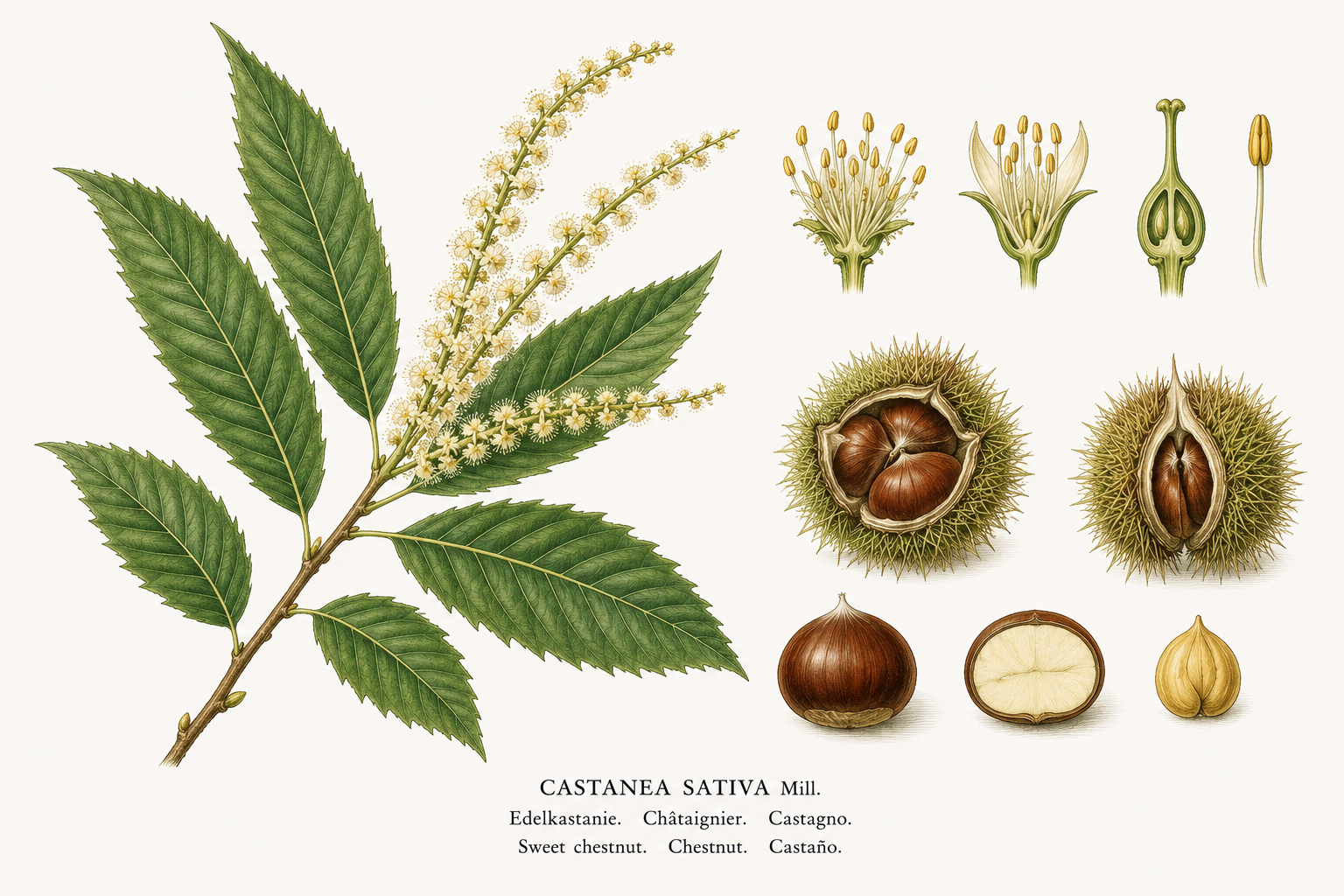
Sweet ChestnutCastanea sativa
Long-lived, stately tree producing delicious chestnuts.
Quick profile
Key data
Suitable growing locations:
Good neighbors
No data
Avoid
No data
Indoor & direct sowing
Sweet Chestnut: Sowing and germination
No indoor sowing recommended.
Direct sow in spring as soon as the soil has warmed up.
Planting & site
Sweet Chestnut: Planting and spacing
Plant young trees or seedlings in late spring.
Site & practical notes
Temperature & frost
Sweet Chestnut: Temperature and site
Water & nutrients
Sweet Chestnut: Water, nutrients and care
Container & growth
Sweet Chestnut: Container, support and growth
Year plan
Sweet Chestnut Calendar
When the spiny husks burst open in October, chestnut season begins.
Recurring tasks
Relevant now
June
- HarvestingFrühe Sorten: Occasionally, very early varieties may bear first fruits in early summer.
- Pest and disease controlBeobachtung: Check leaves and fruits for signs of pests or diseases like chestnut blight.
Next up
July
- WateringTrockenheit: Adequate water supply is important, especially during hot and dry periods.
- Pest and disease controlBeobachtung: Regular monitoring is important to detect outbreaks early.
Monthly tasks
Single tasks from monthly data; repeated seasonal windows are shown in the overview above.
January
Quiet month
February
Quiet month
March
Direct sowing
- SowingBodentemperatur über 10°C: Sow seeds directly where the tree is intended to grow. Germination can be irregular.
Growing
- Soil preparationBoden ist bearbeitbar: Good soil preparation promotes establishment and fruit development.
April
Planting
- PlantingKeine Frostgefahr mehr: Plant young trees or seedlings in their final location. Ensure adequate spacing.
Growing
- WeedingBoden ist trocken genug: Remove weeds that compete with the young tree for water and nutrients.
May
Planting
- WateringTrockenheit: Especially young trees require regular watering during prolonged dry spells.
Growing
- MulchingBoden ist feucht: A layer of mulch helps retain soil moisture and suppress weed growth.
June
Harvest
- HarvestingFrühe Sorten: Occasionally, very early varieties may bear first fruits in early summer.
Plant health
- Pest and disease controlBeobachtung: Check leaves and fruits for signs of pests or diseases like chestnut blight.
August
Harvest
- Harvest preparationBeobachtung: Fruits begin to develop and enlarge within their spiny cups.
Growing
- WateringTrockenheit: Water supply remains important for fruit size during this phase.
Pruning
- Light thinning cut to promote fruit formation.Pruning should not be done too late to avoid new shoots before winter.
September
Harvest
- HarvestingReife Früchte: Fruits fall to the ground when ripe. Collect them regularly. · Früchte fallen - This prevents fruits from rotting or being infested by pests.
October
Harvest
- HarvestingReife Früchte: The peak of the chestnut harvest. Ensure good storage conditions.
- StorageNach der Ernte: Chestnuts do not store for long. Dry them lightly and store them cool and moist.
Growing
- Garden maintenanceLaubfall: Remove fallen leaves to prevent diseases and prepare the soil for winter.
November
Harvest
- HarvestingSpäte Sorten: Collect the last ripe fruits before frost sets in.
Growing
- MulchingBoden ist nicht gefroren: A layer of mulch protects the roots from severe frost.
Plant health
- Pest and disease controlBeobachtung: Check the tree for signs of pests that might overwinter.
December
Growing
- Garden maintenanceNach dem Schnitt: Clean and oil pruning tools to prevent rust and extend their lifespan.
Pruning
- PruningFrostfrei: Remove dead, diseased, or crossing branches. This is a good time for formative pruning.
Flowering & pollination
Sweet Chestnut Flowering & pollination
Self-fertility
low
Pollinator needed
yes
Overview
Wind pollination. Cross-pollination is the norm as the species is not self-fertile.
Notes
Requires at least one other tree nearby for cross-pollination. Bees and other insects visit the flowers but do not contribute to pollination.
Pruning & care
Sweet Chestnut Pruning & care
Pruning type
central_leader
Pruning timing
Main pruning season for shaping, maintenance, and renewal. Perform only during frost-free weather. Ideal for structural cuts.
Light thinning cut to promote fruit formation. Pruning should not be done too late to avoid new shoots before winter.
Remove
Preserve
Avoid
Tools and hygiene
Disinfect pruning tools with alcohol or hot water before and after use to prevent disease transmission.
Use & storage
Sweet Chestnut Use & storage
Fruits ripen in autumn and fall to the ground. Harvest time depends on variety and region.
Storage
Cool and moist
Storage life
2–4 weeks under optimal conditions
Harvest
Fruits ripen in autumn and fall to the ground. Harvest time depends on variety and region.
Processing
After harvest
Remove leaves and debris from fruits. Do not wash as moisture promotes mold.
Edibility & safety
Sweet Chestnut Edibility & safety
For people
In brief: which parts are edible, which parts remain risky, and whether raw consumption makes sense.
Safety notes
Raw nuts contain tannins that can cause stomach upset in large quantities. These are broken down by boiling or roasting.
Animal safety
For many animals, this plant is generally low-risk: 13 animal types are rated suitable or mostly suitable. Quantity, plant part, and individual tolerance still matter.
Each row shows which parts are more suitable and which parts are critical.
Companion animals
 Dog
DogNut (after peeling and cooking/roasting)
Raw nut flesh (high tannin content), Leaves, Bark
Nut (after peeling and cooking/roasting)
Raw nut flesh (high tannin content), Leaves, Bark
Consumption of large quantities of raw nuts, Access to fallen leaves or bark
Stomach upset, Vomiting, Diarrhea
observe
Cooked or roasted sweet chestnuts are suitable for dogs in small amounts as a treat. Raw nut flesh contains tannins that can cause gastrointestinal upset. Leaves, bark, and cupule should be avoided. In case of excessive raw nut consumption, observe and consult a veterinarian if symptoms persist.
Open animal page Cat
CatNut (after peeling and cooking/roasting)
Raw nut flesh (high tannin content), Leaves, Bark
Nut (after peeling and cooking/roasting)
Raw nut flesh (high tannin content), Leaves, Bark
Consumption of raw or unripe nuts, Excessive consumption, Sensitive individuals
Stomach upset, Vomiting, Diarrhea
observe
Cooked or roasted chestnuts are suitable for cats in small amounts as a treat. Raw nut flesh contains tannins that can cause gastrointestinal upset. Leaves, bark, and cupule should be avoided. Consult a veterinarian if symptoms occur.
Open animal page Rabbit
Nut (after peeling and cooking/roasting)
Raw nut flesh (high tannin content), Leaves, Bark
Nut (after peeling and cooking/roasting)
Raw nut flesh (high tannin content), Leaves, Bark
Consumption of raw or unripe nuts, Excessive consumption, Sensitive individuals
Stomach upset, Diarrhea
observe
Cooked or roasted nuts from the sweet chestnut are suitable for rabbits in small amounts as a treat. Raw nut flesh contains tannins that can cause gastrointestinal upset. Leaves, bark, and cupule should be avoided. If symptoms occur, a veterinarian should be consulted. No indications of severe poisoning found with proper feeding of cooked nut meat.
Open animal page Guinea pig
Nut (after peeling and cooking/roasting)
Raw nut flesh (high tannin content), Leaves, Bark
Nut (after peeling and cooking/roasting)
Raw nut flesh (high tannin content), Leaves, Bark
Raw consumption, Excessive consumption, Sensitive individuals
Stomach upset, Diarrhea, Vomiting
observe
Cooked or roasted sweet chestnuts (without shell) can be given to guinea pigs as an occasional treat. Raw nut flesh contains tannins that may cause gastrointestinal upset if consumed excessively. Leaves, bark, and cupule should be avoided. If symptoms occur, consult a veterinarian.
Open animal page Hamster
Nut (after peeling)
Cupule (spiny), Bark, Leaves
Nut (after peeling)
Cupule (spiny), Bark, Leaves
Raw consumption, Excessive consumption, Consumption of husk or leaves
Stomach upset, Diarrhea
observe
Sweet chestnut nut meat is suitable for hamsters in small amounts as an occasional treat, but raw nuts contain tannins that may cause gastrointestinal upset if overconsumed. Husks, leaves, and bark should be avoided due to higher tannin concentrations. Heating (cooking/roasting) reduces tannin levels.
Open animal page Budgie
Nut (after peeling)
Cupule (spiny), Bark, Leaves
Nut (after peeling)
Cupule (spiny), Bark, Leaves
Raw consumption, Excessive consumption, Inappropriate parts
Stomach upset, Vomiting, Diarrhea
observe
The peeled, boiled, or roasted nut fruit of the sweet chestnut is suitable for budgies in small amounts as an occasional treat. Raw or excessive consumption may cause gastrointestinal upset due to tannins. Other plant parts such as leaves, bark, and spiny cupules should be avoided. Due to lack of species-specific sources, a conservative assessment is made. Consult an avian veterinarian if poisoning is suspected.
Open animal pageFarm animals
 Horse
HorseNo suitable parts listed
No risk parts listed
No suitable parts listed
No risk parts listed
unknown
Raw nuts contain tannins that can cause stomach upset in large quantities. These are broken down by boiling or roasting. Leaves, bark, and cupules are not suitable for consumption. Horses can receive peeled, cooked, or roasted chestnuts in moderation as a treat. If large quantities of raw nuts or other plant parts are consumed, a veterinarian should be consulted.
Open animal page Chicken
Nut (after peeling and cooking/roasting)
Raw nut flesh (high tannin content), Leaves, Bark
Nut (after peeling and cooking/roasting)
Raw nut flesh (high tannin content), Leaves, Bark
Consumption of raw or unripe nuts, Excessive consumption, Access to leaves or bark
Gastrointestinal upset, Vomiting, Diarrhea
observe
Cooked or roasted chestnuts can be given to chickens as an occasional treat, but only in small amounts due to tannin content. Raw nut flesh, leaves, and bark are risky due to tannins and acids and may cause gastrointestinal upset. No specific poisoning reports in chickens, but conservative classification based on known compounds and effects in other animals.
Open animal page Duck
DuckNut (after peeling and cooking/roasting)
Raw nut meat (high tannin content), Leaves, Bark
Nut (after peeling and cooking/roasting)
Raw nut meat (high tannin content), Leaves, Bark
Consumption of raw or unripe nuts, Excessive consumption, Access to leaves or bark
Gastrointestinal upset, Vomiting, Diarrhea
observe
Cooked or roasted nuts from Castanea sativa are suitable for ducks in small amounts as an occasional treat. Raw nut meat contains tannins that can cause gastrointestinal upset. Leaves and bark should be avoided. No species-specific sources found; classification based on general plant toxicity and known effects of tannins in birds. Consult a veterinarian if symptoms occur.
Open animal page Goose
GooseNut (after peeling and cooking/roasting)
Raw nut meat (high tannin content), Leaves, Bark
Nut (after peeling and cooking/roasting)
Raw nut meat (high tannin content), Leaves, Bark
Raw consumption, Excessive consumption, Unripe fruits
Stomach upset, Diarrhea, Vomiting
 Sheep
SheepNut (after peeling and cooking/roasting)
Raw nut meat (high tannin content), Leaves, Bark
Nut (after peeling and cooking/roasting)
Raw nut meat (high tannin content), Leaves, Bark
Consumption of raw or unripe nuts, Excessive consumption, Access to leaves or bark
Stomach upset, Diarrhea, Vomiting
observe
Cooked or roasted nuts from the sweet chestnut are suitable for sheep in small amounts as a treat. Raw nut meat contains tannins that can cause gastrointestinal upset if consumed excessively. Leaves and bark should not be fed. If symptoms such as diarrhea or vomiting occur, a veterinarian should be consulted.
Open animal page Goat
GoatNut (after peeling)
Cupule (spiny), Bark, Leaves
Nut (after peeling)
Cupule (spiny), Bark, Leaves
Consumption of raw or unripe nuts, Consumption of leaves, bark, or cupules
Stomach upset, Digestive disturbances
observe
The peeled, boiled, or roasted nut fruit of the sweet chestnut is tolerable for goats in moderation and can be given as a treat. Raw nuts contain tannins that may cause gastrointestinal upset if consumed excessively. Leaves, bark, and the spiny cupule should not be consumed. Goats tend to strip bark, increasing risk. Consult a veterinarian if poisoning is suspected. No indications of severe poisoning in goats…
Open animal page Cattle
Nut (after peeling)
Cupule (spiny), Bark, Leaves
Nut (after peeling)
Cupule (spiny), Bark, Leaves
Raw consumption of large quantities, Consumption of leaves, bark, or cupules
Stomach upset, Vomiting, Diarrhea
observe
Raw nuts contain tannins that can cause stomach upset in large quantities. These are broken down by boiling or roasting. Leaves, bark, and cupules should not be fed. The nut meat can be fed as an occasional treat after shelling and preparation.
Open animal page Pig
PigNut (after peeling)
Cupule (spiny), Bark, Leaves
Nut (after peeling)
Cupule (spiny), Bark, Leaves
Raw consumption of large quantities, Consumption of husk, leaves, or bark
Stomach upset, Vomiting, Diarrhea
observe
Raw nuts contain tannins that can cause stomach upset in large quantities. These are broken down by boiling or roasting. Pigs can tolerate peeled, cooked chestnuts in moderation. Other plant parts are not recommended.
Open animal pageThese guidelines are for general information only and do not replace veterinary diagnosis. If critical plant parts were ingested or the animal shows unusual behaviour or symptoms, seek veterinary advice.
Max risk
unknown
Highest status
not established
Urgency
unknown
Saving seed
Sweet Chestnut Saving seed
Seed viability
1 - 2 years
Practical tips
Sweet Chestnut Practical tips
Common beginner mistakes
Planting in calcareous soil without soil amendment.
Success pattern
Early formative pruning leads to a stable, productive crown after about 10-15 years.
High-impact tips
A thick layer of mulch from its own leaves keeps moisture in the root zone.
Grower observations
In dry summers, the fruits often remain small unless supplemental watering is provided.
Health
Pests, Diseases
Plant health
Diagnosis help
Sweet Chestnut Diagnosis help
Disease groups
Fungal diseases (e.g., Chestnut blight)
Prevention
Diagnosis
Symptoms such as bark necrosis, wilting, or fruit drop can indicate diseases or unfavorable environmental conditions. Accurate diagnosis is crucial for control.
Cultural prevention
Monitoring
First response
Diagnostic rules
Reddish-brown to dark brown spots on the bark, developing into cracks and cankers. Exuding resin.
Possible causes: Cryphonectria parasitica (Kastanienrindenkrebs)
- Examine the bark for typical symptoms of blight.
- Check humidity and weather conditions of recent months.
- Look for mechanical injuries to the bark.
Wilting of leaves and shoots, often starting on individual branches. Dieback of branches.
Possible causes: Cryphonectria parasitica, Root rot, Drought stress
- Check the bark for signs of blight.
- Inspect soil moisture and drainage.
- Assess the tree's water supply.
FAQ
Are all chestnuts edible?
No, only the sweet chestnut (Castanea sativa) is edible. The common horse chestnut is toxic to humans.
Is Sweet Chestnut safe for Dog?
Sweet Chestnut is classified as moderation only for Dog. Risk: unknown. Urgency: observe. Cooked or roasted sweet chestnuts are suitable for dogs in small amounts as a treat. Raw nut flesh contains tannins that can cause gastrointestinal upset. Leaves, bark, and cupule should be avoided. In case of excessive raw nut consumption, observe and consult a veterinarian if symptoms persist.
Is Sweet Chestnut safe for Cat?
Sweet Chestnut is classified as moderation only for Cat. Risk: unknown. Urgency: observe. Cooked or roasted chestnuts are suitable for cats in small amounts as a treat. Raw nut flesh contains tannins that can cause gastrointestinal upset. Leaves, bark, and cupule should be avoided. Consult a veterinarian if symptoms occur.
Is Sweet Chestnut safe for Rabbit?
Sweet Chestnut is classified as moderation only for Rabbit. Risk: unknown. Urgency: observe. Cooked or roasted nuts from the sweet chestnut are suitable for rabbits in small amounts as a treat. Raw nut flesh contains tannins that can cause gastrointestinal upset. Leaves, bark, and cupule should be avoided. If symptoms occur, a veterinarian should be consulted. No indications of severe poisoning found with proper feeding of cooked nut meat.
Is Sweet Chestnut safe for Guinea pig?
Sweet Chestnut is classified as moderation only for Guinea pig. Risk: unknown. Urgency: observe. Cooked or roasted sweet chestnuts (without shell) can be given to guinea pigs as an occasional treat. Raw nut flesh contains tannins that may cause gastrointestinal upset if consumed excessively. Leaves, bark, and cupule should be avoided. If symptoms occur, consult a veterinarian.
Guides
Related guides
Guide
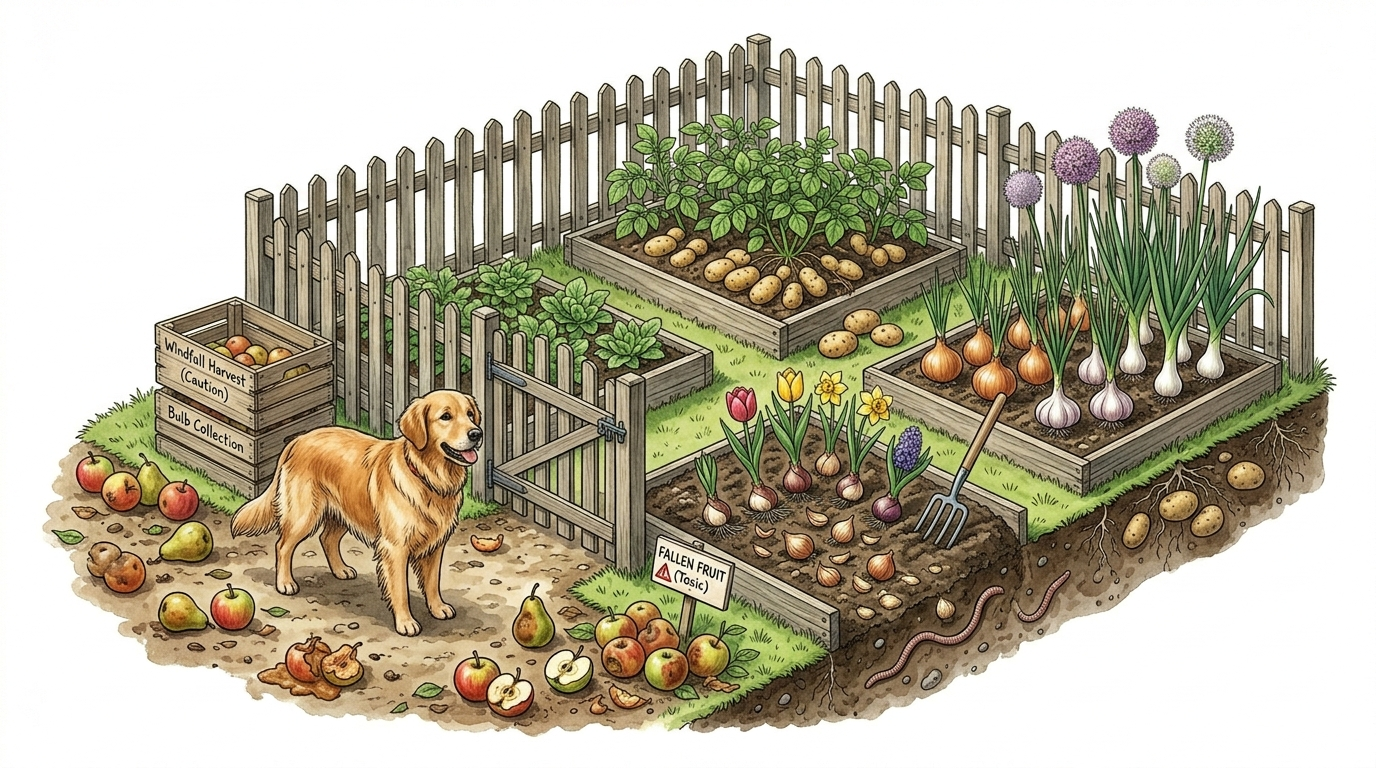
Dogs in the Garden: Windfall Fruit and Risks
Keep your garden dog-safe by managing windfall fruit, seeds, stored crops, and potentially problematic plant parts.
Guide
Horse Pastures and Garden Plants: Safety Checks
Learn how to identify risks near horse pastures, fences, turnout areas, fruit trees, and garden planting zones.
Guide
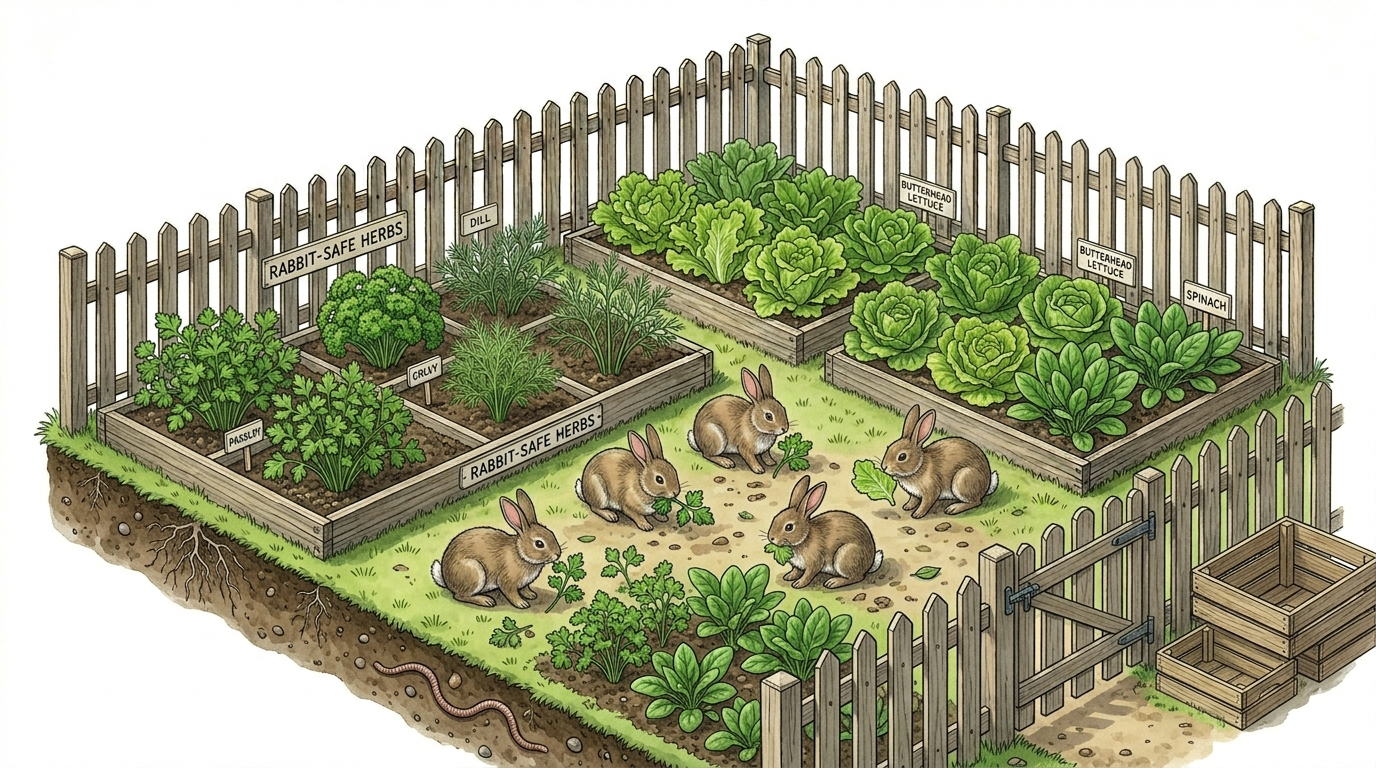
Rabbits in the Garden: Herbs and Vegetables
Learn how to choose suitable herbs and vegetables for rabbits, grow feeding plants, and plan a rabbit-friendly garden.
Guide
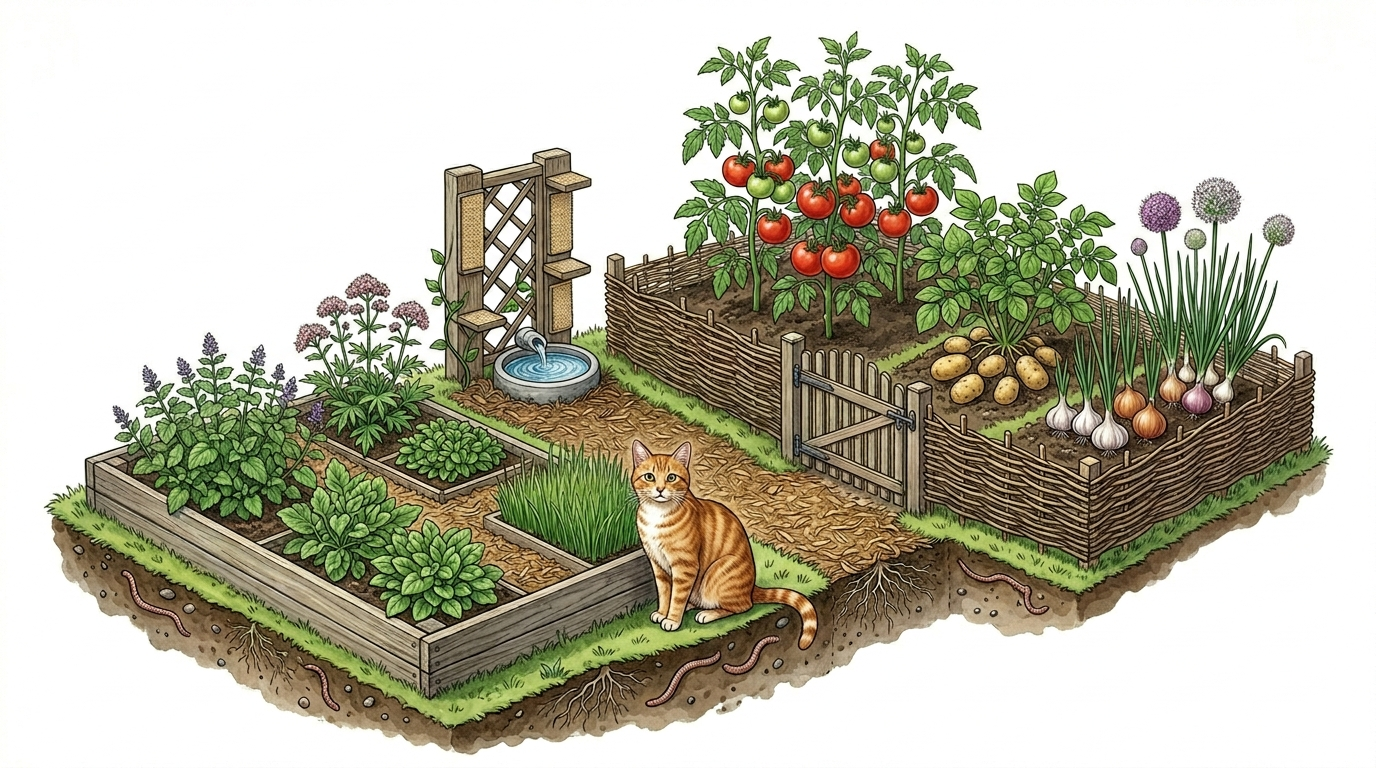
Toxic Garden Plants for Cats: Safer Planning
Learn which garden plants can be risky for cats, how to plan safer beds, and what to do if a cat eats a toxic plant.
Internal links
Related plants
Common Hazel
Another native nut producer for the garden.
Beech
Both belong to the Beech family (Fagaceae).
Oak
Close botanical relationship within the order Fagales.
Common Walnut
Large shade tree with edible nut fruits.
Horse Chestnut
Similar name and fruit shape, but horse chestnuts are inedible (toxic).
Sources
Public sources
- Wikidata entity
Wikidata · 2026-05-12
- GBIF species match
GBIF · 2026-05-12
- Deutschsprachige Wikipedia: Edelkastanie
Wikipedia · 2026-05-12
- English Wikipedia: Sweet chestnut
Wikipedia · 2026-05-12